


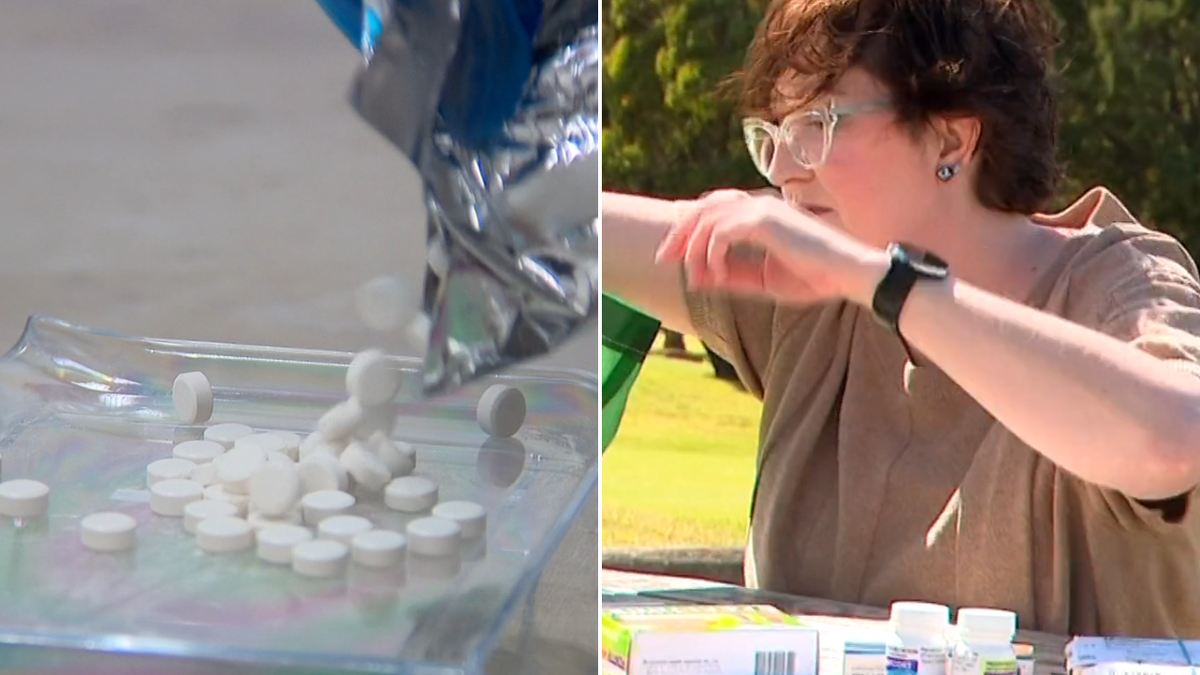
An Australian-made CBD tablet being developed as a potential treatment for chronic pain has failed to outperform a placebo in a clinical trial, although researchers said it was safe and appeared to provide relief for some participants.
The tablet was tested on 155 people, with around 10 per cent reporting some pain relief. Participants were also allowed to continue using basic painkillers such as paracetamol, making it difficult to establish how much benefit came from the CBD treatment itself.
Aprelle Fleming, who lives with debilitating pain caused by the rare lung condition sarcoidosis, said she was seeking an option that would not prevent her from functioning normally.
“The pain has been so severe I’ve almost gone to hospital. I take high-dose opioids and sometimes they don’t do anything,” Ms Fleming said.
“I think what would really help me would be some cannabis. Being able to take that and still be able to drive would be so beneficial.”
CBD tablet trial produced mixed results
The company behind the tablet, medicinal cannabis firm TCANN, is seeking to develop a cannabis-based product without THC, the ingredient associated with a high.
TCANN chief executive Peter Comerford said the active tablet appeared to produce an early improvement that continued through the four-week trial.
“For the active [tablet], you saw the improvement straight away in the first week and then maintained in the second and the third and the fourth,” Mr Comerford said.
However, he acknowledged that the overall findings did not meet the trial’s primary goals.
“The overall result is that it didn’t outperform placebo to meet the primary goals of the trial,” Mr Comerford said, adding that the company needed to investigate further.
TCANN is now seeking registration with the Therapeutic Goods Administration. Regulators will decide whether the evidence is sufficient, while researchers involved in the project say they intend to continue developing the treatment.
People living with chronic pain continue to seek alternatives that could offer relief without affecting their ability to carry out everyday activities.
