


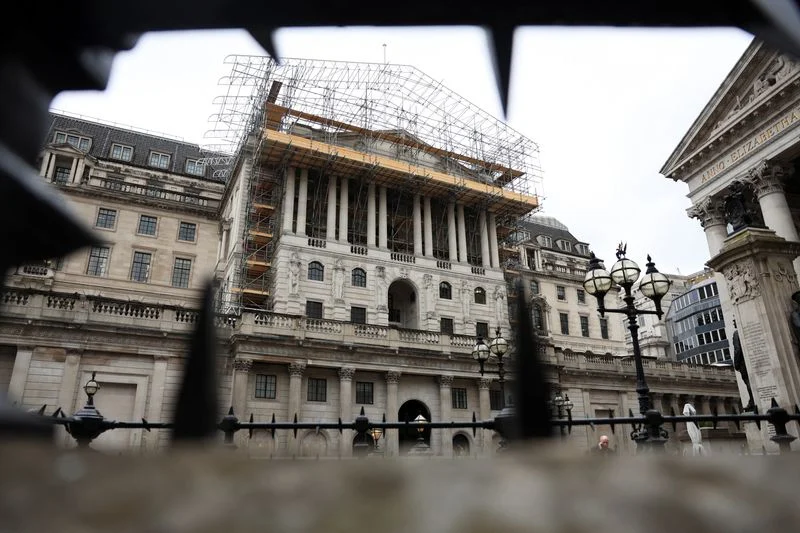
British banks are increasingly turning to the Bank of England for cash by pledging higher-risk credit assets, including loans linked to store cards, vehicle leases and small-business finance.
Figures reviewed by Reuters show that lenders pledged £1.9 billion of the central bank’s highest-risk collateral category at its six-month funding auction on 18 August. That was the largest amount since March 2020 and three times the previous week’s total.
The Bank of England has around £17.8 billion of so-called Level C collateral on its books through the Indexed Long-Term Repo facility, according to Reuters calculations. The figure has risen from £8.7 billion a year ago and less than £1 billion in mid-2024.
Level C assets are generally less liquid and can include lower-quality asset-backed securities and portfolios of residential, consumer and corporate loans. Banks use them to secure reserves held with the central bank, which are needed for wholesale payments and other financial-market transactions.
The growing use of the facility follows the Bank’s decision in 2022 to begin unwinding the £895 billion of quantitative easing carried out between 2009 and 2021. As the amount of cash created through QE has declined, commercial banks have increasingly relied on repo operations to obtain reserves.
The Bank of England said the facility was designed to accept a broad range of collateral while protecting the institution through robust risk controls. It applies larger valuation discounts, known as haircuts, and charges higher interest rates when banks pledge riskier assets.
Level C collateral accounted for between a fifth and a quarter of the assets accepted through the facility over the past year. Its overall value has nevertheless more than doubled as demand for the Bank’s funding has increased.
Bank of England collateral scrutiny
The central bank’s eligible list includes debt products linked to buy-to-let mortgages, vehicle and heavy-equipment leases, credit-card receivables and loans issued through Funding Circle’s business-finance platform.
Some of the assets differ from those accepted by the European Central Bank. The ECB tightened its collateral rules in January, excluding certain products, including some forms of debt backed by vehicle leases.
Among the securities eligible for the Bank of England’s operations are notes connected to NewDay credit cards, which Fitch Ratings has described as targeting higher-risk borrowers. The list also includes debt from the Small Business Origination Loan Trust, which packages repayments from companies financed through Funding Circle.
S&P Global said in an August 21 note that almost one-fifth of the loans in that Funding Circle-linked pool were likely to default. Funding Circle declined to comment.
William Allen, a visiting fellow at the National Institute of Economic and Social Research and former head of the Bank of England’s money-markets division, said the framework could create incentives for lenders to take greater risks if used too extensively.
“The BoE has got good reasons for wanting to buy grade C assets but there’s a risk that if they do too much then that can encourage bad lending,” he said.
The Bank said it regularly reviews its collateral framework to ensure it remains consistent with its risk-tolerance objectives.
