


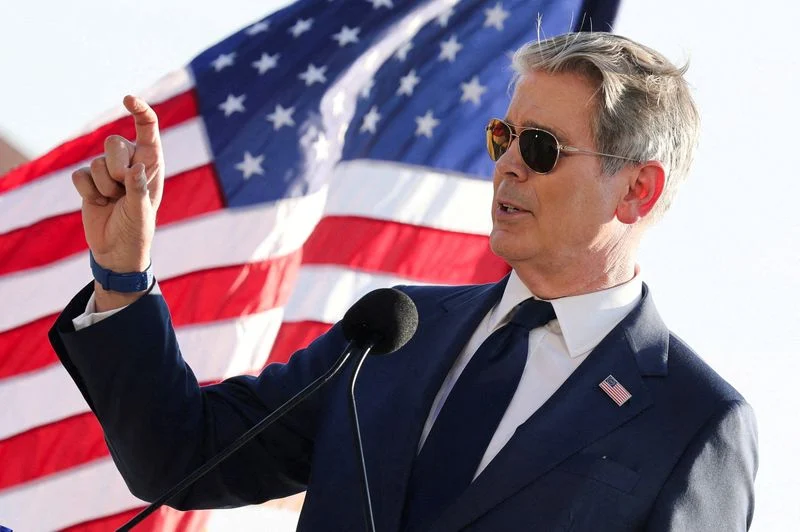
US Treasury Secretary Scott Bessent has openly endorsed using America’s financial strength as a foreign policy instrument, saying Washington can deploy its balance sheet to build alliances and influence political and economic outcomes abroad.
Speaking at the SMU Cox School of Business in Dallas on Tuesday, Mr Bessent said the administration’s objective was to create stronger allies in the Western Hemisphere. “I believe that I can use the balance sheet of the US for foreign policy,” he said.
He pointed to Argentina as an early example, saying President Javier Milei’s government had “sound policies”. The United States established a currency swap arrangement worth up to $20 billion with Argentina in October 2025, in an effort to stabilise the peso and support the country’s finances.
The intervention was carried out through the Treasury’s Exchange Stabilization Fund, a mechanism that gives the department access to foreign currencies and other reserve assets. Argentina later repaid the funds it had drawn under the arrangement, with Mr Bessent saying the deal generated a profit for the United States.
Mr Bessent’s comments amount to an unusually direct explanation of how the Trump administration views financial resources as part of its wider foreign policy. The approach places economic support, currency operations and access to the dollar system alongside more traditional diplomatic and security tools.
He also referred to the US decision to join Japan in a rare intervention to buy yen on July 31, saying he had detailed insight into the likely actions of Japanese policymakers and the Bank of Japan. The operation was intended to prevent instability in the yen and Japanese government bonds from spreading through global markets.
The Trump administration has separately used tariffs as a means of pursuing foreign policy objectives. Mr Bessent’s remarks suggest that the Treasury will continue to play a central role in efforts to expand US influence, particularly across Latin America and other regions where Washington is seeking closer alignment.
