


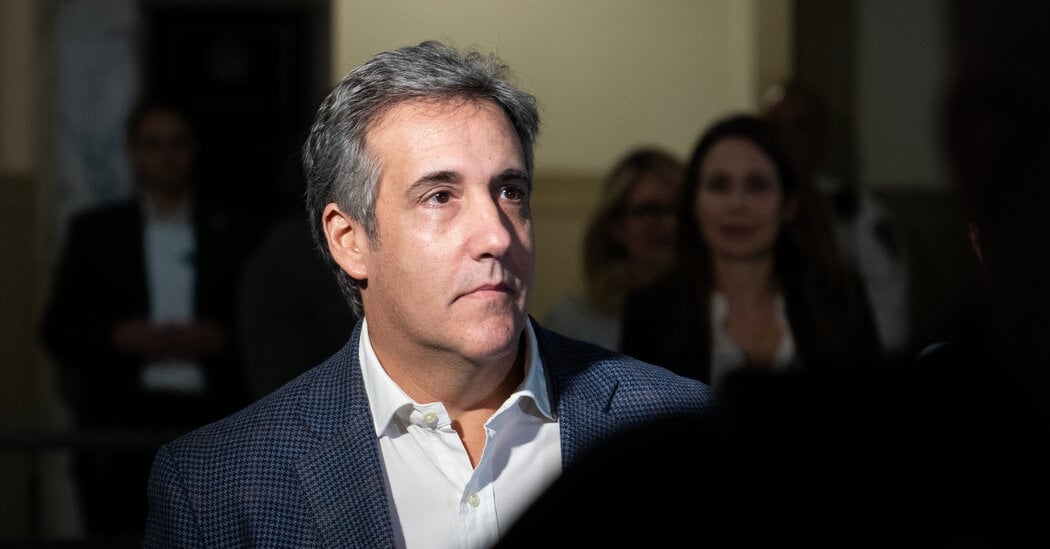
Michael Cohen’s public reconciliation with Donald Trump has exposed the former fixer’s struggle to rebuild an identity after years spent attacking the president and testifying against him, according to people who know him and comments from Cohen himself.
Cohen, once among Trump’s most trusted allies, has recently turned his criticism towards the New York prosecutors who pursued cases involving the president. In a Substack essay, he argued that the system was “broken and abusive”, insisting he would not become “a puppet” after experiencing what he described as official mistreatment.
When a former associate, Carducci, challenged him over appearing to help Trump undermine the cases, Cohen replied by text: “I have attacked him and the administration 998 out of 1000 times.” He said his criticism of Letitia James, the New York attorney general, and Alvin Bragg, the Manhattan district attorney, was intended to expose what he regarded as abuses of the justice system.
The shift has followed a period in which Cohen said his life had been “shredded to pieces”. On his radio show, he described the experience of being publicly targeted and watching his family suffer while he tried to recover from the collapse of his career and reputation.
“I know what it feels like to take hit after soul-crushing hit, to be bloodied and knocked to the dirt while a crowd of millions cheers for your destruction,” Cohen said. He added that he had been left to “pick up the shattered pieces” of his life alone.
Greg Ehrlich, a former friend who said he had helped introduce Cohen to Trump, believes the president remained central to Cohen’s sense of self. “People have their sect, their team,” Ehrlich said. “It’s your identity. His identity was Trump.”
Cohen’s opposition to Trump had provided him with a second public role after their relationship broke down. But Ehrlich said that, after years of conflict, Cohen once again needed the identity he had built around his former employer.
That change was clear when the pair spoke on Cohen’s 77 WABC radio programme in August. It was their first public conversation since their bitter falling-out and followed Cohen’s claims that the two men had made peace.
Cohen sounded eager to revisit their years together, addressing Trump as “Boss” and recalling the period when he had stood at his side. Trump, however, remained distant and used the conversation to repeat his claim that Cohen had withdrawn his evidence against him.
“You took it back,” Trump told him. “I wouldn’t even be talking to you right now if you didn’t, to be honest.” Cohen’s alleged recantation has been central to the renewed relationship, although the claim does not accurately reflect his earlier testimony.
The interview marked a striking reversal for Cohen, who became a key witness against Trump after their split and served prison time in connection with crimes he said had been committed while carrying out work for his former boss.
For Trump, the reunion offered an opportunity to portray the legal cases against him as politically motivated. For Cohen, it represented a return to the relationship that had once defined his professional life — even after he had spent years building a public identity in opposition to it.
