


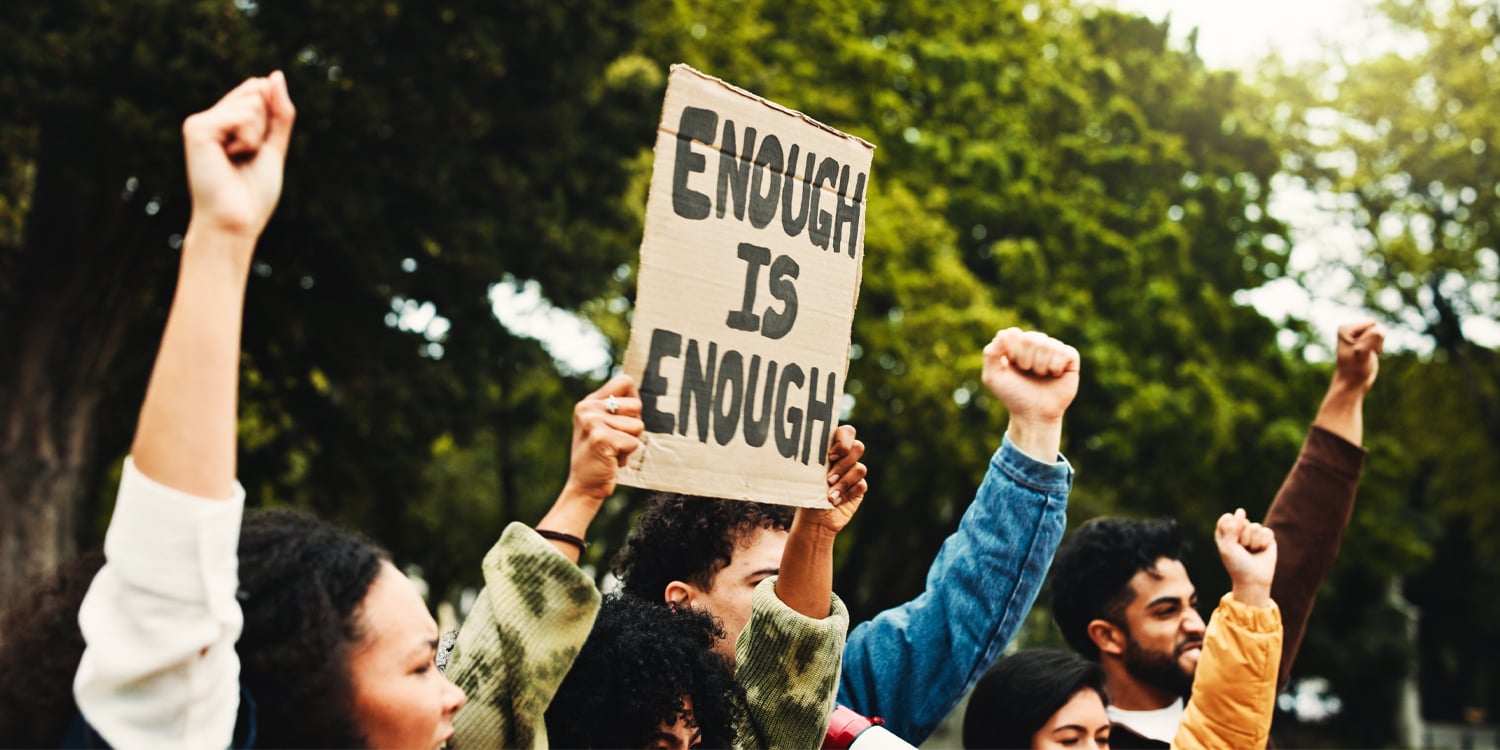
A new study suggests that anger about the state of the country shapes political action in ways that depend on people’s race and gender. The research finds that angry Black women and white women engage across a wider range of political avenues than their male counterparts, a pattern described as the “intersectional anger gap.” The findings were published in Public Opinion Quarterly and are based on analyses by Sara Morell of The College of New Jersey and Marzia Oceno of Florida International University.
Political scientists routinely examine emotion as a driver of political participation. Anger is seen as a catalyst that pushes individuals to act—whether by volunteering for campaigns, donating money or turning up to demonstrations. However, researchers emphasise that people are more likely to pursue formal electoral routes when they believe the system will respond to their voices, a belief known as political efficacy.
Previously, studies highlighted a racial divide: white Americans tended to channel anger into electoral participation, while Black Americans were more inclined toward non-electoral protest, often linked to long-standing exclusion and distrust of formal politics. The new work asks whether gender interacts with race to alter these patterns further.
To test their ideas, the scholars analysed data from a large survey conducted around the 2020 presidential election. The sample comprised 6,661 adults who identified as white or Black and as male or female. Respondents were asked how angry, outraged or irritated they felt about the direction of the country, with controls for age, education and household income.
The same survey also measured electoral participation, asking about attempts to persuade others to vote a particular way, attendance at rallies, and donations, along with whether respondents had worked for a campaign or donated to a political group. Self-reported turnout for the November election was also recorded.
In electoral terms, distinct patterns emerged. White men with higher anger were significantly more likely to engage in formal electoral activity, such as persuasion, online rallies and donations. By contrast, Black men showed little heightened electoral participation when angry and were even less likely to report campaign work.
Women told a different story. Both white women and Black women exhibited higher levels of electoral participation when anger rose, suggesting that angry women mobilise across a broader set of formal political tools than men.
Notably, Black women reported the highest average anger in 2020, and their anger corresponded with the largest measured increase in campaign engagement among all four groups. Angry Black women were particularly active in persuading others, wearing campaign buttons and working on campaigns, underscoring the central role of Black women in contemporary electoral politics.
Regarding voting itself, anger did not predict turnout for white men or white women, the researchers found. They suggest that voting may be a baseline expectation for politically active individuals, with anger more likely to drive activities that require greater time or effort, such as volunteering or donating.
A second, separate panel survey followed 3,529 adults across two periods: immediately after the 2020 election and after the 2022 midterms. This wave focused on non-electoral participation outside traditional campaigns, including protests, signing petitions, posting political messages online and boycotting products for political reasons in the previous year.
White men again followed the established pattern, with anger not leading to higher non-electoral participation in either period, aside from a small uptick in boycotting in 2022.
Black men showed a delayed response. In 2020 anger did not significantly predict protest or petition activity, but by 2022 angry Black men were notably more likely to engage in non-electoral actions, particularly petition-signing and online postings.
Women demonstrated broader engagement routes. White women were especially prone to translate anger into non-electoral activity—signing petitions and boycotting products—in both 2020 and 2022. After the 2022 Supreme Court decision overturning federal abortion protections, white women reported the highest anger levels among all groups while maintaining high non-electoral activity.
For Black women, anger consistently linked to one clear form of non-electoral action: attending protests. In both survey waves, angry Black women stood out as the only group with a persistent link between anger and physical protesting, reflecting the historic centrality of Black women in civil rights and social justice demonstrations.
The researchers caution that the surveys measure general anger toward the state rather than anger over specific policy issues. Without issue-specific data, it is harder to explain why certain groups turned to protest or campaign work in particular moments, including the mass protests in 2020 focused on police brutality.
They suggest that anger may need to combine with other psychological factors—such as a sense of community fate or a personal stake—to prompt people into street action. Future work could examine how anger tied to particular issues influences participation and extend the intersectional approach to include Hispanic and Asian American populations.
In summary, the study—titled The Intersectional Anger Gap: How Race and Gender Condition the Impact of Anger on Participation—highlights how overlapping identities shape political emotion and action. The authors, Sara Morell and Marzia Oceno, argue that understanding these dynamics reveals the varied ways Americans mobilise to defend their political interests.
