


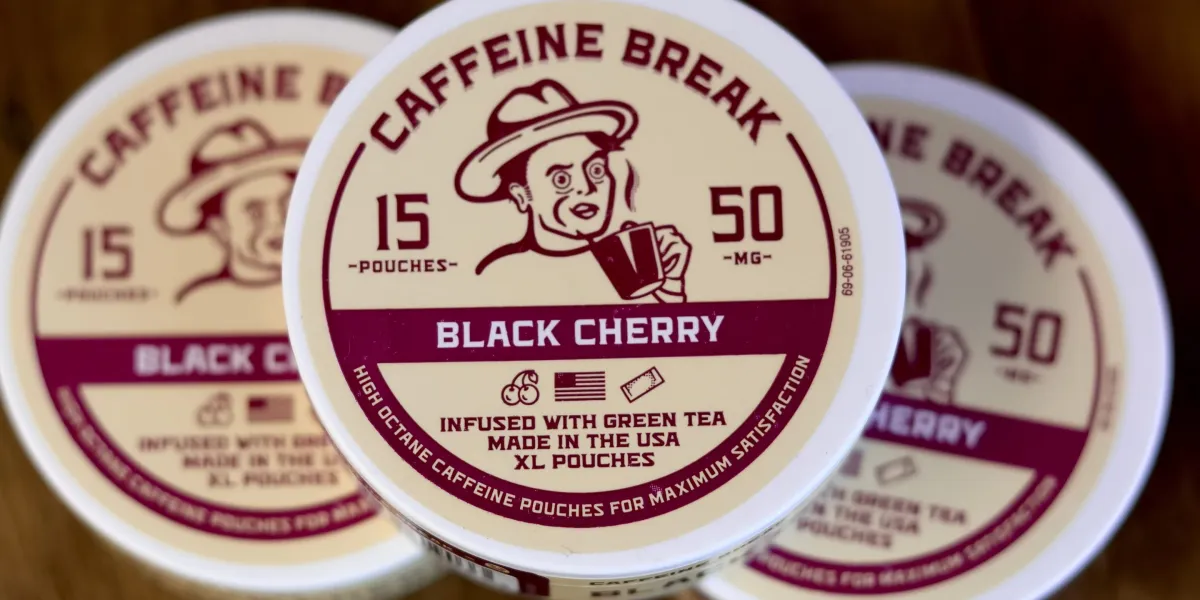
Schools in several US states are banning caffeine pouches after concerns about their health effects and the difficulty of distinguishing them from nicotine products. Districts in New York, Kansas, Pennsylvania and Missouri have restricted the pouches on school grounds or included them in student conduct policies.
The small sachets are placed between the lip and gum, where they release caffeine through the tissues in the mouth. They are marketed as a discreet way to increase energy and concentration, with some containing up to 200 milligrams of caffeine — roughly the amount in two cups of coffee.
Unlike caffeinated drinks, the pouches can be used without spitting and may be difficult for teachers to notice. They are sold in flavours including coffee, mint and fruit, prompting concern among some health officials that younger users could mistake them for sweets or chewing gum.
The products also resemble nicotine pouches. School staff say they cannot always establish what a packet contains, making enforcement difficult and raising concerns that students may be using them without supervision.
Schools introduce restrictions on caffeine pouches
Holton High School in Kansas prohibits the products under rules covering tobacco and simulated tobacco items because staff cannot reliably determine their contents. Breaches may lead to disciplinary action or citations from law enforcement.
Peru Central School District in New York added caffeine pills and pouches to its code of conduct after officials raised concerns at a school board meeting in May 2025.
“The real issue for us as a school, in the middle and high schools in particular, is that when students are using pouches it’s impossible for us to know what the pouch is,” Joha Battin, the district’s associate director of student services, said at the meeting.
Other schools, including Onsted Middle School in Michigan and North Middle School in Wisconsin, have warned families to keep the products at home. It remains unclear whether use is increasing among American pupils, although some schools say they have seen more caffeine pouches on campus.
There is no federal minimum purchase age for caffeine pouches. Federal nutrition standards generally prevent schools from selling caffeinated drinks to elementary and middle school pupils during the day, but do not cover products brought from home, leaving individual districts to decide how they should be handled.
Health concerns over caffeine use among pupils
The American Academy of Pediatrics says caffeine from the pouches enters the bloodstream and can take effect within minutes. It recommends that children avoid caffeine, while the US Food and Drug Administration says up to about 400 milligrams a day is not generally associated with health problems for most healthy people.
Excessive consumption can cause a faster heart rate, tremors, anxiety, sleep problems, seizures and other complications, health organisations including Nationwide Children’s Hospital have warned. Caffeine may remain in the body for more than eight hours, depending on an individual’s metabolism, and its effects can be followed by headaches, irritability and tiredness.
Rob van Dam, a professor of exercise and nutrition sciences at George Washington University, said pouches could worsen anxiety and sleep difficulties among teenagers already facing academic and social pressures.
“You can get into a vicious cycle where kids just don’t get enough sleep for their normal development and mental health,” he said.
Health experts are also concerned that pupils may fail to account for caffeine consumed from several sources, including pouches, energy drinks and other foods and beverages. Nearly two-thirds of young people aged 12 to 19 consumed caffeine on a given day, according to a July report from the Centers for Disease Control and Prevention, with average daily consumption of about 31 milligrams.
