


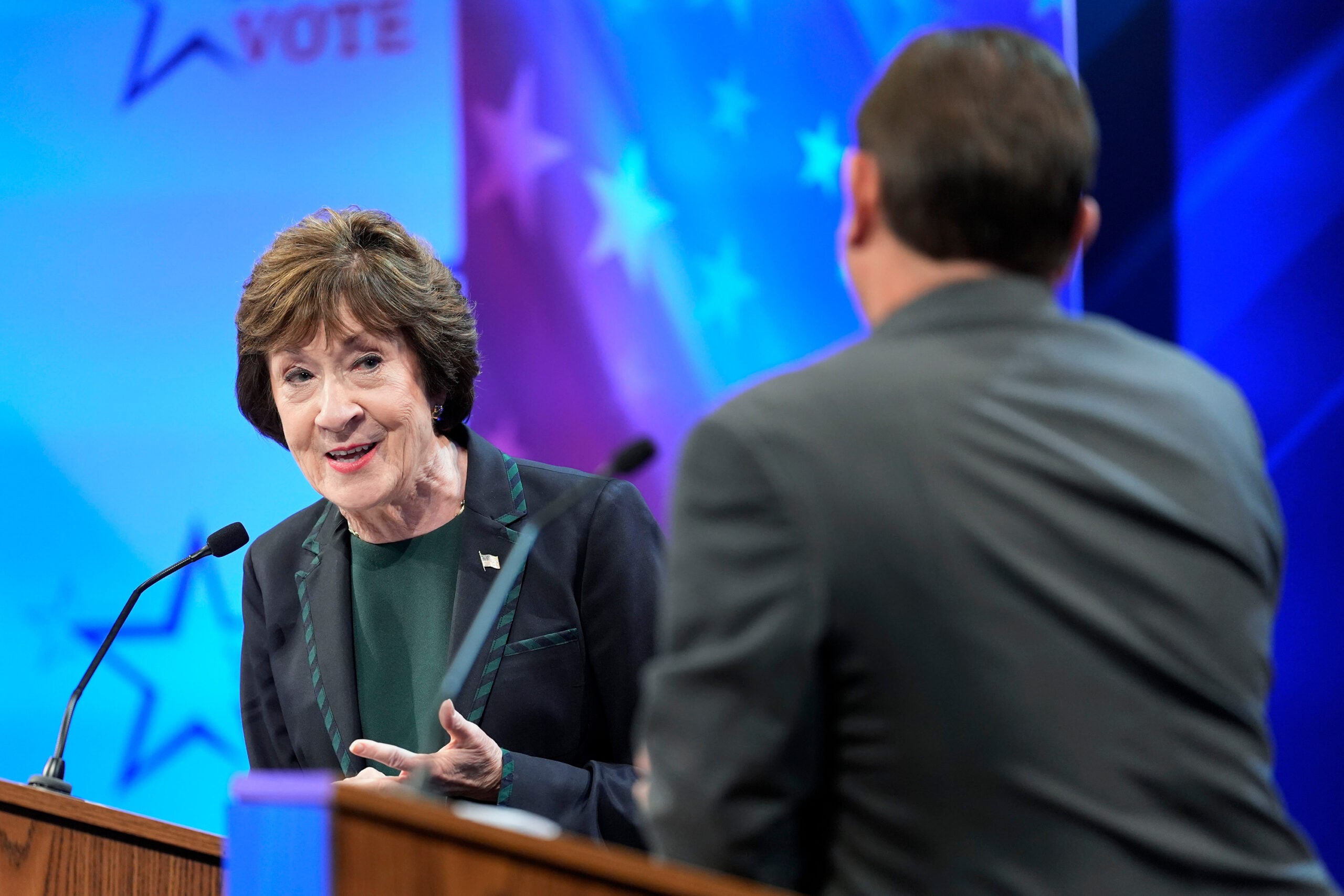
US statewide candidate debates have exposed the difficult choices facing Republicans less than two weeks before Election Day, with Donald Trump’s influence, the cost of living and opposition to data centres dominating contests across the country.
Democrats repeatedly attempted to link Republican candidates to the president’s policies, while Republicans sought to distance themselves from him in more politically challenging states or emphasise their relationship with him where his support remains important.
Republicans tread carefully over Donald Trump
In New Hampshire, former Republican senator John Sununu said he had “never met President Trump” and insisted he had “never hesitated to stand up to my party or the president when they’re wrong”. He singled out the administration’s policies on trade, Iran and Ukraine for criticism.
Minnesota’s Republican Senate nominee, Michelle Tafoya, said she disagreed with Mr Trump’s tariffs and immigration enforcement. Asked whether she would appear on stage with him, she replied: “I am talking to Minnesotans. Theirs is the only endorsement that I care about.”
In Maine, Republican senator Susan Collins highlighted that she had voted against the president more than 100 times this year and criticised his approach to Iran. Bobby Charles, the Republican candidate for governor, also opposed what he called Mr Trump’s “extended engagement” in Iran, saying: “I know what it means to get stuck in a place.”
Some Republicans complained that their Democratic opponents were making the debates excessively focused on the president. Former Michigan representative Mike Rogers said: “The bingo game ought to be, how many times can he put the word ‘Trump’ in any answer that he has given in the last, whatever, 30 minutes? It’s ridiculous.”
In more strongly Republican states, however, candidates were more willing to defend their links with Mr Trump in an effort to mobilise his supporters. Kansas senator Roger Marshall said: “We need the Trump voters to come out.”
Mr Marshall added that he could disagree with the president while maintaining a relationship with him, saying: “President Trump is not always right. But I do think that it’s great that I have a relationship that I can pick up the phone and discuss with him the pros and cons of what he’s contemplating.”
Affordability dominates the debates
Economic pressure was another consistent theme, with Democrats blaming tariffs and the war in Iran for higher prices. Republicans countered by attacking policies associated with the previous administration.
Georgia Republican representative Mike Collins said inflation had been caused by “that Bidenomics, that Green New Deal that my opponent voted for”.
In Maine, Ms Collins took a different approach, saying both she and Democratic Senate candidate Troy Jackson would have opposed Canadian tariffs. She also described the war in Iran as “not well thought out”.
Iowa Republican Senate nominee Ashley Hinson said she would pause the gasoline tax and acknowledged that the conflict was contributing to financial pressure. “I trust in our U.S. military, the greatest fighting force in the world, to bring this to a close as quickly as possible, because I know people are being squeezed,” she said.
Democratic candidates largely concentrated their attacks on the president’s economic policies. Georgia senator John Ossoff said: “These tariffs are crushing our state, and we’ll repeal those tariffs.”
Iowa state representative Josh Turek said tariffs and the war in Iran had hurt Iowa more than any other state, while Kansas Democratic Senate candidate Adam Hamilton told voters: “If you appreciate having record diesel fuel prices … then I’d say vote for Roger Marshall. If you want change, then I’d like to ask you to vote for me.”
Data centres become a bipartisan target
One of the clearest areas of agreement was opposition to data centres, despite differences over how they should be regulated. Candidates from both parties backed a greater role for local authorities, even as Mr Trump continued to support the facilities.
Rick Jackson, a Republican businessman running for governor in Georgia, said: “If you don’t want a data center, I will stand up and defend it and make sure you don’t get it.” Ms Hinson similarly argued that “local communities know best”.
In Maine, both Senate candidates supported safeguards to prevent data centres from increasing utility bills for local residents. Iowa’s two gubernatorial candidates, Democrat Rob Sand and Republican Zach Lahn, backed ending tax breaks for developers.
In New Hampshire, both Senate candidates supported Republican governor Kelly Ayotte’s call for a statewide moratorium. Mr Sununu said decisions on data centres should be handled in the same way as other major infrastructure projects.
“At the end of the day, it’s up to our governor, our local leaders, to make decisions about any big infrastructure, transmission, power plants, new factories, and data centers should be treated just the same,” he said.
Gaffes and confrontations on stage
The debates also produced a series of awkward moments, underlining the risks for candidates who agree to appear in public with their opponents.
In Alaska, Democratic former representative Mary Peltola appeared to refer repeatedly to a notecard during a debate with Republican senator Dan Sullivan. Mr Sullivan asked the moderator: “We weren’t supposed to get these questions beforehand, were we?”
He later wrote on social media: “You can’t cue-card your way through the Senate.” Mr Sullivan had himself been mocked earlier in the campaign after looking at Ms Peltola’s answer during a lightning-round question. “Happy to help, Dan,” she replied online.
Mr Marshall faced shouts of “you don’t live here” during a debate at the Kansas state fair while discussing his residence in Kansas and his home in Florida.
In Maine, Mr Jackson told Ms Collins to “shut up” after a protester interrupted a debate and she said the demonstrator was “obviously one of Troy’s supporters”. Mr Jackson later said he did not regret the outburst, while Ms Collins used it in an attempt to portray him as a sexist hothead.
Ms Hinson also drew attention during an exchange about Social Security when she criticised younger people’s saving habits. “Millennials are the worst group of savers in the country right now and have the least amount of savings,” she said.
Major races where voters saw no debate
Several high-profile candidates declined to face their opponents, meaning voters in a number of battlegrounds were denied the traditional head-to-head contest.
In Texas, attorney general Ken Paxton rejected repeated invitations, including one from Fox News, despite Mr Trump urging him to take part. Ohio’s Senate candidates had still not agreed to a debate, while North Carolina had no debate scheduled between the major-party Senate nominees for the first time in almost 30 years.
The refusals crossed party lines. Democratic Arizona governor Katie Hobbs and Ohio Democratic nominee Amy Acton declined to debate their opponents. Republican governor Greg Abbott of Texas and Alabama senator Tommy Tuberville also rejected invitations.
Mr Tuberville, who is running for governor of Alabama against Democratic former senator Doug Jones, said: “There’s so much difference between us, I mean, there’s no reason to get up there and argue about differences of opinion.”
With most statewide debates now completed, the contests have shown candidates attempting to balance loyalty to their parties with the demands of local electorates — while deciding whether the potential risks of appearing on stage outweigh the benefits.
