


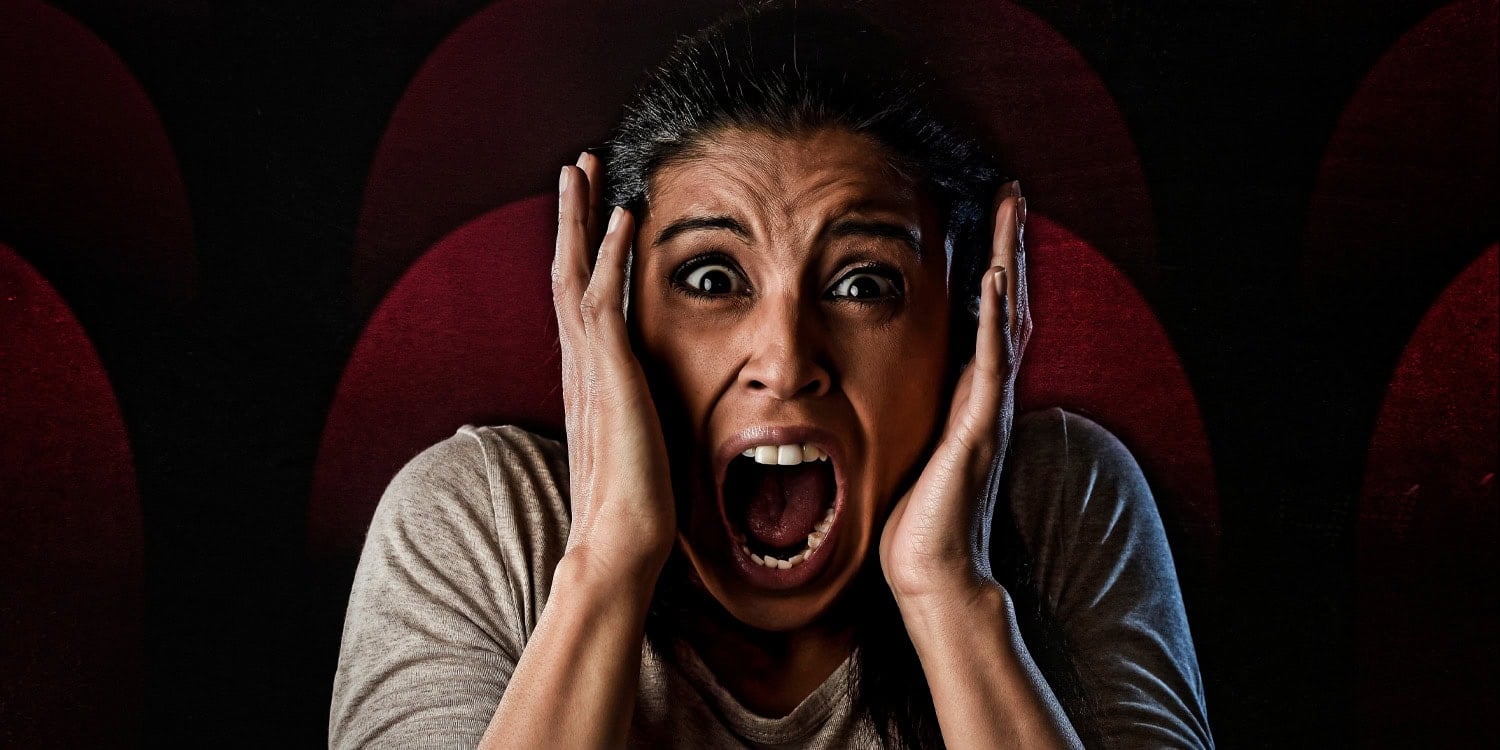
A new study published in the journal Emotion examines whether shared fear in recreational settings can strengthen social bonds. Focussing on adults who voluntarily take part in frightening activities with others — notably a commercial haunted attraction in Florida — the research finds that such experiences can enhance a sense of closeness, but only if participants engage in post-event reflection and discussion. The work, Haunted Attraction: The Effects of Recreational Fear on Interpersonal Bonding, is led by Jane K. Wiley, an undergraduate from the University of Florida and an incoming social psychology doctoral student at the University of Virginia.
Humans are inherently social, and forming bonds is linked to health and wellbeing. The report notes that people share positive emotions in settings like comedy or concerts, and that fear can push individuals to seek company too. When people confront a common threat, they often prefer to face it together, the researchers say.
Previous investigations into fear and bonding often relied on laboratory or real-threat scenarios. This team set out to examine the effect of fear in a recreational, entirely simulated context rather than a genuine danger.
“This topic is a personal one for myself and my PI, Dr. Ken Swan,” Wiley said. “He and I are huge horror and haunted house fans. We have shared plenty of stories (and have heard many others from haunted house guests) of how going through a haunted house together can be a strong bonding experience.”
Wiley added that anecdotal success stories helped spark the project. “A first date he had at Halloween Horror Nights led to a happy marriage, and I got very close with a best friend — Garrett Johnson, another author of the paper — after we went through a haunted house together,” she said. “This interpersonal focus had not been researched in recreational fear literature when we began, so that was what drew us to studying what we did.”
Millions seek out recreational fear every year by riding roller coasters, watching horror films, or visiting haunted attractions. The researchers conducted five studies across three Halloween seasons at a commercial haunted attraction in Florida to test whether playful fear translates into stronger social ties and whether the effect endures when the threat is simulated rather than real.
In the first study, 986 attendees completed a survey immediately after finishing a sensory deprivation haunted house. They rated fear, enjoyment, and closeness to the person they felt closest to in their group, on a seven-point scale, and noted whether they held hands or talked with their companion during the experience. The team found that higher reported fear predicted a stronger sense of bonding, while physical contact and conversation also predicted greater closeness, and enjoyment contributed as well.
The second study, with about 500 participants, asked respondents to complete surveys both before and after the attraction. Fear again predicted perceived closeness, but the measure of change from before to after showed no clear difference, a ceiling effect apparently limiting how much closeness could be recorded on a seven-point scale.
The third study involved 554 participants and shifted focus to the group member they felt least close to or who they argued with most. About 45 per cent of participants said the experience made them feel closer to that person, and roughly 64 per cent said the overall group felt closer as a result of the encounter. Fear, physical contact and enjoyment remained strong predictors of bonding in this more distant relationship context.
A fourth study of 263 attendees again targeted the least-close relationship, seeking pre- and post-experience closeness ratings. The same predictors held, and for the first time the researchers detected a statistically significant rise in closeness — though the average increase was only 0.21 on a seven-point scale. The small numerical shift prompted questions about why people reported feeling closer despite only a marginal change on the scale.
“Our most surprising finding was when we kept seeing no pre-to-post change in closeness, prior to figuring out that post-haunt reflection is essential for bonding to occur,” Wiley noted. “We carried out two different studies with before and after surveys, one investigating closest dyads and the other investigating least-close dyads, and neither of them showed significant change.”
She added that the lack of initial change was hard to interpret at first but ultimately led the researchers to qualitative methods. The team conducted a fifth study involving face-to-face interviews with 20 guests immediately after the haunt, asking what feeling closer meant and why numerical scores might not reflect the relational shift. The interviews highlighted that bonding often emerges during post-experience processing, when people talk, reminisce, and swap stories on the journey home, creating space for vulnerability.
“Haunted houses seem to have the ability to make two people feel closer together, whether these two people were previously very close or not,” Wiley explained. “In other words, going through a haunted attraction with either your best friend or your annoying coworker will likely prove to be beneficial to the relationship. However, this link is quite contingent on what you and that other person do after the experience.”
The researchers emphasise that post-haunt reflection is crucial to bonding: the experience itself may not strengthening the relationship significantly unless accompanied by talk, laughter and reminiscence about the scares after the event.
As with any study, the authors acknowledge limitations. Wiley notes the use of convenience samples drawn from people already at the haunted attraction, which means race, ability and income were not evenly distributed, and conclusions are best generalised to people who attend such events with friends or family.
Surveying took place inside the venue’s bar area, a chaotic, high-traffic space with loud music and alcohol present, which may have influenced responses. The researchers also caution that they looked only at haunted houses, so conclusions may not extend to other forms of recreational fear such as horror films or extreme sports.
Some participants did not feel closer, suggesting that fear can strain a relationship if a partner feels unsupported or mocked during moments of vulnerability. The researchers describe recreational fear as an interpersonal stress test, wherein supportive responses can deepen bonds, while poor reactions may erode them.
Looking ahead, the team hopes to expand the work with experiments that manipulate whether participants have time for post-experience reflection and to explore whether similar bonding patterns occur with other forms of recreational fear. Wiley said: “We would definitely like to expand on this study, particularly adding an experimental manipulation where some participants have time for post-experience reflection while others don’t, in order to investigate the cause-and-effect relationship. We’d also like to see if this bonding pattern exists for other forms of recreational fear.”
The study Haunted Attraction: The Effects of Recreational Fear on Interpersonal Bonding was authored by Jane K. Wiley, Alexa A. Rivers, Otho Garrett Johnson, Cristina S. Negraru, Jake T. Watson, Tara M. Perreault, Rebecca Martin, Sara C. Slayton, Steffano I. Segovia-Palacios, Benjamin R. Stanisky, Kate E. Doherty, and Lawton K. Swan.
