


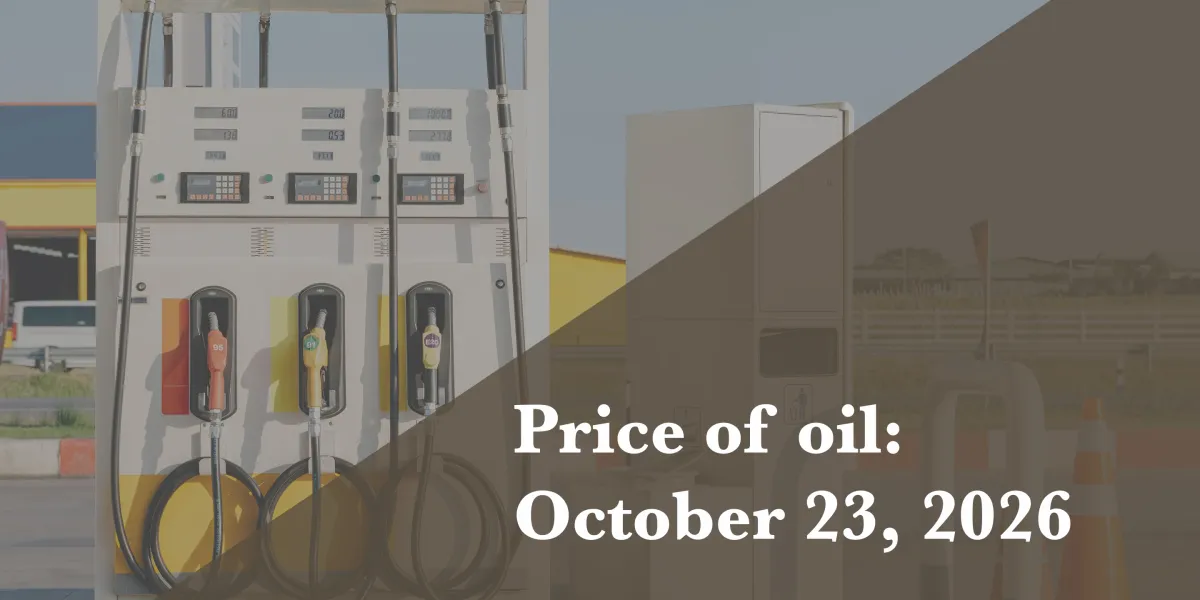
The Brent crude oil price rose to $116.03 a barrel at 7.15am Eastern Time, up $2.82 from the previous morning and almost $50 higher than a year ago.
The benchmark was also 16.60% above its level one month earlier, when oil stood at $99.51 a barrel. Compared with the previous day’s $113.21, the increase was 2.49%.
Why oil prices can move sharply
Oil prices are driven chiefly by supply and demand, although expectations about future production and consumption can move the market quickly. Geopolitical tensions, wars, recessions, supply disruptions and decisions by OPEC+ can all influence the direction of prices.
The market trades continuously while futures exchanges are open. Buyers and sellers agree prices for oil to be delivered in the future, meaning the quoted price can change as companies and investors respond to new information.
Brent is regarded as the main global benchmark and is used to track much of the world’s traded crude. West Texas Intermediate is the principal benchmark for North America.
Impact on petrol and the wider economy
Crude oil accounts for a large share of the cost of petrol, so a sustained rise can feed through to prices at the pump. However, motorists also pay for refining, transport, taxes and the margin added by service stations.
Petrol prices often fall more slowly than they rise, a pattern sometimes described as “rockets and feathers”. Higher oil prices can also raise the cost of transporting goods, adding to prices faced by consumers.
Oil and natural gas markets are linked because both provide energy for households and industry. Where businesses can substitute one for the other, a rise in oil prices may increase demand for natural gas.
The United States can draw on its Strategic Petroleum Reserve during an emergency, including a major supply shock caused by sanctions, severe storm damage or war. The reserve is intended to provide temporary relief rather than serve as a long-term solution.
Oil’s volatile history
Brent crude has experienced substantial swings over several decades. Prices surged during the first major oil shock in the early 1970s, after Middle Eastern exports were cut and an embargo was imposed on the United States and other countries during the Yom Kippur War.
Prices fell in the mid-1980s amid weaker demand and increased production from non-OPEC countries. They rose again in 2008 as global demand strengthened, before plunging alongside the global financial crisis.
During the Covid-19 lockdowns in 2020, demand collapsed and oil prices fell below $20 a barrel. The history of the market reflects its sensitivity to economic conditions, supply decisions, conflict and changes in energy policy.
