


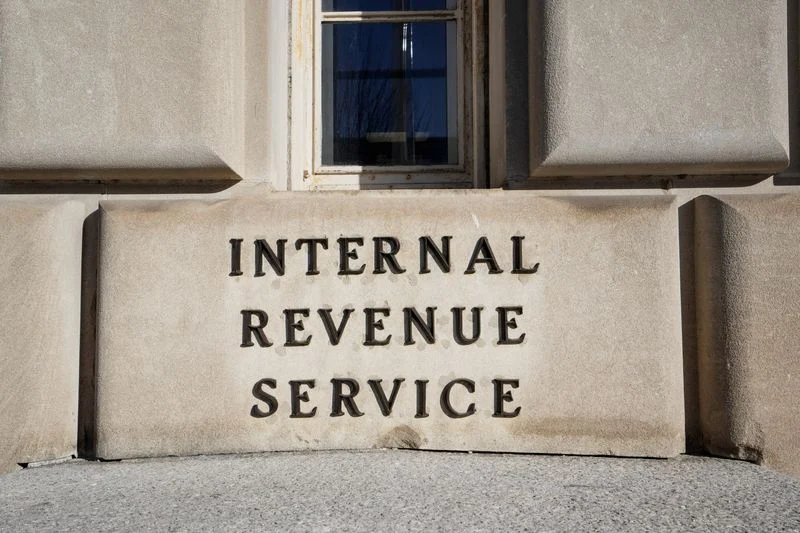
A US appeals court has upheld an order blocking an Internal Revenue Service procedure that allowed immigration authorities to obtain the addresses of thousands of taxpayers, ruling that the Trump administration’s data-sharing practice breached federal law.
The three-judge panel of the US Court of Appeals for the District of Columbia Circuit found that the IRS had disclosed more than 47,000 taxpayer records to Immigration and Customs Enforcement (ICE) in 2025 under a system introduced as part of the administration’s wider immigration crackdown.
The arrangement allowed ICE to ask the IRS for the last known addresses of up to 1.28 million people suspected of living unlawfully in the United States. The IRS ultimately handed over 47,289 records before a lower court intervened.
In its ruling on Tuesday, September 8, the appeals court said the procedure failed to ensure that ICE requests met the strict conditions imposed by Congress on the disclosure of tax information.
The judges highlighted the fact that ICE could submit a five- or nine-digit number in an address field, even when it was not a genuine US postcode. The court said the IRS had therefore failed to require an actual taxpayer address, as required under the law.
The procedure also allowed the agency to automate the review of millions of records without individual checks to establish whether each disclosure satisfied the statutory requirements.
“But that’s a gripe with Congress, not the court,” Judge Cornelia Pillard wrote in response to the administration’s argument that the injunction hindered federal law enforcement.
The restrictions on sharing tax information were introduced after the Watergate scandal exposed the misuse of taxpayer records during the presidency of Richard Nixon. Federal law generally requires agencies seeking IRS information to show that it is linked to a specific qualifying criminal investigation.
The court said ICE’s request did not provide sufficiently specific reasons for seeking the information, while the IRS had accepted a broad explanation covering a batch of 1.28 million records.
Groups including the Center for Taxpayer Rights and the Main Street Alliance brought the legal challenge. Skye Perryman, whose organisation Democracy Forward represented the plaintiffs, said the ruling stopped what she described as unlawful conduct and upheld privacy protections created after Watergate.
The IRS and the Department of Homeland Security, which oversees ICE, did not respond to requests for comment.
