


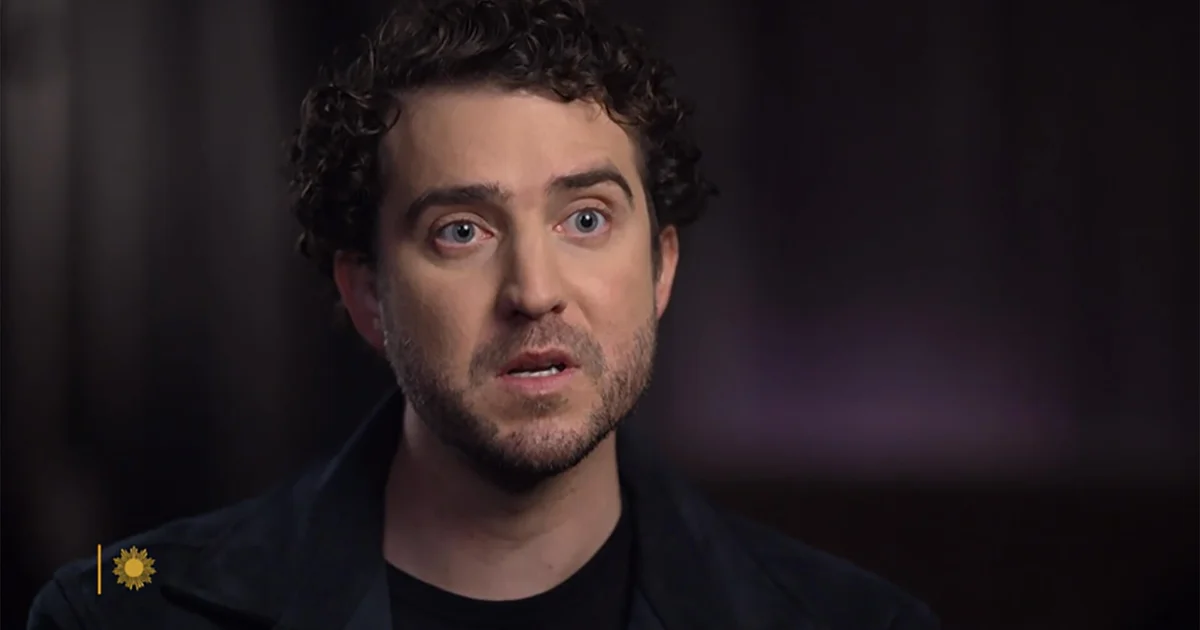
Billy Evans has given his first television interview about the documentary You Can See Everything, defending his relationship with Elizabeth Holmes while criticising the way he is portrayed in the film.
Evans, 34, said the experience had taught him that “you can’t lose your voice”, particularly after Holmes endured intense scrutiny in the press. The couple live in Texas with their two young children, close to the prison where Holmes is serving her sentence.
The documentary was made by Lance Oppenheim and Nathan Fielder, who spent 34 days living with Evans and Holmes in the weeks before Holmes reported to prison in 2023.
Evans, an MIT graduate who has worked in the technology sector, emerges as a controversial figure in the film. He is presented as controlling and manipulative, but rejected that characterisation.
“I am not some controlling monster who’s leveraging his wife for insert-whatever-anybody-is-saying,” he said. “No, I am not those things.”
He acknowledged that the portrayal was painful, but said he did not intend to respond with anger. “I’m going to live my life with integrity and with who I am, and I hope people can see that over time,” he said.
Despite the depiction, Evans said he loved the documentary and believed it had achieved his main aim: allowing audiences to see Holmes as he knows her.
“I would have preferred for that not to be the case, but it’s entertainment, you know, and I didn’t get to control that edit,” he said. “When I watch that movie, I see the person that I love in exactly who she is.”
Evans questions consent in documentary filming
Some of the film’s most uncomfortable scenes show Evans naked in the shower. He said he knew cameras were filming in the house, but had not agreed to that footage being used.
“I did not give consent to do that,” he said. “I was just as surprised as the rest of the country to have my whole body on camera for the world to see.”
Evans said filming took place for as many as 16 hours a day and that there had been “inappropriate” and awkward requests, including material he believed was not suitable for television. The film’s production company, A24, said everything filmed was done with the couple’s consent.
He also said the documentary deliberately leaves questions over what viewers can trust, including speculation that Fielder developed feelings for Holmes. Evans said some moments appeared designed to highlight the filmmaker’s own possible bias.
Evans has not spoken to Fielder since watching the finished film, although he said he had no intention of suing the filmmakers.
Holmes was once celebrated as a pioneering entrepreneur before coming under investigation over claims about Theranos, the company she founded. She had claimed its technology could test for hundreds of diseases using a single drop of blood.
Evans said he did not know who Holmes was when they first met in 2017, despite having seen her at her office earlier that week.
He said he now carries a gun at all times because he and his family receive daily threats of violence. He described one incident in which a driver allegedly shouted threats about knowing where he lived and where his children slept.
Despite the fallout from the documentary, Evans said he would make it again, believing he would simply have a better understanding of what he was agreeing to.
He and the children visit Holmes in prison every week. Evans said the visits had become “strangely normal”, although he regretted that his daughter’s first steps took place inside a federal prison.
Holmes could be transferred to a halfway house next summer. Evans said he no longer counts the days of her imprisonment because doing so had become too painful.
“I miss her so much,” he said, recalling a conversation with Holmes before the interview. “She said, ‘Just be zen. Enjoy it. Embody love. And I’ll talk to you, when you’re done.’”
