


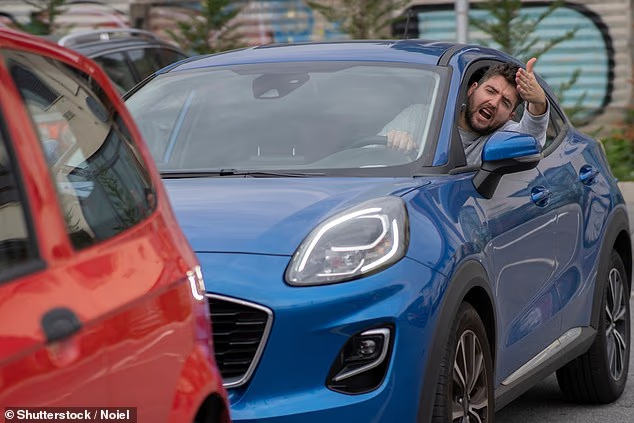
British drivers have admitted to being hypocrites behind the wheel, with 74 per cent saying they regularly do things they criticise other motorists for doing.
Refusing to let another vehicle pull out was the most common example, admitted by 17 per cent of those surveyed. Other frequent double standards included failing to indicate when turning or changing lanes and refusing to let another car merge, both reported by 14 per cent.
A further 12 per cent said they had failed to thank another driver after being allowed out, while the same proportion admitted not acknowledging somebody who had given way to them.
Cutting into a queue of traffic and becoming impatient with a learner or inexperienced driver were each reported by 11 per cent. One in ten said they had made an offensive hand gesture to another motorist, despite disliking the same behaviour from others.
Tesla drivers recorded the highest level of self-confessed rule-breaking, at 88 per cent. Cupra drivers were also joint first in the ranking of offenders, followed by Skoda drivers on 83 per cent and Kia and Renault drivers, both on 81 per cent.
Seasonal driving habits cause frustration
The research also examined the driving habits that irritate motorists during autumn and winter. Failing to dip full-beam headlights was the leading complaint, cited by 60 per cent, followed by dazzling lights at 59 per cent.
Driving without lights in gloomy conditions annoyed 41 per cent of those surveyed. Other frustrations included following too closely in wet or icy conditions, using fog lights unnecessarily and setting off with only a small section of a frosted or iced windscreen cleared.
Despite 96 per cent describing themselves as good and polite drivers, 93 per cent said at least some other motorists were bad drivers. Two per cent went further, saying every other motorist in the UK was below par.
Drivers said they sounded their horn an average of three times per journey. The most common reasons were another driver pulling out in front of them, cited by 37 per cent, being cut up at 36 per cent and failing to move when traffic lights changed at 35 per cent.
Motorists said they typically became annoyed by another driver about 35 minutes into a journey. Yet they also reported appreciating a driver who acknowledged them with a wave around 15 times a week.
The survey was conducted by temporary vehicle insurance provider GoShorty. Its managing director, Phil Evans, said: “Things such as indicating, letting someone merge or simply acknowledging another driver might seem small, but they can make a big difference to how calm and considerate our roads feel.”
“What this research really highlights is how easy it is to notice poor behaviour in somebody else while overlooking our own. A little more self-awareness behind the wheel could go a long way towards reducing frustration and encouraging safer, more courteous driving.”
Mr Evans said reduced daylight, glare from headlights, rain, ice and poorer visibility made patience particularly important during autumn and winter.
He added: “Simple habits such as dipping your headlights at the right time, clearing your windscreen properly and leaving extra space in wet or icy conditions can make a real difference – and save you from a potential fine for breaking road laws!”
