


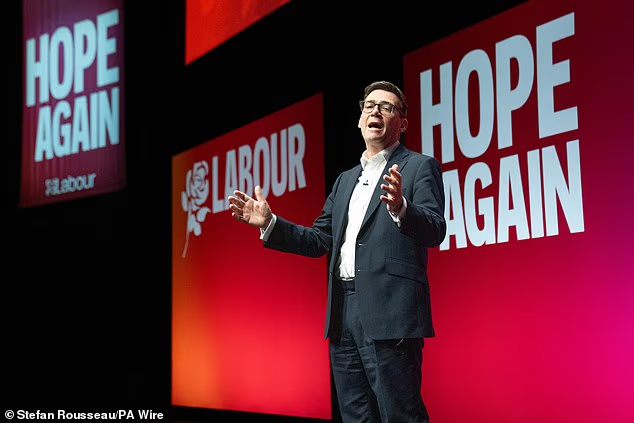
Andy Burnham could signal a change to the state pension triple lock in his first Labour conference speech as leader, as he sets out plans for an NHS-style social care system estimated to cost £18 billion a year.
The Prime Minister is expected to use his address to activists in Liverpool to argue that major reforms will require “honesty” about their cost, while outlining a broader programme of public ownership and intervention.
Labour ministers have so far refused to guarantee the triple lock beyond the current Parliament, although they insist the party’s manifesto commitment to retain it until the next election remains in place.
The policy increases payments by whichever is highest of inflation, earnings growth or 2.5 per cent. Any suggestion that it could be weakened has already prompted opposition from Labour’s union allies.
Sharon Graham, general secretary of Unite, warned that “picking the pocket of pensioners” would be “electoral suicide”. She said the party should consider wealth taxes before changing the pension guarantee.
“Going to a group of people who are getting around £12,500 a year in order to pay for it to take away their security is wrong,” she told BBC Radio 4’s Today programme. “I think it’s morally wrong.”
Ms Graham said the triple lock had not been discussed when she met Mr Burnham earlier in the week, but warned that changing it would suggest to working-class voters that Labour was not on their side.
Lucy Powell, Labour’s deputy leader and Education Secretary, said the party remained committed to the policy until the next election but declined to extend that guarantee further.
“The triple lock has really delivered for pensioners, in this country, over the course of this Parliament,” she told Sky News, adding that the state pension was expected to rise by about £2,000 a year.
Ms Powell said Mr Burnham’s proposals represented a wider discussion about how to meet the cost of tackling the social care crisis. Baroness Casey is conducting a review, and Mr Burnham has said reforms will not be implemented until after the next election.
Burnham to set out nationalisation plans
Mr Burnham will accuse the political establishment of taking Britain backwards and argue that “hope comes from honesty and from saying the things politicians usually avoid”. He is also expected to blame the problems facing the Government on what he calls the “flawed thinking of the last 40 years”.
His plans include a publicly owned “Great British Grid”, intended to bring UK energy costs into line with those in European countries within a decade. He will also call for greater public control over essential services including water, energy and housing.
Renationalisation of the railways is already under way, while ministers are considering other forms of intervention, including regional oversight boards led by elected mayors.
The Government is prepared to place Thames Water into a special administration scheme if a rescue plan fails, effectively taking on the debt-laden company’s liabilities. Labour sources said full nationalisation of major utilities was unlikely at this stage because of the cost.
Mr Burnham’s speech comes as the Government faces a difficult economic backdrop, with inflation, weaker growth and rising debt costs reducing the Chancellor’s room for manoeuvre under the fiscal rules.
John Healey, the Chancellor, has warned that Labour cannot embark on a spending spree similar to that which followed Tony Blair’s election victory in 1997. Spending cuts or tax rises are expected to be considered ahead of the Budget on October 28, although cuts would face strong resistance from Labour MPs.
