


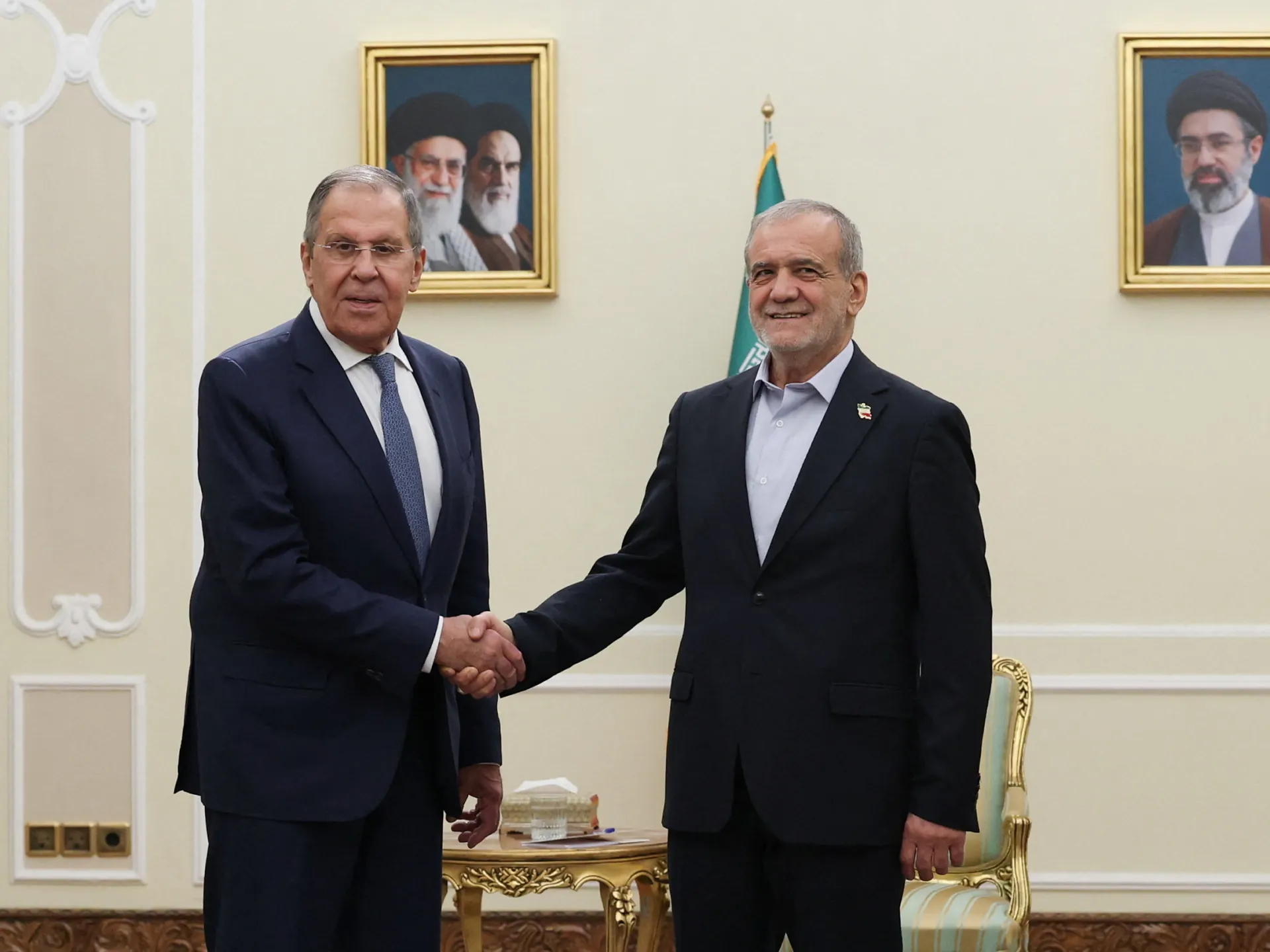
Russia is seeking to mediate a new nuclear agreement between the United States and Iran, after Foreign Minister Sergey Lavrov travelled to Tehran for talks with President Masoud Pezeshkian and other officials.
The visit followed meetings between Mr Pezeshkian and Russian President Vladimir Putin on October 8 and September 1. Media reports have indicated that Moscow has offered to help Washington and Tehran negotiate a possible deal, although the prospects for success remain uncertain.
Russia is regarded as having particular expertise in Iran’s nuclear programme. It is a major nuclear power and its state-owned energy company, Rosatom, is a leading force in the global civilian nuclear sector.
Moscow supports Iran’s right to develop domestic nuclear energy and is building two additional units at the Bushehr nuclear power plant. At the same time, it opposes Iran developing or acquiring nuclear weapons and does not want nuclear proliferation close to its borders.
Relations between Russia and Iran, which were historically difficult, have improved in recent years. Both governments have been drawn closer by their opposition to the United States, with Iran directly targeted by American action and Russia facing what it describes as an indirect conflict conducted through a proxy war.
In 2022, Washington openly set the goal of “inflicting a strategic defeat on Russia”. Iran subsequently transferred Shahed drone technology to Moscow.
The two countries signed a Treaty on Comprehensive Strategic Partnership in early 2025, setting out plans for expanded economic, political and military co-operation. Russia proposed including a mutual military assistance clause, but Iran declined.
Russia’s position also reflects its wider economic and regional interests. A settlement could help unlock the International North-South Transport Corridor to India, which runs through Iran, while Moscow wants to preserve relations with the Arab Gulf monarchies.
Although Russia may have benefited financially from higher oil prices following the closure of the Strait of Hormuz, the gains are considered short-term. A continuing blockade and wider instability would not serve Moscow’s interests.
Russia was also one of the eight parties involved in negotiations that produced the 2015 Joint Comprehensive Plan of Action, the agreement addressing Iran’s nuclear programme. The United States later withdrew, while France, Germany, the United Kingdom and the European Union lost influence in both Washington and Tehran because of their actions.
That leaves Russia and China as the remaining possible intermediaries for US President Donald Trump. Putin has reportedly passed an Iranian proposal to Mr Trump by telephone, as diplomatic activity has also intensified around ending the war in Ukraine.
Mr Trump has additionally suggested that an unprecedented three-way meeting with Mr Putin and Chinese President Xi Jinping at next month’s Asia-Pacific Economic Cooperation summit in Shenzhen could focus on denuclearisation.
The prospect of the leaders of the United States, Russia and China discussing such a meeting reflects the links between the major crises involving Ukraine, Iran and Taiwan. It could mark a limited move towards using diplomacy alongside military pressure to address them.
