


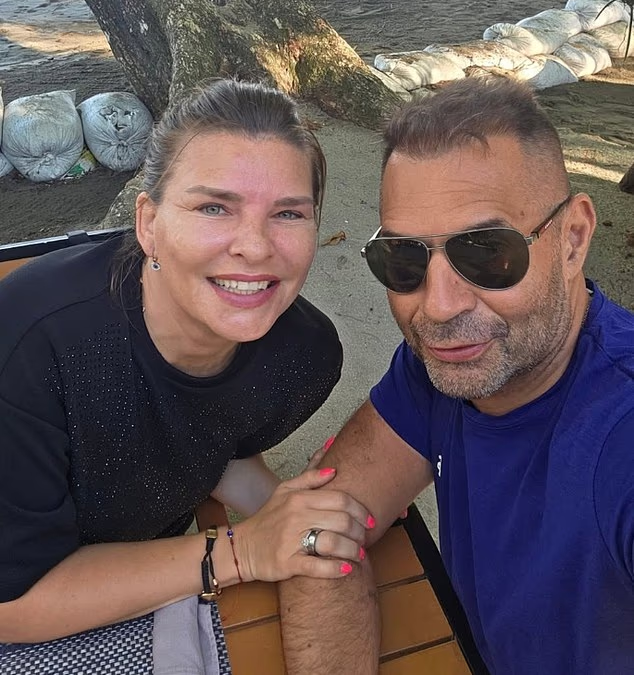
Plastic surgeon Alexander Aslani had privately warned that he feared for his life just days before he was shot dead at his clinic on Spain’s Costa del Sol, according to a fellow conference delegate.
The 57-year-old German-born surgeon was killed at about 6pm on October 7 after a masked gunman entered the Cirumed Clinic in Marbella and opened fire. Police sources said Dr Aslani was hit four times as he sheltered in his office in front of patients, staff and his wife, Jeannine.
The final shot was allegedly fired at close range into his face. Investigators are examining whether the killing was ordered by a disgruntled patient who had previously made threats against the surgeon.
Dr Aslani had reported threats to police in April after an unidentified patient became unhappy with a procedure. Detectives are also investigating claims involving a wealthy Arab client who allegedly demanded the return of a £17,000 deposit.
The client is said to have insisted on the repayment after preliminary work connected with a Brazilian butt lift. Dr Aslani allegedly refused, saying the money represented standard charges, and the woman and her husband were reportedly accused of threatening him and issuing warnings to staff before leaving Spain.
Surgeon had raised security concerns
A colleague who met Dr Aslani at a plastic surgery conference in Brussels said he had appeared relaxed in public but had privately expressed concerns about his safety three days before his death.
“Publicly he was happy and relaxed but privately he seemed concerned,” the colleague said.
The delegate said Dr Aslani had increased security at his home and had cameras installed at the property and his clinic. He added that the surgeon did not have a bodyguard with him in Brussels, although he did not know whether one had been employed in Spain.
“I’ve visited him and his wife Jeannine many times and stayed with them – they have two lovely daughters and she is devastated,” the colleague said.
Dr Aslani had travelled to Belgium to address fellow surgeons and returned to Spain shortly before the attack. He had also been preparing to attend a conference in Karachi, where he was due to speak in three weeks.
Dr Fahad Mirza, a plastic surgeon based in Pakistan, said he had spoken to Dr Aslani only hours before his death while they discussed plans for the event.
“I’m so, so shocked. I spoke with him a few hours before he died,” Dr Mirza said.
He described Dr Aslani as “The Master” because of his skill and said he had seemed unconcerned during their conversation. Dr Mirza added that patients could sometimes become fixated on perceived flaws despite successful treatment, describing the issue as body dysmorphia.
Masked gunman fled on motorbike
The attacker was dressed in black, with a hoodie worn over a crash helmet. After shooting Dr Aslani, he left the Marbella clinic on a Yamaha Maxi Scooter and travelled towards the Bello Horizonte area, where he was allegedly seen getting into an Audi.
Closed-circuit television footage and automatic number plate recognition technology enabled police to trace the vehicle to an Airbnb in Benalmadena, about 25 miles away. Officers broke down the door and arrested an 18-year-old Swedish national, who denies involvement.
The suspect has been remanded in custody without bail while the investigation continues. Police are still searching for the driver of the Audi and believe the gunman may have been acting with accomplices.
The suspect has allegedly refused to say who hired him. Detectives are also examining how the attacker knew the layout of the clinic well enough to pass reception and the waiting area before walking directly to Dr Aslani’s office.
Neighbours said Jeannine ran from the building after the shooting, screaming: “They’ve killed my husband.” The clinic has remained closed, while residents reported hearing shouting and screaming before police and paramedics arrived.
Dr Aslani was known internationally for body contouring and facial surgery and had carried out more than 7,000 operations during a career spanning more than three decades. His patients came from more than 40 countries and included reality television figures such as Chloe Sims and Hannah Elizabeth, as well as members of the Qatari royal family.
He was also associated with a procedure described as a “super-charged Brazilian butt lift”. He drove a distinctive grey Ferrari to the clinic and lived with his wife and two daughters in a five-bedroom villa in the foothills above Mijas Costa.
In his spare time, he used a 40ft yacht kept at Puerto Banus, where the berth reportedly cost £15,000 a year. Despite the outward appearance of a wealthy and successful life, colleagues said he had become increasingly worried about the safety of himself and his family.
Previous medical controversy
Dr Aslani had also faced professional controversy. In 2012, the UK General Medical Council ordered him to address deficiencies in six areas of his practice, including patient consent and post-operative care.
The ruling prevented him from operating in Britain without written permission and required him to work under medical supervision. He surrendered his UK medical licence four years later and could no longer practise there legally.
In 2020, influencer Paulina Sobierajska alleged that a procedure carried out by Dr Aslani had been botched and that she required further reconstructive surgery. She had initially promoted him to her followers before advising women not to book treatment with him.
Dr Aslani sued Ms Sobierajska for libel and won, with the court ordering her to pay £40,000 in damages. In a separate case in 2018, a client sued the surgeon over alleged medical malpractice and inadequate follow-up care; Dr Aslani, the hospital and its insurers were ordered to pay almost £20,000.
He trained in Austria and South Africa before working as a consultant plastic surgeon at hospitals in Birmingham and London. He later became head of plastic surgery at hospitals in Marbella and Malaga before establishing the Cirumed Clinic in Marbella in 2018.
Fernando Bentabol, of Malaga’s anti-drugs department, said the Costa del Sol faced a “serious problem with paid assassins”. He claimed organisations recruited people, particularly from northern Europe, to carry out killings before leaving the country.
