


Australia’s RedBridge poll has put the Coalition ahead of Labor on a two-party-preferred basis, while One Nation has emerged as the leading party on the primary vote.
One Nation recorded 28 per cent support, followed by Labor on 26 per cent, the Coalition on 25 per cent and the Greens on 13 per cent.
In the two-party-preferred contest, the Coalition led Labor by 53 per cent to 47 per cent. Labor remained ahead of One Nation in a separate head-to-head result, leading 54 per cent to 46 per cent.
The survey was carried out after the Reserve Bank raised the cash rate to an 18-year high of 4.85 per cent.
Coalition gains as economic debate intensifies
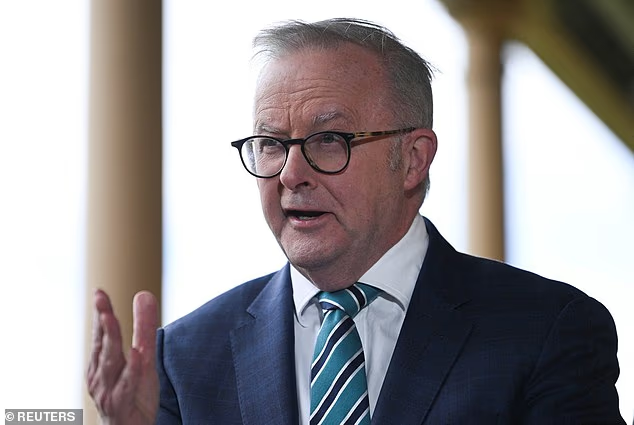
Anthony Albanese said voters would ultimately assess his government on its record on the economy, Medicare and employment when the next election is held in 2028.
“When we go to the next election in 2028, we’ll be able to talk about the strengthening that we’ve done in Medicare, the fact that we have the lowest unemployment rate of any government on average over the last 50 years, the fact that, unlike most advanced economies, we haven’t had a single quarter of negative growth,” the Prime Minister said.
Mr Albanese also criticised the opposition, arguing that its parties lacked unity and did not offer a credible alternative government.
“It stands in stark contrast to the alternative, which is essentially a rabble of dysfunction made up of One Nation, the Liberals, the Nationals and others on the right, and the Greens being a protest party on the left,” he said.
“It’s time they were constructive and supported the savings measures that are before the Parliament over the next couple of weeks.”
Mr Albanese’s net approval rating rose four points to minus 23, while Treasurer Jim Chalmers increased one point to minus 22. Opposition leader Angus Taylor’s rating improved by one point to minus five, while Pauline Hanson’s fell four points to minus 14.
In a three-way preferred prime minister contest, Mr Albanese slipped one point to 30 per cent. Ms Hanson fell two points to 24 per cent, while Mr Taylor rose one point to 16 per cent.
Shadow treasurer Tim Wilson said the figures showed voters were losing confidence in Labor’s management of the economy. He accused the government of fuelling inflation through excessive spending.
“The Prime Minister keeps stoking inflation and making Australians poorer because this government’s economic model is built around an active inflation agenda,” Mr Wilson said.
“It fuels inflation, taxes inflation and spends inflation in a vicious cycle that is sending households backwards.”
Analysis from the Business Council of Australia estimated that almost 70 per cent of inflation was coming from non-tradeable parts of the economy, including housing, rents and locally supplied services.
The modelling attributed about three percentage points of Australia’s 4.3 per cent annual inflation rate to domestic, non-tradable components, with a smaller proportion linked to international pressures.
“Australians are having to choose between keeping a roof over their heads and paying for opportunities for their children,” Mr Wilson said.
“We should be a country where families do not have to make those kinds of sacrifices.”
