


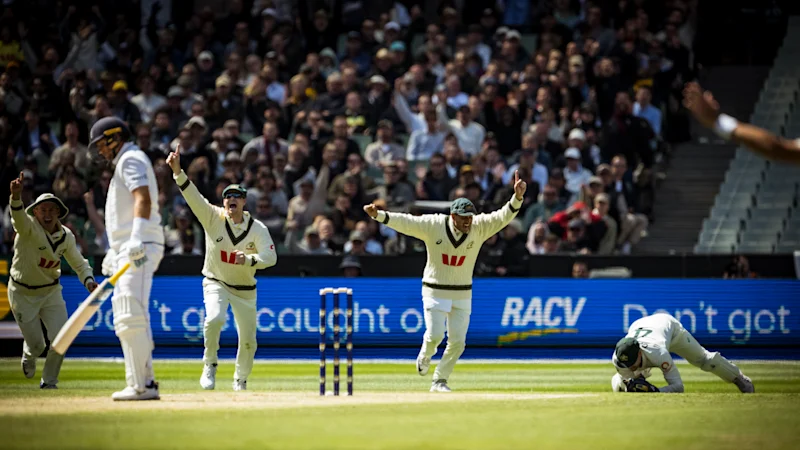
Cricket Australia chief executive Todd Greenberg has urged curators to prepare flatter pitches, warning that a continued run of two-day Test matches could damage the sport financially and undermine its traditional appeal.
Greenberg made the intervention at a conference of groundsmen in Durban, an unusual appearance which he said was intended to underline the seriousness of the issue. Three of Australia’s past seven Tests have finished inside two days, including the Perth and Melbourne Ashes matches, with the lost revenue estimated at about $15 million.
The Boxing Day Ashes Test was also completed in two days, amid concerns that grassy wickets and a more responsive Kookaburra ball are producing matches played “in fast forward”.
“What we’ve said is if you’re erring on which side of the line to roll on, then make it flatter, maybe slightly less grass, because the game has evolved over time,” Greenberg said.
“The way batters are batting and players are playing cricket. I’m not sure if our wickets have kept pace with that. The data and the stats certainly tell you that.”
Greenberg said occasional short Tests could be accepted, but warned that a sustained pattern would threaten both the commercial foundations of cricket and the character of the five-day game.
“I am worried about short Test matches over time. I think a one-off is fine. You can deal with it. But over time, if we continue to see that trend, that will hurt the sport,” he said.
“It’ll hurt cricket, both from a commercial lens, but also just the purity of Test cricket and the beauty of a five-day close draw is as much a part of the fabric of Test cricket than a win or a loss, and so I don’t think we want to lose that.”
Greenberg said he had told the curators’ conference that Australia’s pitches needed to reflect how the modern game had developed. His presence, he acknowledged, was unusual after decades of meetings without a Cricket Australia chief executive addressing the group.
He also said the Sydney Test was contracted through to 2032 under government and broadcast agreements, but conceded that its position beyond then could not be guaranteed. Cricket Australia would prefer to retain the existing schedule, he said, while remaining open to other possibilities.
