


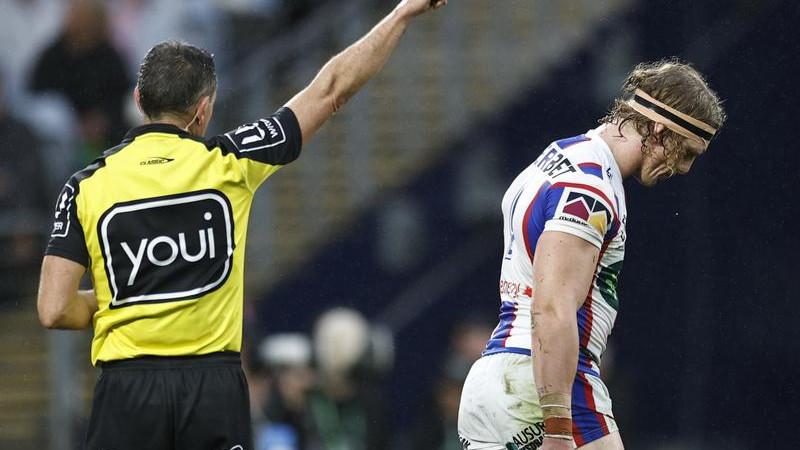
Phoenix Crossland has faced a wave of online abuse after his tackle left Nathan Cleary with a serious injury during the NRL preliminary final, despite the Newcastle Knights player expressing remorse and being punished by the judiciary.
Crossland was sent from the field after the tackle on one of rugby league’s biggest stars. He was subsequently suspended for four matches, ruling him out of Sunday’s grand final as the Knights prepare for their first appearance in the decider in 25 years.
The incident was rightly subjected to scrutiny, but the reaction on social media has gone beyond criticism of the tackle, with Crossland targeted by threats and personal abuse.
Cleary was stretchered from the field after suffering the injury, prompting an emotional reaction from his Penrith team-mate Dylan Edwards. Panthers supporters have every right to feel anger and disappointment at the loss of a key player, but those emotions do not justify directing abuse at another person.
Cleary himself has defended Crossland, describing the tackle as a complete accident and asking supporters to stop abusing the Knights player. His intervention has highlighted the distinction between accountability for a dangerous mistake and hostility towards the person responsible.
Online abuse of Phoenix Crossland adds to the burden
Crossland must now live with the consequences of the tackle, including the knowledge that it caused a serious injury and the fact that he will miss the biggest match of his career. The suspension has already imposed a formal sporting penalty.
He will also have to watch from the sidelines as Newcastle compete in the grand final, while dealing with the public fallout from an incident that he has openly regretted.
The scale of online abuse directed at athletes is reflected in figures from Australia’s eSafety Commissioner, which found that 18 per cent of adults surveyed had personally experienced online hate in the previous year. More than half of those people reported at least one significant negative effect on their wellbeing.
Elite sportsmen and women are not exempt from that harm. A 2025 Rugby League Players Association survey found that 13 per cent of male NRL players and 9 per cent of NRLW players had experienced targeted abuse, with social media accounting for more than 80 per cent of those experiences.
Comparable problems have been seen in other sports. A study by Britain’s communications regulator Ofcom found that 68 per cent of Premier League players received at least one abusive tweet during the period examined, with some targeted every day.
Tennis players have also faced death threats and threats against their families after defeats, illustrating how quickly frustration about sporting results can become personal abuse when it moves online.
Athletes may compete in front of large audiences and appear physically resilient, but they remain vulnerable to anxiety, self-doubt and emotional distress. Public condemnation from thousands of strangers can carry a serious mental-health impact, particularly when it follows a mistake made in front of millions of viewers.
Rugby league is a physically demanding sport in which players accept that injuries are an unavoidable risk. That does not mean dangerous tackles should escape punishment, but it does mean that a damaging outcome is not automatically evidence of malicious intent.
Crossland should be held responsible for his tackle, and the judiciary has dealt with the offence. He should not, however, be threatened, harassed or publicly humiliated over it.
Cleary’s appeal for compassion has underlined the need for supporters to maintain that distinction. Criticism of a player’s actions is part of sport; making his life miserable because of one moment on the field is not.
