


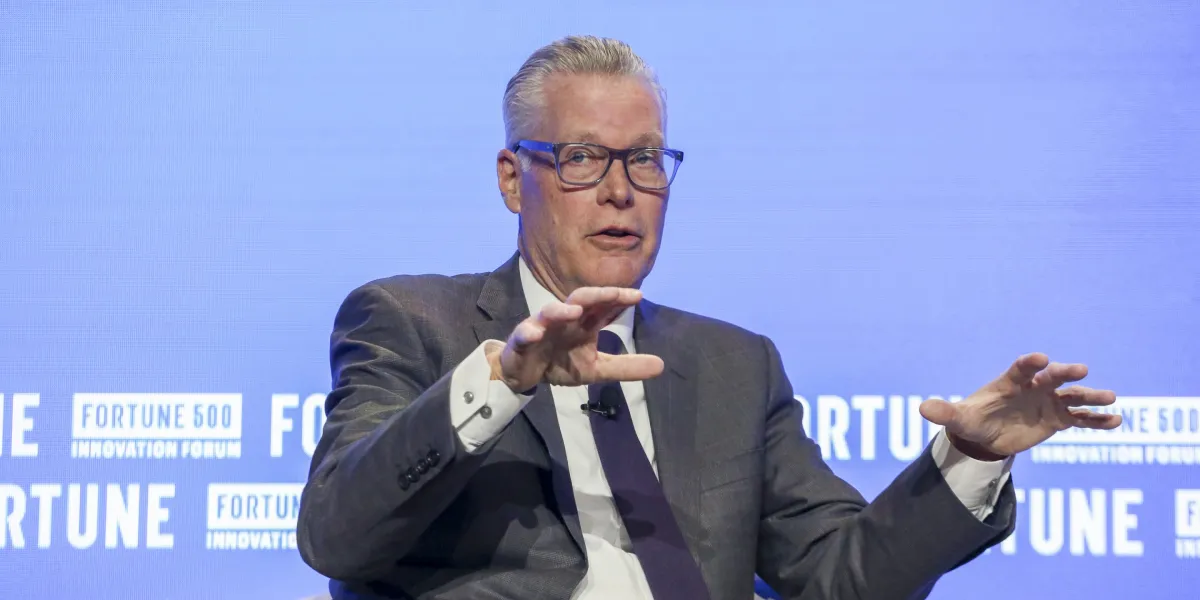
Delta chief executive Ed Bastian has criticised the US air traffic control system, saying the airline’s Atlanta to LaGuardia route now takes longer than it did when it began in the 1950s.
“Today, it takes more time to fly from Atlanta to LaGuardia than it did in the 1950s when we first launched that flight, which is absurd,” Mr Bastian said at the Fortune 500 Innovation Forum on Monday.
His comments came days after the Federal Aviation Administration’s nationwide flight grounding placed renewed focus on congestion in America’s skies. Mr Bastian said modernising the system would allow airlines to add flights and could help bring ticket prices down.
However, he questioned whether the necessary investment would be made while vast amounts of capital were being directed towards data-centre construction.
“We can’t even get $50 billion to fix our skies, which affects all of us at a much higher level than any individual data centre,” he said.
Mr Bastian said aircraft had advanced significantly since the first scheduled commercial flight more than a century ago, while the system through which they operate had failed to keep pace.
Delta is also facing higher fuel costs following pressure on jet fuel prices linked to the Iran war. Mr Bastian said the airline’s fares were 15% to 20% higher than a year earlier as a result, adding that such increases would not have been possible without strong demand.
“We would not be able to generate that type of pricing if we didn’t have a consumer that was willing to pay it, and so that tells you the core demand is really healthy, even if pricing is where it’s at,” he said.
US airfares rose 22.4% year on year in October, according to figures cited from the Bureau of Labor Statistics. The five largest airlines generated $8.8 billion more in the third quarter of 2026 than in the same period a year earlier, while passenger traffic increased by less than 1%.
Rather than competing primarily on fares, Mr Bastian said Delta was seeking to attract customers through its service. He said the company’s emphasis on premium customer care had been developed over 15 years.
That approach was tested during the FAA shutdown, he said, when passengers faced disruption outside Delta’s control. “Unlike most weekends, when there’s always something going wrong or excuses somewhere, the overwhelming sentiment I received from customers was, ‘You have amazing people’ because they saw the stress, the conditions [were] none of our doing,” he said.
Mr Bastian also rejected the idea that artificial intelligence would replace Delta employees. Instead, he said staff affected by technological changes would be redeployed wherever possible, arguing that passengers preferred human assistance during a crisis.
“Obviously this past weekend, they wanted individuals to tell them what was going on, and there’s a lack of trust the more you put technology in place of humans, so humans are always going to be at the center of Delta,” he said.
