


China is ahead of the United States in hypersonic weapons and has the world’s leading missile arsenal in the field, according to the co-founder and chief financial officer of a US defence technology start-up.
Andrew Kreitz, who helped establish Castelion, said America was being outpaced as the two countries compete to develop weapons capable of travelling at hypersonic speeds. The company is valued at $13 billion and is focused on producing hypersonic missiles.
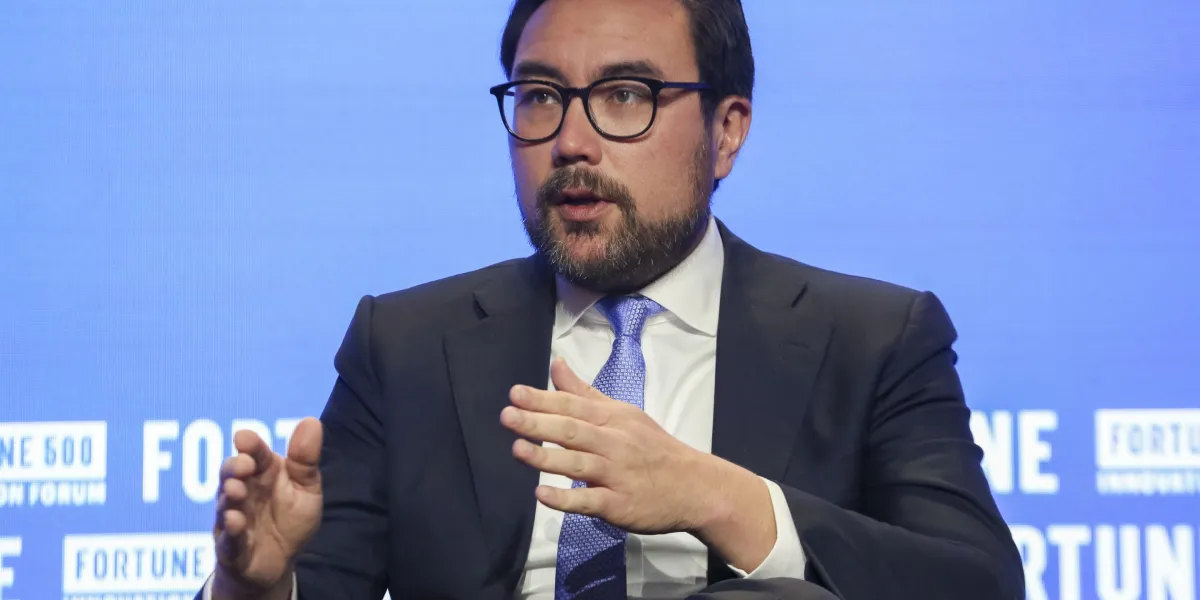
“Unfortunately, China, especially, full stop, is ahead of us in hypersonics,” Mr Kreitz told Andrew Nusca at the Fortune 500 Innovation Forum in Detroit.
The United States has begun fielding its first long-range hypersonic missile system, known as Dark Eagle. China, however, has been ahead for years and was described as having “the world’s leading hypersonic missile arsenal” in the US Department of Defence’s 2025 report to Congress.
Mr Kreitz attributed the gap in part to the way weapons are developed and procured in the American defence industry. He said the Pentagon had often prioritised highly advanced technology without sufficient consideration of cost or the ease with which systems could be manufactured.
He also criticised cost-plus contracts, which reimburse contractors for their expenses and, he argued, provide less incentive to control spending.
The industry’s approach to testing was another problem, Mr Kreitz said. Hardware is not tested early or frequently enough, limiting the speed at which engineers can learn from failures and improve their designs.
“Unfortunately, our adversaries very much took the opposite approach,” he said. “The Chinese have tested and iterated very, very fast, and they’ve been relentlessly focused on industrializing and manufacturing these weapons at a very large scale.”
Castelion’s SpaceX-inspired approach to hypersonic missiles
Mr Kreitz, Sean Pitt and Bryon Hargis left SpaceX in 2022 to launch Castelion, with the aim of changing how defence equipment is designed, built and manufactured.
In four years, the company has grown to more than 400 employees, reached a valuation of $13 billion and won several Pentagon contracts. In September, the US Navy awarded Castelion a contract worth up to $200 million for Blackbeard, described as a low-cost hypersonic missile.
Mr Kreitz said the company’s engineering culture was shaped by the founders’ time at SpaceX and by the earlier methods of NASA’s Apollo programme.
“It hearkens back to the golden age of American aerospace in the 50s and 60s: get to hardware as quickly as possible, test as early as possible, iterate as fast as possible,” he said.
Castelion is also prepared to bring more manufacturing work in-house when supply-chain problems make reliance on outside suppliers difficult.
“Everything has to be backwards planned, from how do we scale production of this weapon—the iteration cycles and the testing, especially though, that just unlocks learning at a really, really rapid pace,” Mr Kreitz said.
Defence technology investment boom faces shakeout
Castelion is expanding as investment in defence technology reaches record levels. Defence start-ups raised $2.5 billion in the third quarter of 2026, while the sector’s venture capital value for the year reached $67.4 billion across 726 deals, according to PitchBook.
Anduril was the most highly valued company in the sector after raising money in May at a $61 billion valuation. It has since explored a potential transaction that would nearly double that figure.
Mr Kreitz warned, however, that the surge in funding had created a bubble and that not every company would survive a period of consolidation.
“There is froth in the market,” he said. “I think that there will be a shakeout at some point. That’s the truth.”
Some businesses had promising technology but lacked the capacity to bring products to market or manufacture them at scale, he said. Others could eventually be acquired as the industry consolidates.
Castelion’s response, Mr Kreitz said, was to concentrate on building its operations rather than being distracted by conditions in financial markets.
“Our approach to weathering this is focus on execution, focus on operations, focus on manufacturing, get ourselves to scale and free cash flow generation as soon as possible to sort of immunize us to any of the noise that might be occurring in the capital markets,” he said.
