


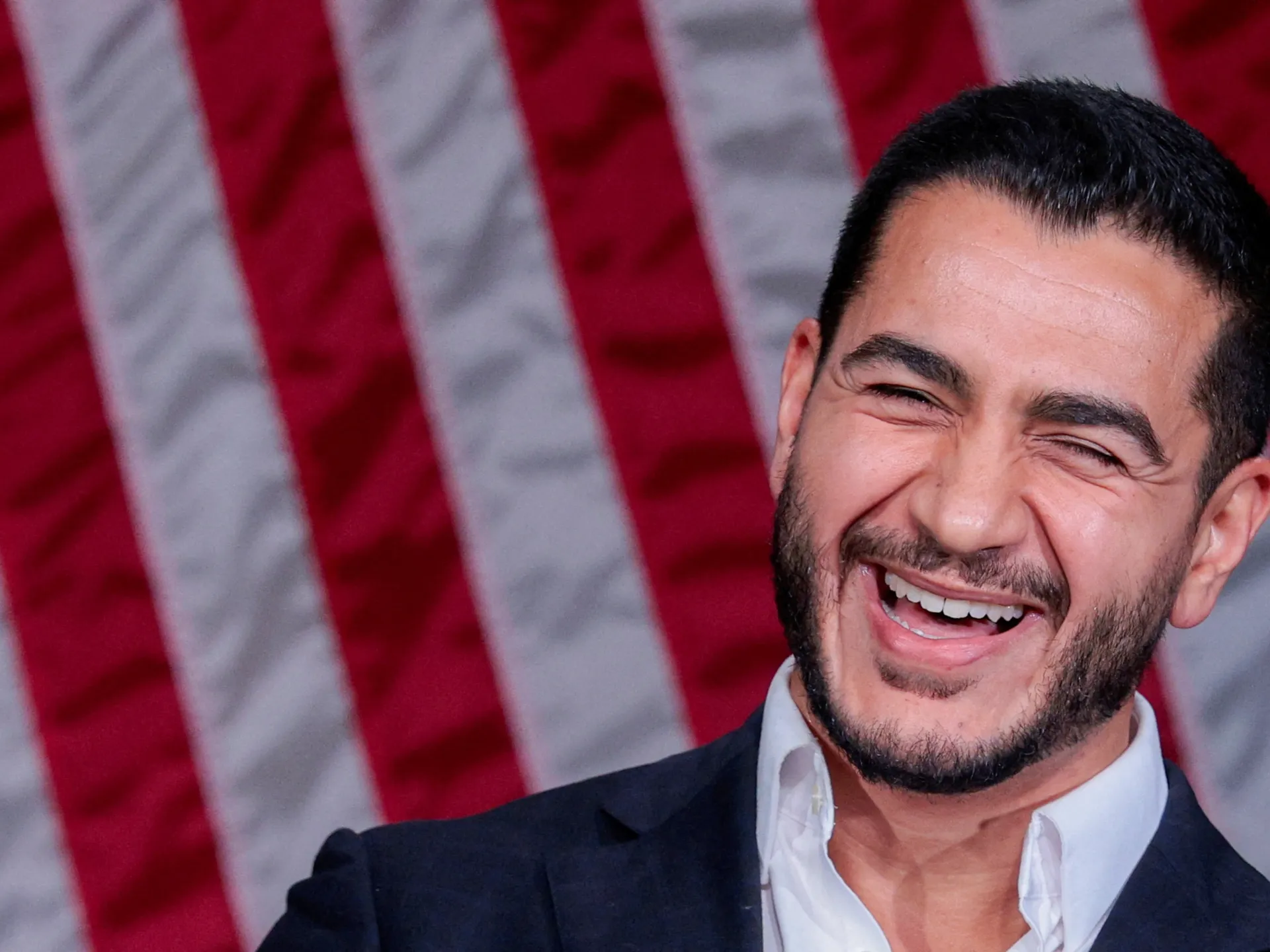
Abdul El-Sayed’s victory in Michigan has been hailed as a major setback for the anti-Muslim politics that shaped the Republican campaign, after he defeated Donald Trump-backed Mike Rogers and became the first Muslim elected to the US Senate.
Mr El-Sayed’s win formed part of a wider Democratic sweep that ended Republican congressional majorities and returned Democrats to national prominence. Mr Rogers’s campaign benefited from about $169 million in outside spending, including support from Republican super PACs linked to Mr Trump and Elon Musk.
Addressing supporters, Mr El-Sayed said Michigan voters wanted their taxes directed towards schools, healthcare and infrastructure rather than overseas conflict.
“Michiganders, we want our taxes spent here, for schools here and healthcare here, and infrastructure here,” he said. “We don’t want our money sent to do apartheid or genocide or war.”
His use of his full name became a defining moment of the campaign. Right-wing activists had repeatedly invoked “Abdulrahman Mohamed El-Sayed” while branding him a “terrorist”, a “jihadist” and “a danger to the American public”.
On election night, he embraced the name and joked about Mr Trump’s difficulty pronouncing it. “Donald, look, I know you struggled with my name, so after JD swears me in in January, you could just go on and call me Senator,” he said.
The crowd responded with chants of “Abdul”. Later, Mr El-Sayed referred to his frequent use of the Islamic phrase “Inshallah”, meaning God willing, during the campaign. When he invited supporters to complete the phrase, they answered: “Alhamdulillah” – praise be to God.
“For the right-wing ops, that just means praise be to God,” he added.
The response was seen by supporters as a direct rejection of attempts to portray Islam and Muslim identity as threats to American society. Mr El-Sayed had spoken openly throughout the campaign about his faith, Arabic heritage and family, while presenting himself as an American and a Midwesterner.
Abdul El-Sayed victory follows anti-Muslim campaign
The campaign against him included attacks from Republican politicians and online activists. The Center for the Study of Organised Hate said anti-Muslim hostility had been advanced through social media, legislation and a congressional caucus.
According to the organisation, 89 Republican elected officials took part in a coordinated campaign over 13 months. It said 46 officials published 1,111 social media posts, while eight bills concerning Sharia were introduced and the Sharia-Free America Caucus had grown to 62 members by April 2026.
Mr El-Sayed was advised by political consultants that a Muslim candidate with his name and personal story would be unelectable. He nevertheless made opposition to Islamophobia a central part of his campaign, rejecting the idea that Muslims should be treated as outsiders.
His wife, Dr Sarah Jukaku, introduced him at his final rally by saying: “With Abdul, what you see is what you get … No corporation, no billionaire, no special interest. No one tells him what to do or what to say.”
Mr El-Sayed also used his record in public health and his connections to communities across Michigan to present a broader political message. He worked on a programme that helped provide glasses to 16,000 children from low-income families in Detroit and Wayne County, and visited farmers and residents including rural conservatives in the Upper Peninsula.
In one campaign advert, he spoke directly about prayer and faith, saying Americans needed “faith and hope that we can fix things”. The advert ended with the words: “I’m Abdul El-Sayed, a man of faith. That’s a good thing.”
At his victory rally, he linked the cost of living at home with American spending on war abroad. “It just shouldn’t be this hard to buy a second bag of groceries or fill your tank,” he said. “It shouldn’t be this hard to see a doctor in the richest, most powerful country in the world.”
“It shouldn’t be this hard to pay your taxes and know that that money’s going to be spent on you and your kids instead of dropping bombs on somebody else and their kids,” he added.
Mr El-Sayed closed by calling for “an America for all her kids” and urging Michigan to help build it. His win has prompted debate among Democrats over whether the party should adopt a more direct anti-Islamophobic politics or continue accepting support from wealthy donors associated with anti-Muslim campaigning.
