


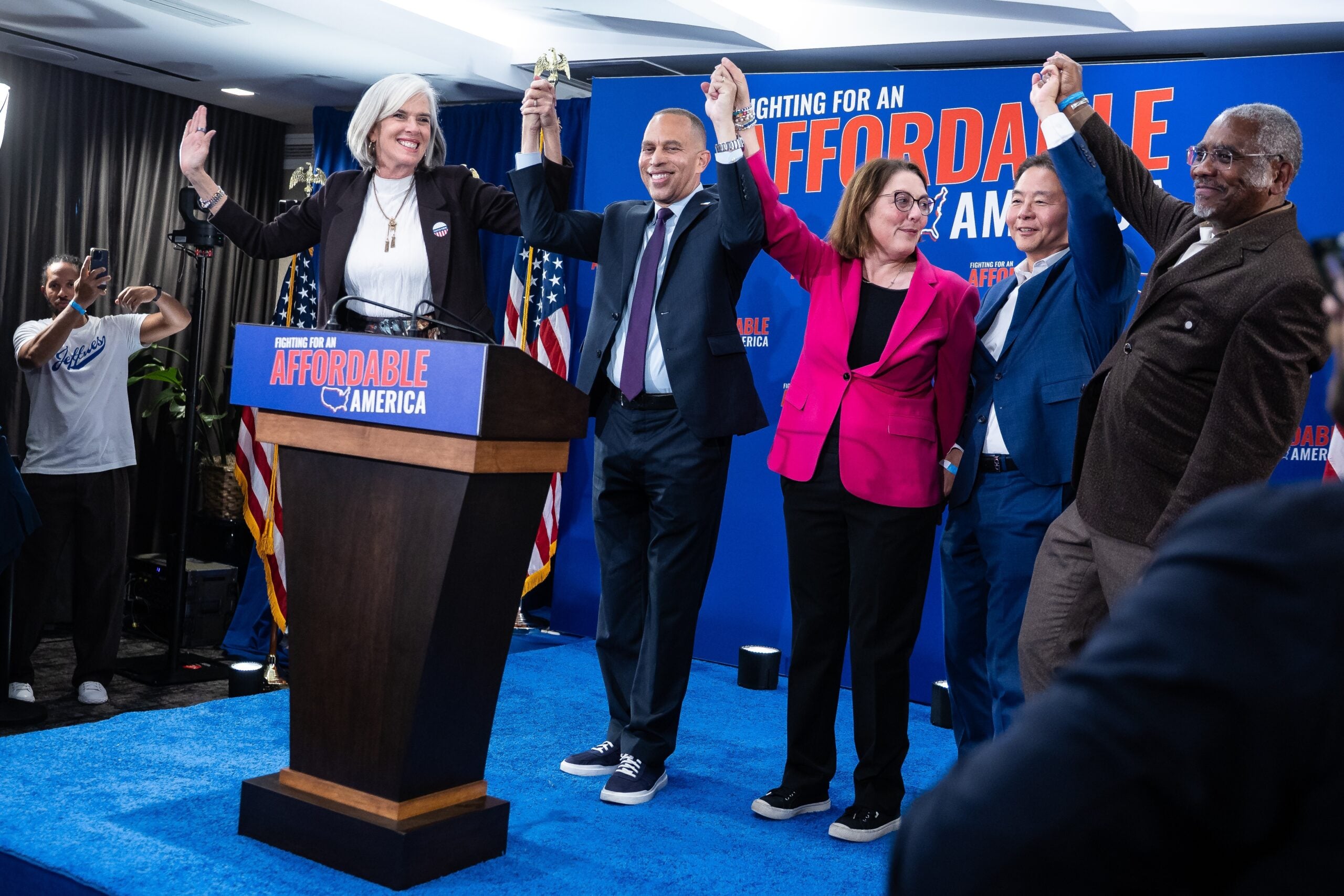
The scale of the Democratic House midterm wave surprised even the leader of the party’s biggest political action committee, who said the results were at the “very high end” of expectations.
Mike Smith, president of House Majority PAC, said Democrats had secured 252 House seats after Tuesday’s election, with more contests yet to be called. The group spent at least $283 million on advertising during the campaign, making it the largest Democratic spender in House races.
Mr Smith said Democrats had entered election day believing there was a clear path to winning more than 235 seats. The eventual result represented the best-case scenario as the party succeeded in competing across a wider section of the electoral map.
“Obviously this would have been on the very high end of what we expected,” he said.
House Majority PAC had targeted districts that initially appeared beyond the party’s most realistic opportunities, including races in Indiana, Colorado, Kentucky, South Carolina and Florida. Mr Smith said those contests had been brought into play by the national political environment and polling from individual districts.
The organisation also altered its spending plans during the final stages of the campaign. It had secured advertising slots months in advance before allies took over reservations in several markets, allowing the group to save about $130 million for reinvestment.
Some of the money was later redirected to competitive districts where other groups had not stepped in. Mr Smith said Florida was among the states where the organisation had initially left advertising reservations unused before returning to certain races after Michael Bloomberg urged greater investment.
Democrats focused campaign on living costs
Mr Smith said the party had kept its central campaign message largely unchanged despite Republican groups, including MAGA Inc and Elon Musk’s political action committee, entering the advertising battle alongside the Congressional Leadership Fund.
House Majority PAC ran about 1,300 types of advertisements across television, digital media and direct mail. Mr Smith said 76 per cent referred to the economy, while 60 per cent focused on corruption, which the group sought to link to the cost of living.
He said Democrats had wanted voters to associate the party with economic concerns, while arguing that Republican policies were making everyday life more expensive. Republican messaging, by contrast, sought to portray Democrats as out of touch or extremists.
Looking ahead to 2028, Mr Smith said Democrats could retain their House majority if they continued to address affordability. He said soon-to-be Speaker Hakeem Jeffries had identified the party’s priorities as “costs, care and corruption”.
“When we come into power, we are going to be hyper-focused on fighting to bring down the cost of living for voters,” Mr Smith said.
He said Democrats did not necessarily need to pass a large number of bills, but had to demonstrate that they were prepared to deliver results and work across party lines where necessary. He also described Donald Trump, who remains president, as an “outsized X-factor” in the party’s prospects.
Mr Smith said voters were likely to continue blaming Mr Trump for failures to deliver on affordability in the run-up to the 2028 election, rather than holding Democrats responsible.
He also urged Democrats controlling state governments to consider redrawing congressional maps where they had the power to do so, saying the party should take every available step to win.
The Democratic gains that surprised him most included New Jersey’s second congressional district, formerly held by Republican Jeff Van Drew. Mr Smith said the race had not been considered a credible Democratic target.
North Carolina was another major surprise, he said, pointing to what he described as a collapse for Republicans at both federal and state level. Several districts had offered Democrats a possible route to victory, but the party had lacked the resources to compete in all of them.
