


Democratic candidates in key US House races are being urged to avoid making AI regulation a prominent campaign issue amid fears that technology groups could pour millions of dollars into attack adverts before November.
Strategists in three closely fought races have privately advised campaigns to tread carefully, according to people involved in the contests. Senior Democrats fear that criticism of the technology could provoke spending by industry-backed super PACs at a time when the party is already struggling to match Republican-aligned groups on the airwaves.
The warnings come as concern about artificial intelligence grows among voters. Around two-thirds of Americans believe advanced AI could pose a risk to humanity, while President Donald Trump has dismissed that concern as a “hoax”.
That combination has created an opportunity for Democrats, but also a dilemma. The party wants to address fears about rapidly developing technology, yet candidates are concerned about becoming targets for well-funded groups linked to the AI industry.
“We do need to be able to make sure that we’re regulating [AI] and addressing those real fears,” said one senior Democratic strategist working on Senate campaigns. “But we don’t want AI money coming in.”
The concern is particularly acute in competitive contests involving representatives including Don Davis of North Carolina, Marcy Kaptur of Ohio and Henry Cuellar of Texas, as well as races in South Texas and Pennsylvania.
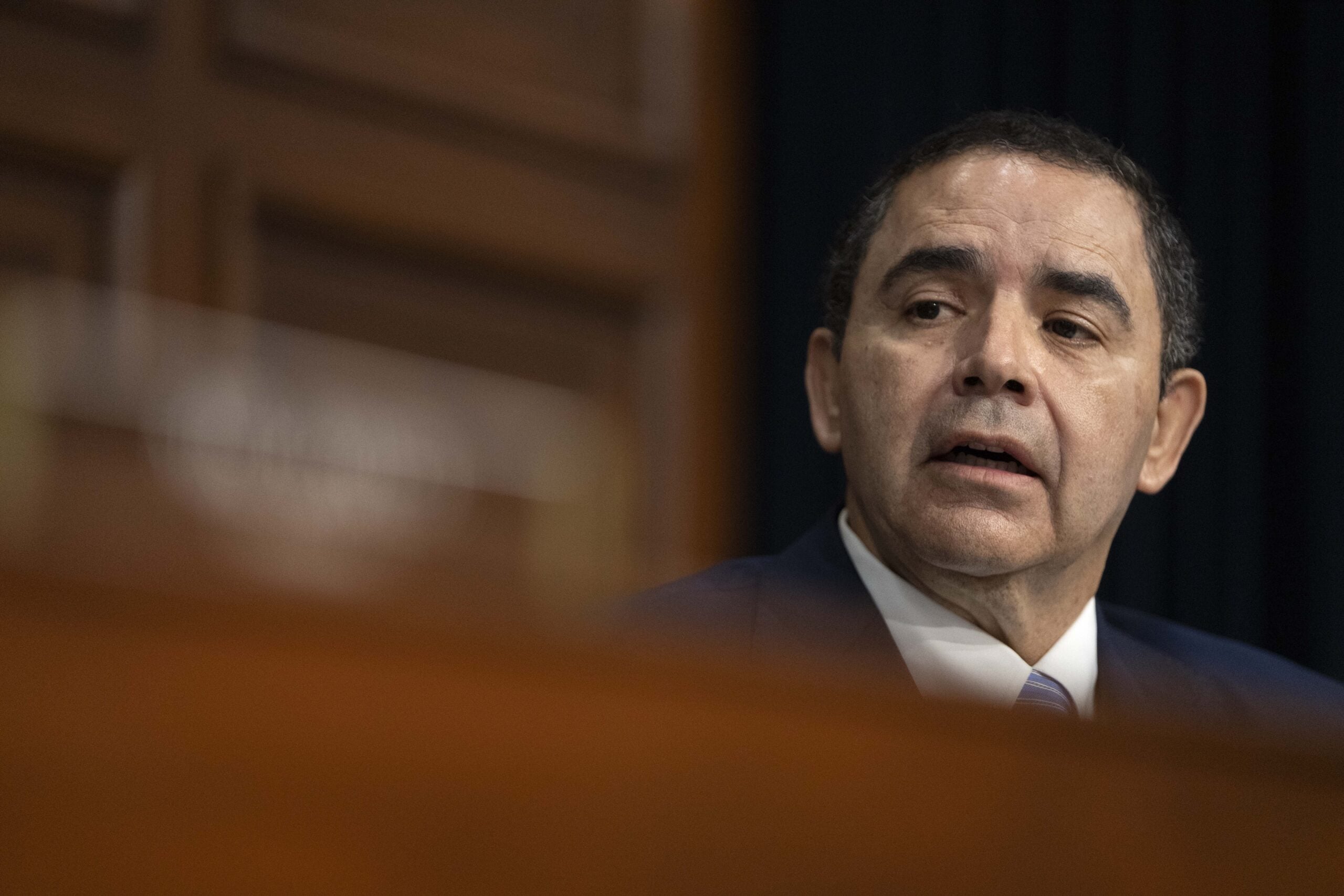
Cuellar, who is defending a Republican-leaning South Texas seat, said lawmakers should approach the issue according to the circumstances of their districts.
“Like any industry, there should be a conversation about guardrails,” he said. “But, every member needs to make their own decision based on their district and beliefs.”
AI regulation becomes a battleground for political spending
Representative Pramila Jayapal, a former chair of the Congressional Progressive Caucus, said pro-AI organisations could claim to support regulation while spending heavily against candidates who back legislation.
“You know, these AI groups — they come out and they say that they’re concerned, that they want regulation. But then they spend huge amounts of money on defeating anybody who wants legislative regulation,” she said.
Jayapal said that, if Democrats take power next year, AI groups would be likely to support candidates they believed would allow them to shape legislation.
Democrats are especially wary of Leading the Future, a pro-industry super PAC that spent more than $25 million in primary contests this year and is backed by investors and executives at OpenAI. Its rival, Public First Action, supports AI regulation and is funded by Anthropic, OpenAI’s chief competitor.
Leading the Future has declined to identify a specific AI policy it opposes. Its spokesman, Josh Vlasto, said the organisation had always supported “strong and smart national regulation” that was gaining support in Congress and across the country.
On Wednesday, the group began its first general-election advertising campaign through its Republican PAC, committing $2 million to support four Republican Senate candidates: Julia Letlow in Louisiana, Cindy Hyde-Smith in Mississippi, Darline Graham in South Carolina and Mike Rounds in South Dakota.
The two groups have previously clashed in primary races, including a contest for the seat of retiring representative Jerry Nadler. Leading the Future is not currently expected to repeat the multi-million-dollar negative advertising campaign it used against Alex Bores in that race, although Democrats believe the organisations could confront one another again in important contests.
Brad Carson, co-founder of Public First Action, said the group would “absolutely” participate in the general election. It is most likely to support candidates who favour export controls and oppose preventing states from passing their own AI laws in the absence of a federal framework.
Carson said the group would be inclined to spend against candidates taking the opposite position, adding: “It’s really about finding the people who want to step out and be heroes for you.”
Anthropic policy chief Sarah Heck said on Wednesday that the United States needed to remain ahead of China in AI, arguing that “you can’t do safety from second place”. She said companies could not be left to police safety entirely within their own organisations, but did not endorse bipartisan legislation for external regulation.
Some Democrats remain determined to pursue tougher measures despite the financial risk. Abdul El-Sayed, the party’s Senate nominee in Michigan, has called for a “full pause at the frontier of research” and said he would “rather be on the truth than dodge [AI industry] money”.
However, El-Sayed has not committed to running campaign adverts on the issue. Representatives Susie Lee of Nevada and Greg Landsman of Ohio, both seen as vulnerable Democrats, have also said they do not plan to advertise on AI safeguards, despite supporting greater regulation.
Republicans are hoping the AI super PACs could become involved in other competitive races, including Georgia, where Democratic senator Jon Ossoff has been a vocal critic of the industry, and Texas, where Republican nominee Ken Paxton has recently trailed in most polls.
“We could use the help in some races like that,” one Republican senator said.
