


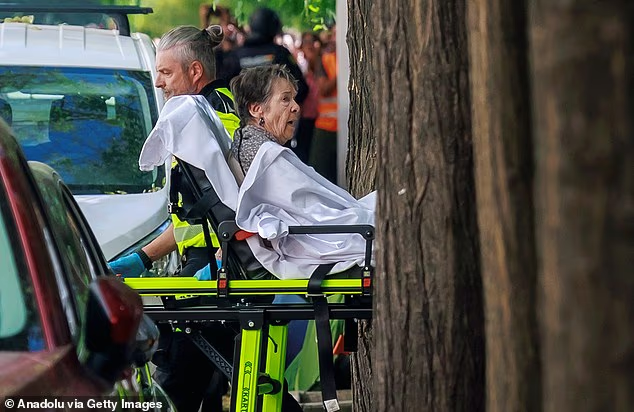
Maricarmen Abascal, the 87-year-old Spanish pensioner whose eviction from her Madrid home became a symbol of the country’s housing crisis, has died, the Madrid Tenants’ Union has said.
Abascal was removed from the flat where she had lived for more than 70 years after a dispute over a proposed 275 per cent rent increase. She was taken to hospital following the court-ordered eviction on 23 September.
“We regret to announce that Maricarmen passed away today,” the tenants’ union said, describing her case as “a turning point in the history of this country”.
The union said an agreement had been reached that would have allowed her to return to the property, but added that the solution had come too late.
“An absolutely avoidable situation after a torturing process,” it said.
Eviction triggered protests across Spain
Abascal was carried from the flat on a stretcher as riot police forced their way through a barricade made from chairs, shelves and a lamp. Supporters had gathered outside the building in Madrid’s upmarket Retiro district in an attempt to prevent the eviction.
Dozens of activists were dragged away or charged by police as protesters shouted “shame”. Health workers took Abascal from the building while supporters chanted: “Maricarmen, you are not alone.”
Her eviction prompted protests in Madrid and across Spain, with tens of thousands of people marching to demand stronger protections for tenants and more affordable housing.
Proposed reforms were later rejected by parliament, leading to further demonstrations over the weekend. Prime Minister Pedro Sánchez has promised housing measures when his cabinet meets, while his Socialist Party is seeking support for legislation aimed at addressing public anger.
Beatriz Duro, Abascal’s lawyer, said both sides had shown “goodwill” and agreed a new contract under which her client would pay a similar rent. She said the agreement was the result of “social mobilisation”.
Abascal had been paying about €440 (£379) a month under an old tenancy agreement. The property’s owners later proposed increasing the rent to €1,650 (£1,420), while her monthly pension was €1,350, according to Spanish reports.
Her father first rented the flat in 1956 and Abascal remained there after her parents died. Urbagestión Desarrollo e Inversión SL bought the property in 2018, and three previous attempts to evict her were blocked by the courts.
The legal dispute eventually reached Spain’s Supreme Court, which ruled in favour of the company and cleared the way for the eviction, according to the Madrid renters’ union.
After she left the building, Abascal was taken to Gregorio Marañón Hospital. She refused a free emergency placement offered by the city and was thought to have been staying with a relative.
Amnesty International Spain described the eviction as “a violation of human rights” and said it reflected “a system that puts the speculative interests of a vulture fund before Ms Abascal’s right to stay in her house”.
In an interview recorded before the eviction, Abascal described the company as “inhuman, and all in order to make money”. She added: “You cannot make a person live for seven years with a machete hanging over their neck.”
The Bank of Spain estimates that Spain is short of about 700,000 homes. Rents and property prices have risen as supply falls short of demand, while residents have also blamed short-term tourist rentals for reducing the availability of housing.
