


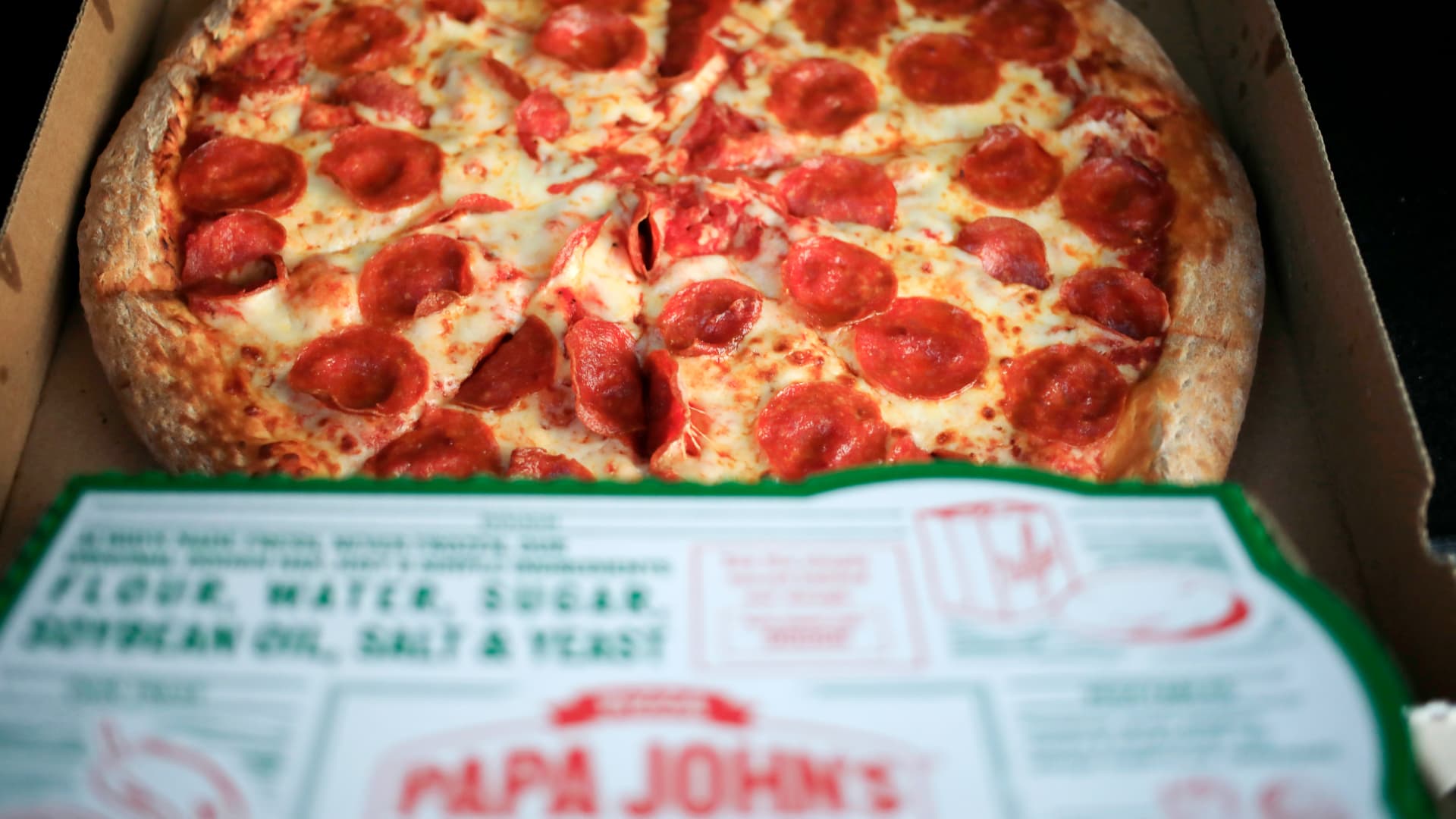
US pizza chains are facing falling sales as cautious consumer spending, tougher competition and the growing use of GLP-1 weight-loss medication weigh on demand.
The sector benefited from the boom in home delivery during the pandemic, but Domino’s, Papa Johns, Little Caesars and Pizza Hut have struggled to retain customers since dining rooms reopened.
Consumers now have more choice through delivery platforms, while food quality and the overall dining experience have become increasingly important to people seeking value.
The number of pizza restaurants in the US has fallen sharply. More than 9,600 outlets had closed by July 2026 from a peak of 83,035 in August 2019, according to Datassential.
Sales at US pizza restaurants declined by 0.3% in 2025, with independent pizzerias down 0.4%. Chains, which account for around two-thirds of domestic pizza sales, recorded a 0.3% fall.
Papa Johns reported a 2.5% decline in North American like-for-like sales last year, while Pizza Hut’s US same-store sales fell 5%. Domino’s was the only one of the three publicly traded chains to report annual growth, with US same-store sales up 3%.
The weakness has also been reflected in share prices. Papa Johns stock has lost about two-thirds of its value since March 2020, while Domino’s shares have gained only around 2% over the same period. The S&P 500 has risen by about 150%.
Why pizza chains are losing ground
Delivery platforms have widened the competition beyond traditional takeaway categories. Domino’s and Papa Johns must now compete with restaurants including McDonald’s and Chick-fil-A for orders placed through DoorDash and Uber Eats.
Price is another pressure. The average large cheese pizza now costs almost $17, according to the 2026 Pizza Power Report, while frozen pizza offers consumers a cheaper option. Retail sales of single- and multi-serve frozen pizza rose 2.9% in the 52 weeks to November 7 compared with the same period in 2022.
David Portalatin, a food and food service industry adviser at Circana, said: “When the American consumer is focused on the least expensive eating occasion, the items that are in my pantry, my refrigerator and my freezer win every single time.”
Convenience stores such as Casey’s General Stores have also attracted customers with lower-priced pizza. Sara Senatore, an analyst at Bank of America Securities, said the chain’s locations appeared to overlap geographically with Pizza Hut and suggested Casey’s was taking market share from it.
Pizza chains have also been slow to respond to changing attitudes towards nutrition. Papa Johns is the only one of the four biggest chains to have tested a crust with added protein, and that trial took place at one Atlanta restaurant for a single day.
The combination of dough and cheese can make pizza less attractive to people taking GLP-1 medicines. Spending at pizza quick-service restaurants fell 22.2% per GLP-1 household after six to eight months of using the medication, according to a 2026 PwC survey.
The wider category has not collapsed, however. Total pizza servings are down by about 1% this year, according to Portalatin, and the major chains are attempting to restore demand.
Domino’s launched a customisable Detroit-style personal pizza in August to appeal to solo diners. Papa Johns announced a turnaround plan in November focused on food consistency and restaurant operations, while Pizza Hut is promoting a holiday meal deal.
Yum Brands also sold Pizza Hut this year to LongRange Capital and Yum China after about two decades of stagnating sales. Zachary Fadem, an analyst at Wells Fargo, said the disposal would mean Yum was no longer exposed to “pizza category dynamics”.
“Pizza’s not going anywhere,” Portalatin said. “The American consumer loves pizza.”
