


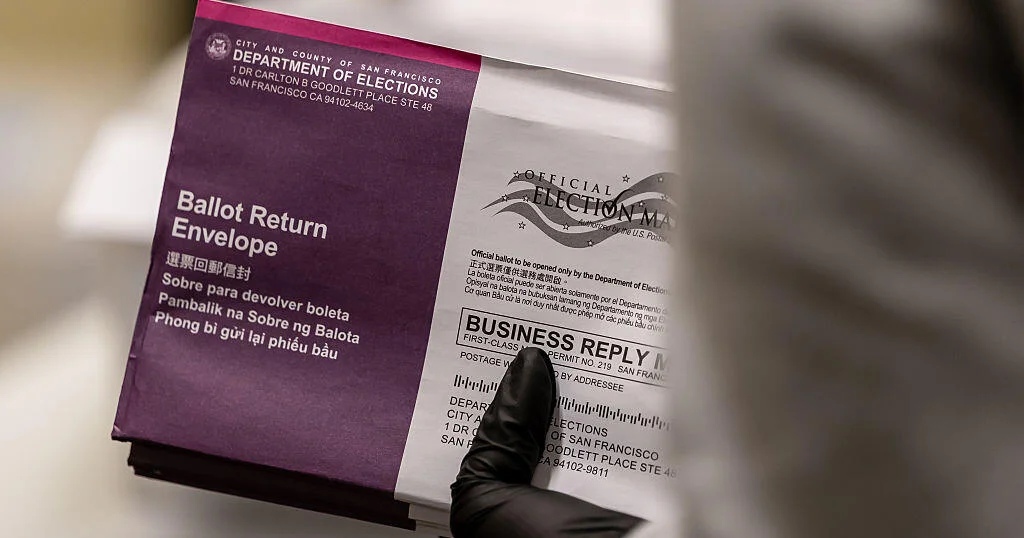
The US Justice Department has ordered California to review a list of people it believes may have been sent mail-in ballots for November’s election despite not being US citizens.
Acting deputy attorney general Trent McCotter gave officials 48 hours to examine the names and establish the citizenship status of each person. The list was supplied on a password-protected thumb drive.
Where citizenship could not be independently confirmed, Mr McCotter instructed election officials to segregate the ballots while checks continued, rather than cancel them.
He also told California officials not to issue a ballot to anyone on the list who had not yet received one, pending confirmation of their citizenship.
The letter was sent to the Los Angeles County clerk’s office, which confirmed it had received the request. Similar letters were sent to other counties, according to a person familiar with the matter.
California’s secretary of state was approached for comment. The move follows a July warning from Department of Homeland Security secretary Markwayne Mullin, who told the state’s secretary of state that the federal government believed non-citizens appeared on California’s voter rolls.
The action is part of the Trump administration’s wider effort to scrutinise voter registration records in states led by Democrats. The Justice Department’s Civil Rights Division has filed 31 lawsuits seeking unredacted copies of voter rolls, saying it wants to ensure the lists are accurate while also acknowledging that the information will be shared with Homeland Security to screen for non-citizens.
Assistant attorney general Harmeet Dhillon wrote to all 50 states in July, warning of possible criminal action if they knowingly allowed non-citizens to remain on their voter registers. The department has so far lost 26 of the cases and has not secured a legal victory.
Since Donald Trump returned to the White House, the Justice Department has brought criminal charges against more than 100 people in cases involving alleged voter fraud. Mr Trump has continued to claim, without evidence, that voter fraud was responsible for the 2020 election being stolen.
Studies cited in the material have repeatedly found that voter fraud is rare and has not occurred on a scale capable of affecting an election outcome. A recent data analysis estimated that more than 30,000 self-declared non-citizens may have been added to US voter rolls since 2000 because of software and clerical errors linked to driving licences and state identification cards.
The figure was small compared with the roughly 174 million people registered to vote in the 2024 election, according to census data.
