


Siemens is planning to invest more than €1 billion in industrial artificial intelligence over the next three years, as Europe seeks to turn its established manufacturing base into an advantage in the global AI race.
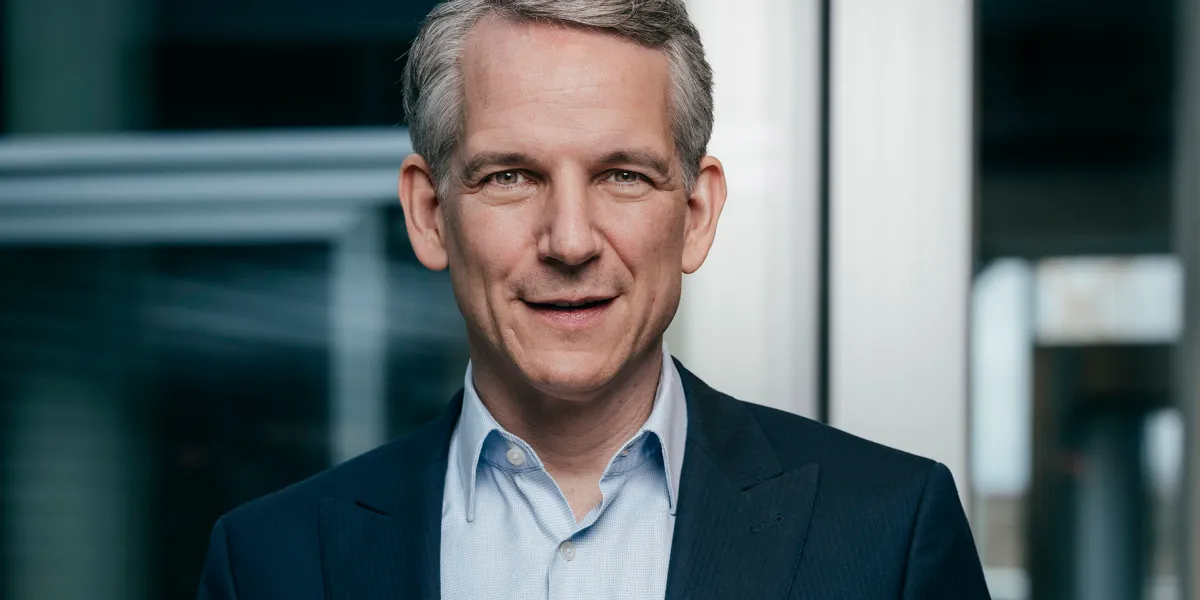
Peter Koerte, chief executive of Siemens’s Smart Infrastructure division, said the company’s industrial foundation model could cut engineering cycles by up to 40%. Potential applications include the automotive and aerospace industries.
Koerte said Europe had fallen behind the United States in private AI investment, adoption, data-centre capacity and the creation of highly valued technology companies. US private investment reached $285.9 billion in 2025, compared with $20.9 billion in Europe, according to figures from Stanford University.
He attributed part of Europe’s difficulty in producing companies at the scale of America’s biggest technology groups to the fragmentation of its markets. “We have really smart people in Europe,” Koerte said. “But the U.S. and China have a massive advantage because of their huge domestic markets. In Europe, it’s disproportionately harder to scale because of the different languages, regimes, and political systems.”
Siemens bets on Europe’s industrial data
Industrial AI models differ from large language models because they are trained on manufacturing and engineering data rather than primarily on text. Koerte said that distinction was essential in sectors where inaccurate calculations could have serious consequences.
“In engineering, you need to be precise. If the AI hallucinates or makes up a calculation, you will have a problem,” he said. “When we try to use large language models in engineering and production, it doesn’t work—words are much more imprecise.”
Siemens believes Europe’s long-established industrial companies could provide a valuable source of training data. More than half of the companies on the Fortune 500 Europe are more than 100 years old, while established pharmaceutical, automotive and chemical businesses have accumulated decades of operational information.
Convincing those companies to share it remains a challenge. Businesses such as BMW and AstraZeneca are unlikely to place their data on the internet, Koerte said, meaning they must trust another organisation to use it to train AI systems.
Siemens, founded in 1847, is seeking to use its long-standing relationships with industrial customers to address that concern. Companies that share data retain ownership of it, while Siemens uses the information for training. In return, they receive access to its AI model and can request new applications.
“We have decades-old relationships with most of the companies we work with,” Koerte said. “They trust us to take utmost care of their data and can rely on us if something breaks.”
The company has also recruited senior AI specialists from the US. Vasi Philomin, previously Amazon’s vice-president of generative AI, joined Siemens last year as head of data and AI, while former Amazon Web Services director Manu Parbhakar was appointed to lead its Silicon Valley-based strategy and partnerships team.
Koerte said attracting the necessary expertise required higher pay than would normally be offered in Europe. Siemens is also working with Nvidia to develop an industrial AI operating system.
Those US links come as the European Commission seeks to reduce the bloc’s dependence on American Big Tech. The EU relies on non-EU countries for 80% of its digital infrastructure and services, and its technology sovereignty package is intended to support home-grown alternatives.
Koerte said, however, that complete technological sovereignty was unrealistic because the resources needed to develop advanced AI are spread across countries. “To put it simply, there’s no sovereignty. Not in the U.S. Not in China. Not in Europe,” he said.
He cited the high-performance chip supply chain as an example, saying it depends on ultraviolet machines made by ASML in the Netherlands, components sourced from German companies and suppliers operating across the world.
Rather than pursuing isolation, Koerte backed greater international co-operation. Siemens chief executive Roland Busch has warned that a “digital iron curtain” could slow technological progress if governments seek excessive control over digital supply chains.
