


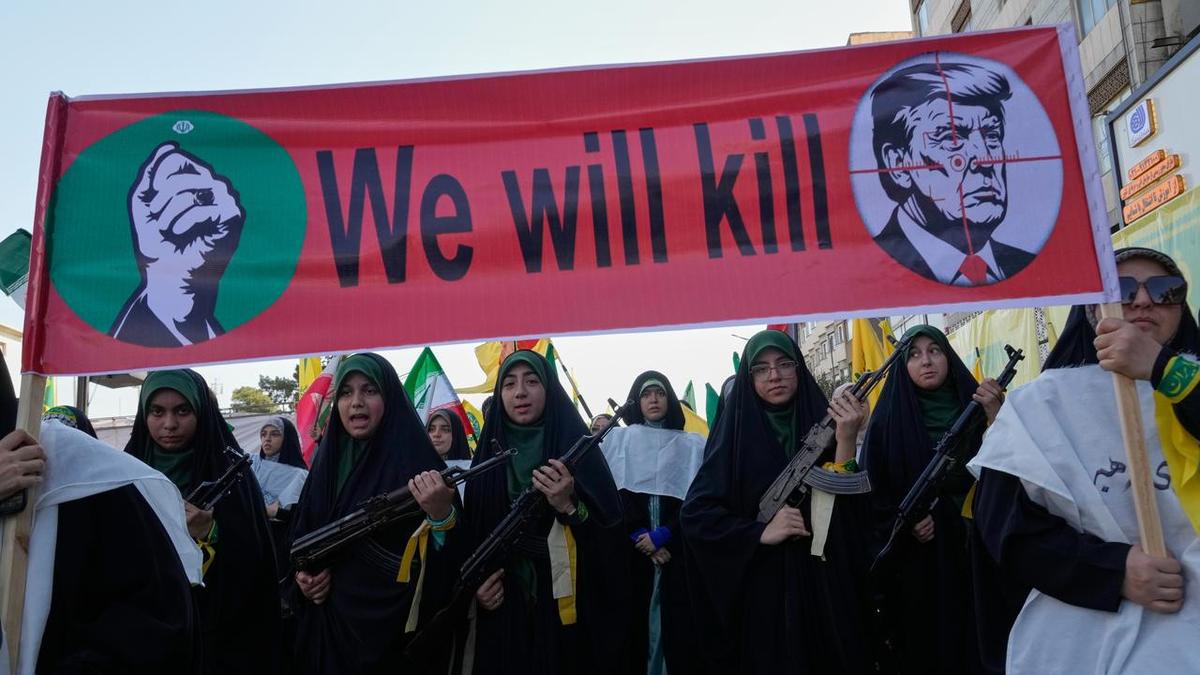
Fears of a return to all-out war between the US and Iran are growing after Donald Trump said Tehran wanted an agreement to end hostilities, but not one he would accept.
Speaking at a White House news conference, the US president said: “We want to make a real deal, not a fake deal.” He also accused the Iranian government of having been “bullshitting people for 51 years”.
Mr Trump later repeated his vow that “Iran will never have a nuclear weapon, ever”, as uncertainty continued over whether Washington would pursue negotiations or further military action.
The president has alternated between backing an agreement to stop the fighting and saying the US does not need to reach a deal. Diplomats and analysts say the uncertainty, combined with uneven exchanges of fire, reflects the difficult position facing both sides nearly nine months into the war.
A Middle Eastern diplomat said Gulf Arab states were concerned about a possible return to full-scale hostilities. They are using existing communication channels to seek a sustainable, if limited, arrangement, the diplomat said.
One proposal under discussion would remove restrictions on shipping through the Strait of Hormuz, a key route for the global energy trade, in return for limited sanctions relief for Iran. It could also create the conditions for wider negotiations involving Tehran’s nuclear programme.
The diplomat, who spoke anonymously because of the sensitivity of the discussions, said mediating countries placed little weight on public statements from either side. They were focusing instead on positions communicated in private negotiations.
Iran attacks US facilities in Gulf
Iran has intensified attacks on neighbouring Gulf states over the past week, including strikes on a US air base in Kuwait and several attacks on Bahrain. The escalation followed a US fighter jet strike on a Revolutionary Guard missile launch site on Qeshm Island in the Strait of Hormuz.
Tehran said its actions were a response to US drone surveillance operations and an attack on Iranian communications towers. It had been about two months since Iran had ordered attacks on US facilities in neighbouring countries.
Analysts described the exchanges as measured tit-for-tat action, suggesting both sides were signalling their positions while facing pressure to resume engagement. They said neither appeared to have much appetite or capability to return to the height of the war.
The latest Iranian strikes began days after Mr Trump said the conflict was “militarily is effectively over”, following his Republican Party’s loss of control of Congress. Voters had cited opposition to the war and the impact of its economic consequences on household finances.
However, thousands of US troops remain stationed off Iran’s coast as part of a naval blockade intended to restrict the flow of Iranian oil on to the global market.
The Joint Maritime Information Center, a coalition overseen by the US Navy, issued an updated warning this week that ships could breach the blockade if they had received cargo from a restricted vessel or were carrying goods loaded in Iran, even if they had not entered an Iranian port.
The Trump administration is also continuing an economic pressure campaign aimed at Iran’s remaining international financial links, while appearing to show greater restraint than during US military retaliation over the summer.
The Associated Press has reported that Israeli Prime Minister Benjamin Netanyahu has urged Washington to restart the war or allow Israel to strike Iran’s nuclear facilities and missile capabilities.
