


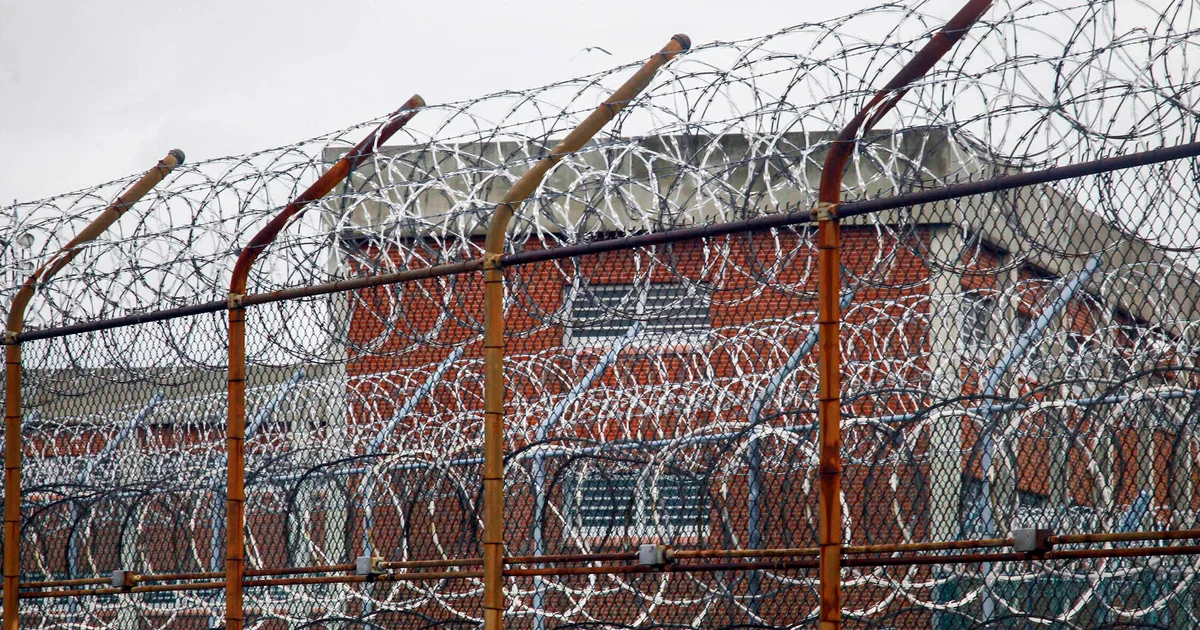
New York City mayor Zohran Mamdani has unveiled a plan to close the troubled Rikers Island jail complex and replace it with four smaller facilities across the city by 2032.
The proposal acknowledges that the city will miss its existing legal deadline of August 2027. Mamdani will need approval from the City Council to extend the timetable, while the six-year strategy also requires legislative backing.
One Rikers facility was closed earlier this year, but the remainder of the complex is still operating. “I’m proud to say New York City will close Rikers Island once and for all,” Mr Mamdani said.
Plan for four borough-based jails
The replacement jails, in Brooklyn, the Bronx, Queens and Manhattan, are intended to hold about 4,100 people between them. The first is due to open in Brooklyn in 2029, followed by facilities in the Bronx and Queens in 2031, and Manhattan in 2032.
That capacity is substantially below the roughly 6,700 people reported to be in custody at Rikers in June. The city therefore plans to reduce the number of people held before trial by speeding up cases, expanding diversion programmes and increasing access to psychiatric beds.
City projections suggest the jail population can be brought down to 5,500 by the time the first replacement facility opens. An interagency taskforce will focus on court backlogs, evidence-sharing and delays in processing cases.
“We’ll work across city agencies to speed up the exchange of evidence and address court backlogs,” Mr Mamdani said. “We do not want any New Yorker to spend a day longer in detention than necessary.”
Julie Menin, the City Council speaker, said half of the city’s felony cases took more than a year to resolve during the first six months of 2025. “That’s simply unacceptable,” she said.
Rikers, which mostly holds people awaiting trial, has faced years of concerns over violence and safety. Mr Mamdani said assaults occur there at eight times the rate of similar jails, while people are held for nearly four times longer than the national average.
The plan includes $50 million for job training, education, mental health counselling and drug treatment. A further $76 million will fund community programmes and supervision intended to keep more people out of jail while they await trial.
“These are the kinds of key methods that we are going to use to ensure that public safety is paramount and that we deliver everything that this plan requires of us,” Mr Mamdani said.
Stanley Richards, the city’s correction commissioner, said the proposed changes were intended to create a system based on dignity. Mr Richards, who was previously incarcerated at Rikers, said both prisoners and staff had been overlooked.
“At Rikers, out of sight, out of mind is the norm for both people in our custody and our staff,” he said.
Supporters of the closure say the city has delayed it for too long, but critics have questioned whether the jail population can be reduced safely and whether the new buildings can be completed on schedule.
Jan Lee, founder of Neighbors United Below Canal, said the plans did not resolve residents’ concerns about construction, including nighttime drilling and heavy lorries travelling through narrow streets. Brooklyn resident Judy Collison said construction had continued until midnight for years.
Mr Mamdani said the strategy had been developed with the federal monitor and would be implemented in partnership with the monitor’s office.
Elizabeth Glazer, a former director of the Mayor’s Office of Criminal Justice, said the plan needed a safeguard in case the population could not be reduced quickly enough. She suggested allowing construction on Rikers Island while the replacement jails were being completed.
Staten Island council member Frank Morano has argued instead for building modern correctional facilities on Rikers Island, saying it was already city-owned and separated from residential neighbourhoods.
Jonathan Lippman, a former New York State chief judge who published a blueprint for closing Rikers in 2017, said delays under former mayors Bill de Blasio and Eric Adams had contributed to the need to extend the deadline.
Mr Mamdani cannot change the August 2027 deadline on his own and must secure City Council approval for the proposed 2032 closure date.
