


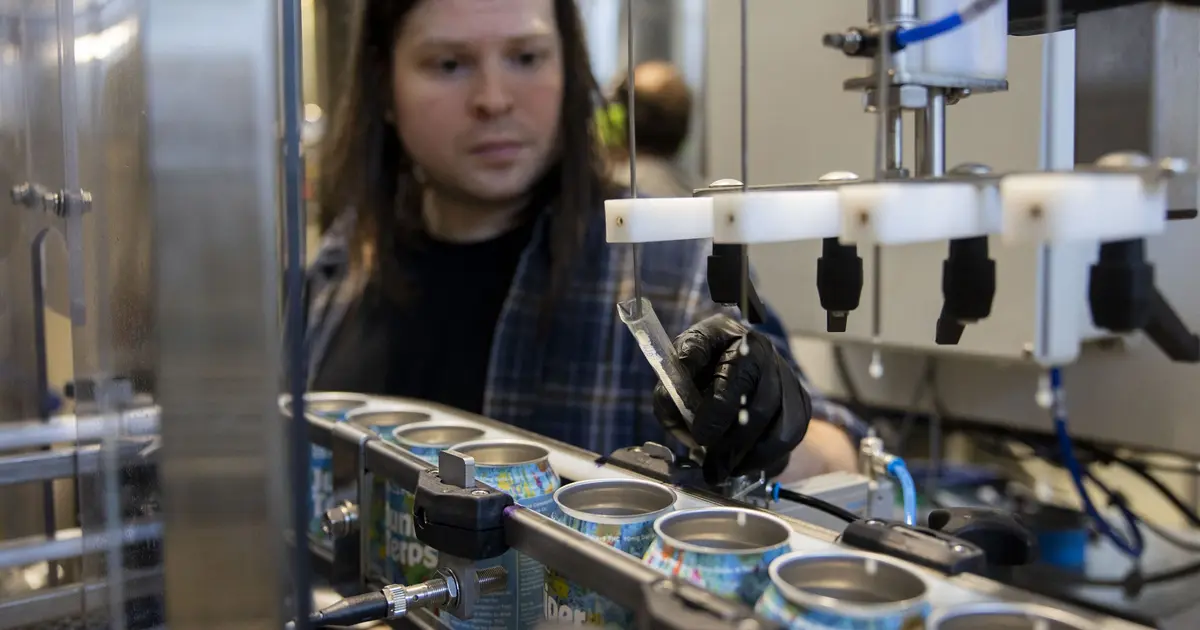
A federal ban on hemp-derived THC products is threatening breweries and other small businesses across the United States, with legislation due to take effect on December 11 unless Congress intervenes.
The new rules would prohibit the sale of hemp-based products containing more than 0.4 milligrams of THC per container, potentially removing a lucrative line of drinks, gummies and other products from the market.
For Chicago’s Marz Community Brewing Co, the disruption has already begun. The brewery began producing THC seltzers after customers and retailers asked for an alcohol alternative, but new Illinois laws enacted in November have stopped it selling the products.
Ed Marszewski, who co-founded the brewery in 2014, said the change had cost Marz more than half of its wholesale revenue.
“We have lost over 50% of our wholesale revenue,” Marszewski said. “We have had to reduce employee hours and have laid off several workers. It has greatly impacted our wholesale business and impacted our on-premise sales significantly.”
Breweries face losing a growing revenue stream
Hemp-derived THC drinks have become an important part of the business for some breweries, particularly as alcohol consumption declines and customers look for alternatives.
At Bent Paddle Brewing Co in Duluth, Minnesota, hemp beverages account for about 40% of overall business, according to Pepin Young, the company’s director of new business development.
Young, who also sits on the board of Minnesota Hemp Beverage Producers, said the proposed limit would effectively wipe out the products currently being made and sold by the business.
“A 0.4 mg per-container limit effectively eliminates the products we’re currently making and selling,” Young said. “This isn’t a minor adjustment for us. It would fundamentally change our business overnight.”
Wisconsin-based Sprecher is also warning of the consequences. The company currently sells four hemp-derived THC soft drinks, each containing 10 milligrams of THC — far above the proposed federal threshold.
Sprecher president and chief executive Sharad Chadha said the company had invested in product development, manufacturing, compliance and distribution on the basis of the existing legal framework.
“The proposed 0.4 mg per-container limit would effectively eliminate our ability to sell these products through our existing channels,” Chadha said.
He said the category had given craft breweries a way to diversify as they faced falling beer consumption, rising costs and changing consumer preferences.
“THC beverages have created an opportunity to diversify, innovate, and utilize existing manufacturing capacity,” Chadha said.
Federal hemp ban follows 2018 legal change
The 2018 Farm Bill removed hemp and cannabis derivatives with low concentrations of THC from the definition of marijuana under the Controlled Substance Act.
The change allowed products including seltzers, sodas and gummies containing hemp-derived THC to enter the market. Critics have described the development as a loophole, arguing that the sector has operated without sufficient safeguards.
Opponents have also raised concerns about products resembling ordinary sweets and snacks being accessible to children. Samuel Levine, director of the US Federal Trade Commission’s Bureau of Consumer Protection, said in 2024 that companies selling such products put young children’s health at risk.
Several states introduced their own regulations, but those measures did not close the federal gap created by the Farm Bill.
The hemp industry is estimated in the source material to be worth $38.7 billion nationwide, with businesses ranging from growers and processors to laboratories, distributors, packaging companies and retailers.
Chadha said a blanket ban could affect that wider network, which he said had invested millions of dollars in equipment, facilities, technology and staff.
Lawmakers seek alternative to federal ban
Senators Amy Klobuchar and Tim Sheehy have introduced the Hemp Guardrails Act, which would keep hemp products on the shelves while imposing age restrictions, banning copycat marketing and prohibiting synthetic THC products.
Klobuchar said a ban would have far-reaching consequences for farmers, brewers and small businesses. Young described the proposed legislation as encouraging and urged lawmakers to listen to businesses already operating in the sector.
Not all senators support the proposal. Senator Ted Budd said Congress had already acted to close a loophole that should never have existed and argued that the products could contribute to addiction and endanger children.
With the December 11 deadline approaching, Congress has only a limited number of working days to act. The same date is also when the current government funding package expires, creating the possibility that any hemp measure could be attached to wider budget legislation.
Chadha said the industry was seeking regulation rather than elimination.
“We support sensible regulations, including age restrictions, responsible marketing, product testing, clear labeling, and appropriate THC limits,” he said. “However, a blanket ban is not the answer.”
