


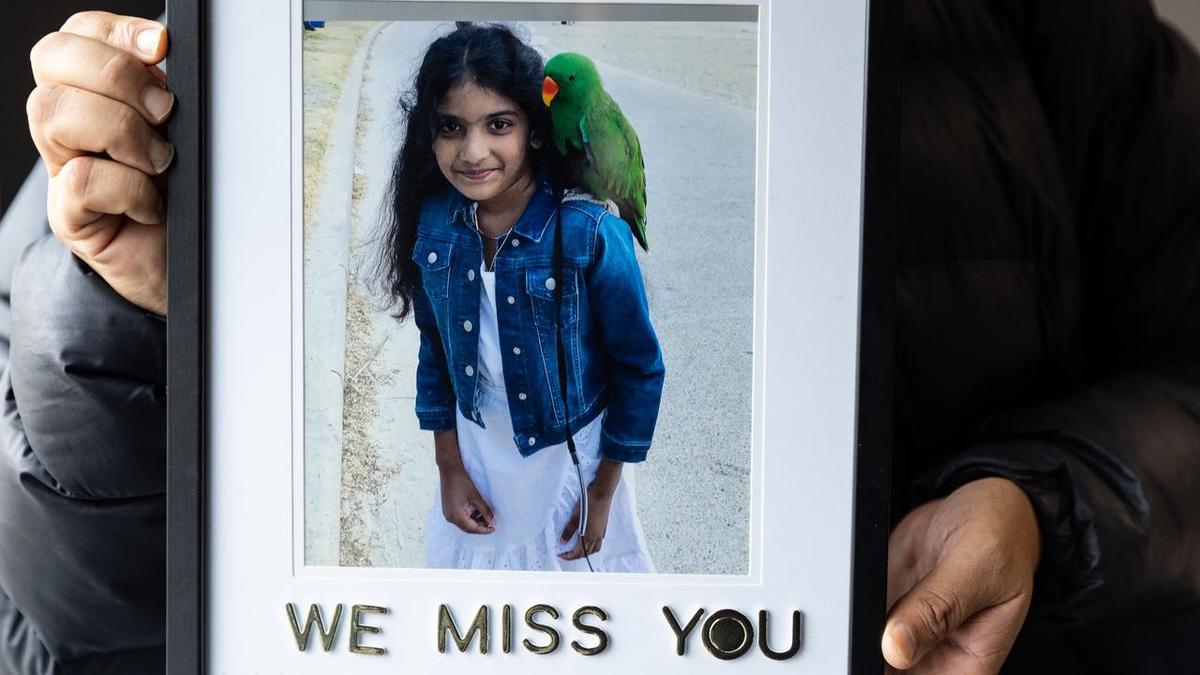
The death of eight-year-old Amrita Varshini Lanka was preventable, a coroner has found, after criticising the care she received at a Melbourne emergency department.
Victoria’s deputy state coroner, Paresa Spanos, said Amrita’s life could have been saved by about 4am on April 30, 2022, when an abnormal electrocardiogram and blood test results showed the seriousness of her condition.
Amrita had arrived at Monash Children’s Hospital’s emergency department at about 1pm the previous day after two days of stomach pain, nausea and vomiting. Tests ruled out appendicitis and clinicians initially treated her illness as gastroenteritis.
In the early hours of the morning, her mother, Satya Tarapureddi, raised concerns that Amrita was experiencing chest pain and shortness of breath. An ECG carried out at about 3.30am was abnormal, prompting emergency department registrar Patrick Tan to suspect myocarditis.
Dr Tan discussed the preliminary diagnosis with another doctor, who agreed with it. However, neither doctor appeared to appreciate how seriously ill Amrita was, the coroner said.
Her blood pressure was not measured at that point, while other tests showed an elevated lactate level, indicating that she was deteriorating. Dr Tan decided she did not look unwell and did not attend to her again until 5.30am, when her condition had clearly worsened.
Care was then escalated to senior clinicians and specialist units. Amrita suffered a brief cardiac arrest at about 7.30am, before arrangements were made to transfer her to the Royal Children’s Hospital.
A transfer crew arrived at about 8.51am, by which time Amrita had suffered a prolonged cardiac arrest. She could not be revived despite attempts at CPR.
Handing down her findings on Wednesday, Ms Spanos said: “Certainly by about (4am), when the ECG had been completed and the elevated lactate was available, Amrita’s life could have been saved.”
She was also critical of Dr Tan’s management of the case, while acknowledging that emergency departments were busy and that he was a relatively junior doctor with numerous responsibilities.
“The clinical management and care he provided to Amrita was wanting,” Ms Spanos said. “(His actions) thereby caused or contributed to her death.”
Monash Health admitted during a 2024 inquest into Amrita’s death that staff had failed to recognise the seriousness of her condition.
The coroner made no formal recommendations, but commended Monash Health for carrying out an internal review. The hospital has since introduced changes, including requiring emergency department clinicians to notify on-call consultants in specific cases.
Ms Spanos appeared at times to hold back tears as she read her findings and offered her condolences to Amrita’s parents, who nodded and wiped away tears in court. The couple did not speak to the media as they left.
