


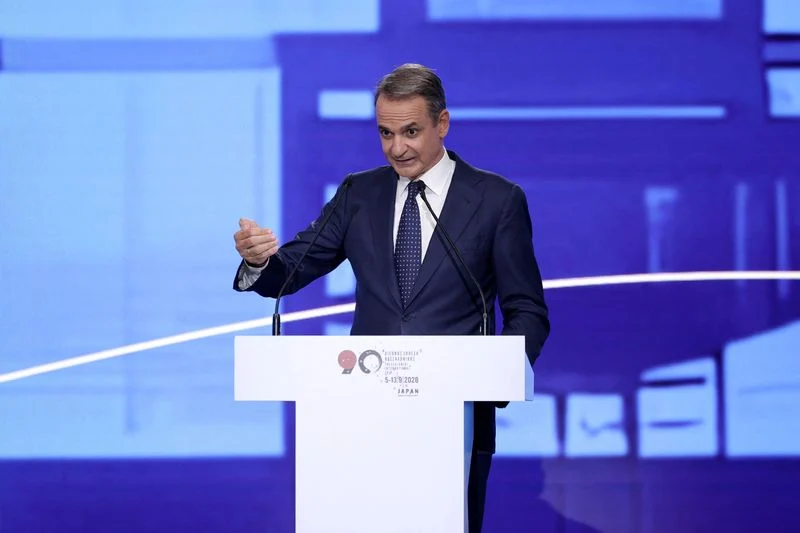
Greek Prime Minister Kyriakos Mitsotakis has unveiled an income tax and wage plan worth €2.2 billion for 2027, promising increases for workers, pensioners and the self-employed ahead of elections next year.
The package includes annual bonuses of €400 for pensioners and €500 for public-sector workers, alongside tax changes aimed at low-income households, farmers and small businesses.
Low-income farmers and families with three children will be exempt from income tax under the proposals. Self-employed workers and small companies will also benefit from a reduction in advance tax payments.
Mr Mitsotakis further announced that Greece’s monthly minimum salary would rise to €950, with a further increase to €1,000 planned for 2028. Pension contributions are also set to fall by 0.5 per cent.
The measures are expected to cost about one per cent of Greece’s gross domestic product in 2027. The government says stronger-than-expected public finances have created room for the reforms, with a primary surplus forecast at about 4 per cent of GDP this year.
Greece’s economy is expanding at an annual rate of about 2 per cent, ahead of the eurozone average, after years of recovery from the financial crisis that began in 2009.
But the centre-right government is facing pressure over the cost of living and allegations of corruption. Although it remains ahead in opinion polls, its support has fallen below 30 per cent, compared with the 40.5 per cent share of the vote it secured when it was re-elected in 2023.
The income measures are central to Mr Mitsotakis’s political message as he seeks to demonstrate that economic growth is translating into higher household incomes before the next national election.
