


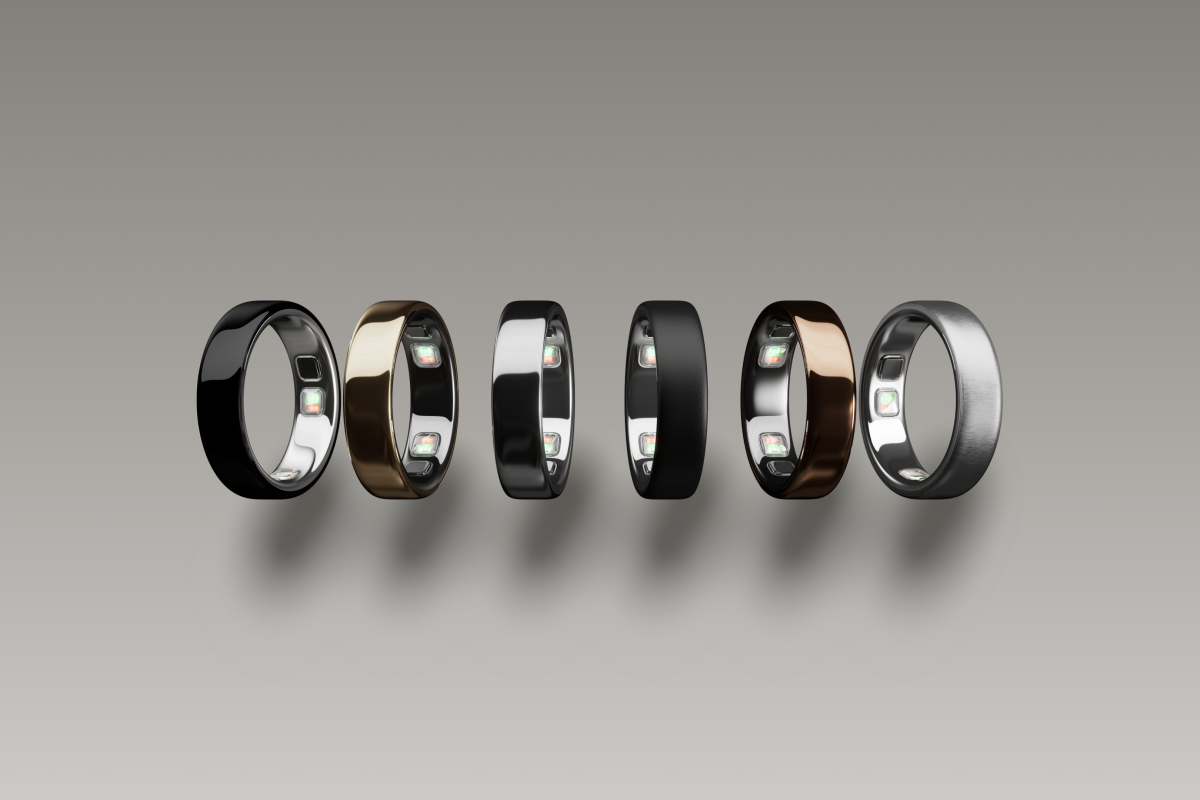
Oura’s decision to go public has underlined the intensifying battle for control of the smart ring market, with rivals including Ultrahuman, Circular, RingConn and Samsung seeking to challenge the Finnish company’s lead.
Oura filed to become a publicly traded company on September 3, shortly after launching its fifth-generation ring. The company reported that revenue had almost doubled to $1.21 billion (£900 million) in the nine months to June 30.
It said it had sold 3.6 million rings over the past year and had about five million paying members. The Oura Ring 5 is described as the company’s thinnest and lightest model so far.
The figures reflect the rapid growth of a category once marketed principally as a discreet alternative to the smartwatch. Health and sleep monitoring remain central to the devices, but manufacturers are increasingly adding features designed to make the rings more interactive and useful in everyday life.
Ultrahuman targets Oura’s market lead
Ultrahuman, an Indian company, has unveiled its third-generation Ring Pro, priced at $479 and due to begin shipping in the US in mid-September.
The model has been redesigned following a patent dispute in which Oura prevailed before the US International Trade Commission in October 2025. The ruling prevented Ultrahuman from importing new ring stock into the country, prompting it to alter the Ring Pro’s design.
Ultrahuman says the new ring includes an improved heart-rate sensing system intended to produce more reliable readings during sleep. A dual-core processor is designed to support more accurate data collection and greater processing on the ring itself.
The company has also raised $70 million, with backing from Qualcomm’s venture arm. Its stated ambition extends beyond sleep and fitness tracking, with future rings intended to run software directly on the device and potentially support artificial intelligence features and games.
Contactless payments and alerts
French firm Circular is preparing two versions of its Ring 3, the Pro and Slim, for an expected launch early next year. Both are due to include near-field communication technology, allowing users to make contactless payments with the ring.
The devices will also use vibrations for silent alarms, reminders and health notifications. Circular says the Pro will offer an FDA-cleared electrocardiogram feature for detecting atrial fibrillation, alongside blood-pressure trend monitoring, glucose tracking and more detailed sleep analysis.
No prices have yet been announced for either model.
RingConn, a Chinese manufacturer, launched its Gen 3 ring in May, with prices starting at $349. It uses sensor data, calibrated against externally measured blood-pressure readings, to provide insights into changes in vascular strain over time.
The ring also records heart rate, blood oxygen levels, sleep, activity and stress. Its vibration alerts can flag health changes, remind users to move and warn when the battery is running low.
Samsung and newer entrants
Samsung remains one of the most significant challengers because of its wider ecosystem of phones, watches and other devices. The $399 Galaxy Ring, launched in 2024, is aimed particularly at existing Samsung customers.
It offers health and sleep monitoring but is less advanced in some areas than competing products. Features such as sleep-apnoea detection, available on Oura, RingConn and Ultrahuman devices, are absent, as is atrial-fibrillation detection offered by Circular and RingConn.
Other companies are pushing the form beyond a passive health tracker. Chinese appliance maker Dreame has shown a ring with haptic alerts for calls, messages and alarms, as well as a small touchpad intended to control music or trigger a smartphone camera.
The device is also expected to monitor heart rate, blood oxygen, heart-rate variability and sleep, although pricing and availability have not been confirmed.
There are signs that the category could move even further towards smartphone-style functions. India’s Pebble Halo has a screen, although it is currently available only in India, while Dreame’s proposed touch controls point towards rings being used to interact with phones rather than simply collect data.
That expansion presents a dilemma for an industry built on reducing screen time. As Oura seeks public-market backing on the strength of its health platform, competitors are testing whether payments, alerts, controls and eventually software can give a two-gram titanium ring a much broader role.
