


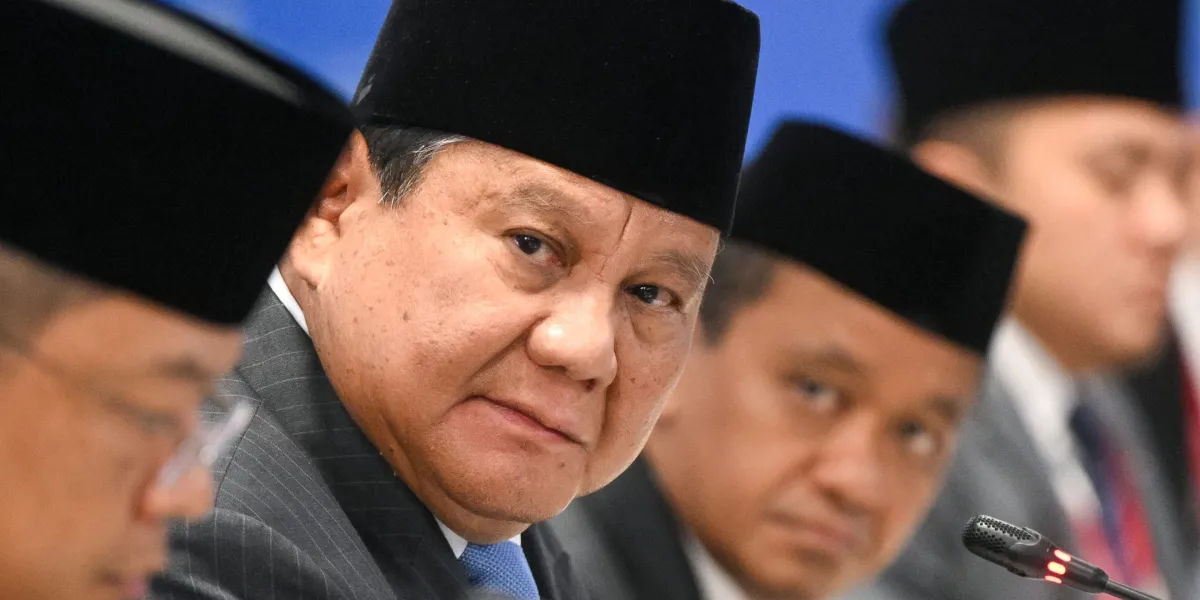
Indonesia’s president, Prabowo Subianto, has rejected the threat of an MSCI downgrade, declaring that the country will not be intimidated by a proposal that could exclude it from major global and regional investment indexes.
Addressing his cabinet, Mr Prabowo said Indonesia faced “all sorts of disturbances” and accused MSCI of trying to pressure the country.
“I simply want to tell MSCI: the Indonesian nation fears no one and will never back down,” he said. “We have the strength, the courage and we are willing to make sacrifices, and we refuse to surrender.”
MSCI downgrade threatens investment flows
MSCI said on 15 October that it was considering moving Indonesia to “standalone” status, below its current emerging-market classification and frontier-market status. The index provider cited suspected coordinated trading behaviour and a lack of evidence of meaningful enforcement.
A final decision is expected by the end of June 2027. Because many investment funds track MSCI indexes, the reclassification could trigger billions of dollars in outflows from Indonesia.
The country has faced the prospect of a downgrade throughout 2026. In January, MSCI considered shifting Indonesia from emerging-market to frontier-market status, a move that threatened as much as 13 billion dollars in passive investment flows. The latest proposal would place the market below frontier status and could result in larger outflows.
Indonesia’s benchmark Jakarta Composite Index has fallen by more than 10 per cent since MSCI announced the proposal and is down by almost 40 per cent so far this year.
The dispute has also prompted claims of outside pressure. Former trade minister Muhammad Lutfi accused Singapore’s state investors Temasek and GIC of pushing MSCI towards a decision that would cause a sell-off and allow foreign investors to buy Indonesian strategic assets at lower prices.
Temasek and GIC denied the allegations. A Temasek executive described them as “patently untrue”, while Jeffrey Hendrik, president director of the Indonesia Stock Exchange, said global index providers were regarded as independent.
Mr Prabowo is facing wider political and economic pressure, with his approval rating reported to have fallen to 44.5 per cent from 81 per cent in November. Public dissatisfaction has included his free meals programme and doubts over a plan to establish cooperatives in about 80,000 communities.
More than 9,000 police officers were deployed across Jakarta this week ahead of events marking Mr Prabowo’s second year in office, amid increasing protests against his administration. Wildfires causing haze across the region have added to the pressure, with Singapore threatening to prosecute companies responsible.
