


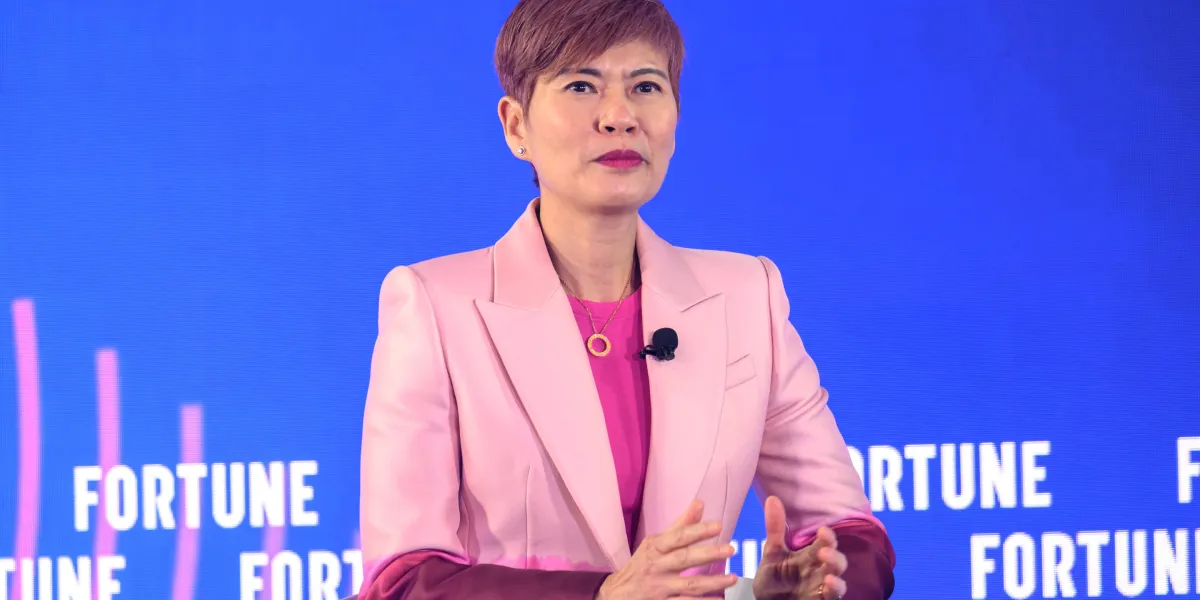
The chief executive of AS Watson has rejected the idea that artificial intelligence should primarily be used to reduce headcount, arguing instead that it can improve the quality of work and give employees more time with customers.
Malina Ngai, group chief executive of the world’s largest health and beauty retailer, said companies should view AI as a partner for staff rather than a replacement for them.
“Is it really that, with AI, we’re going to cut out 30% of our workforce? Or… are we going to increase the quality of our people’s intelligence?” Ms Ngai said at the Fortune Leaders Forum on September 8.
Her comments come as companies, particularly in the technology sector, have announced tens of thousands of redundancies while shifting towards AI. Oracle has cut 21,000 jobs, or about 13% of its workforce, over the past year.
AS Watson, meanwhile, has adopted what Ms Ngai described as a “human-AI partnership” strategy. “You should bring the AI assistant with you to work. It helps you to think faster and smarter,” she said.
The approach was introduced last October. Ms Ngai said employee engagement scores had “jumped up a lot” since then, as staff spent more time interacting directly with customers instead of working in front of screens.
The company also tracks a “customer love score”, which Ms Ngai said had continued to rise as shop-floor employees were freed to focus on serving customers. “This is not the usual way that people would measure AI,” she acknowledged.
She said the technology presented an opportunity to rethink the retail model rather than simply automate existing procedures. “Going forward, I think retail is going to become more human, not less,” she said.
AI and the changing retail workforce
Ms Ngai’s view has been echoed elsewhere in the retail sector. In May, Costco chief executive Ron Vachris said AI was “elevating” workers.
AS Watson was founded as a pharmacy in Hong Kong in 1841, when the territory was a British colony. It now operates more than 17,000 outlets across 31 markets and is reportedly planning listings in Hong Kong and London, with reports suggesting a valuation of about $30 billion.
Automation is also changing the make-up of the company’s workforce. During a visit two months ago to a warehouse in Foshan, about 120 kilometres from Hong Kong, Ms Ngai found that 62% of employees were women.
She said warehouses typically employed about 80% men because of the physical demands of lifting goods. With robots now carrying out that work at the Foshan site, the shift had created a more diverse workforce.
“That was something that really positively surprised me—how technology can also bring more diversity in the company,” Ms Ngai said.
She warned that the biggest danger for business leaders was using AI only to make existing systems faster. “Basically, you get a version of yesterday,” she said.
