


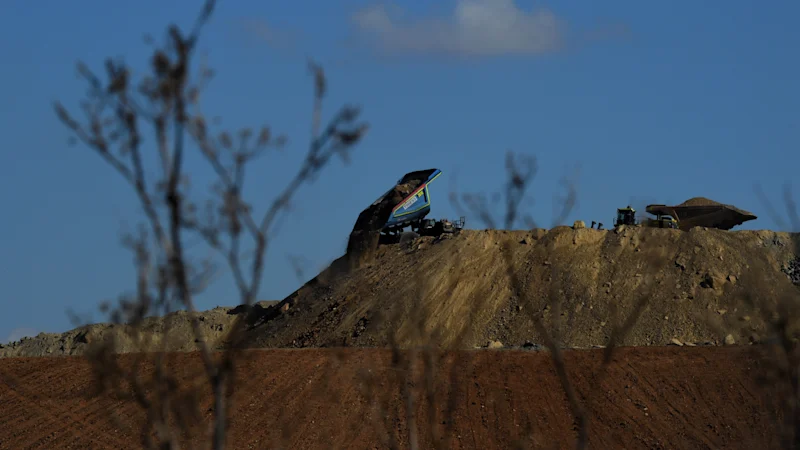
Australia’s High Court has invalidated approval for a major expansion of the Mount Pleasant coal mine in New South Wales, ruling that planners failed to properly consider emissions produced when exported coal is burned overseas.
The decision means NSW planning authorities must reckon with so-called Scope Three emissions when considering whether conditions should be imposed on coal projects. The emissions accounted for 98 per cent of the proposed expansion’s total greenhouse gas output.
The case concerned MACH Energy Australia’s open-cut mine in the Hunter region, which received approval in 2022 for an expansion extending its operating life by 22 years. The company had outlined measures to address emissions produced within Australia, but said emissions from the use of exported coal would be managed by customer countries under their Paris Agreement commitments.
High Court ruling centres on overseas coal emissions
Under NSW law, the Independent Planning Commission was required to consider conditions to ensure greenhouse gas emissions were minimised “to the greatest extent practicable”.
Justice James Edelman said the commission had not addressed that requirement in relation to Scope Three emissions because it believed they would be accounted for in the countries receiving the coal.
By concentrating on the remaining 2 per cent of emissions, the commission had failed to fulfil its duty to consider conditions that could minimise the project’s overall emissions, the court found.
Justice Michelle Gordon said the High Court was not deciding the merits of the legal requirement or determining what conditions should be imposed. However, she found the failure to consider conditions for the overseas emissions was a material error that invalidated the approval. Justice Robert Beech-Jones agreed.
Chief Justice Stephen Gageler and Justice Jayne Jagot dissented, finding that the commission had adequately considered emissions generated overseas. They referred to the commission’s finding that, under the Paris Agreement, almost all countries had committed to reducing global greenhouse gas emissions and tracking their progress.
The ruling upheld the outcome of an earlier NSW Court of Appeal decision, although the High Court reached its conclusion on a different basis. The mine operator had previously survived a legal challenge brought by the Denman Aberdeen Muswellbrook Scone Healthy Environment Group.
Environment Minister Murray Watt said the federal government was still examining the 111-page judgment and questioned whether its effect would extend beyond NSW. He said the decision did not automatically apply to Commonwealth decisions or legislation, while other states could be affected depending on their own laws.
The federal Coalition called the decision “absurd” and urged the NSW Labor government to amend its planning legislation. Opposition Leader Angus Taylor and Nationals leader Matt Canavan said the law should make clear that overseas emissions from exported Australian resources were not a factor in project approvals.
They added that the federal government should intervene if the NSW government failed to act, arguing that legislation was needed to provide certainty for workers, businesses and international energy partners.
The Minerals Council also called for new laws, saying that legal challenges to approved mining projects created uncertainty for workers, communities and investors in NSW.
Anita Hart, a lawyer for the environment group that fought the expansion, described the judgment as “a groundbreaking decision for climate law in Australia” that would be closely studied in other countries.
Greens deputy federal leader Steph Hodgkins May said the ruling showed that “when Australian coal is burned overseas, the climate damage doesn’t magically disappear at the port”.
