


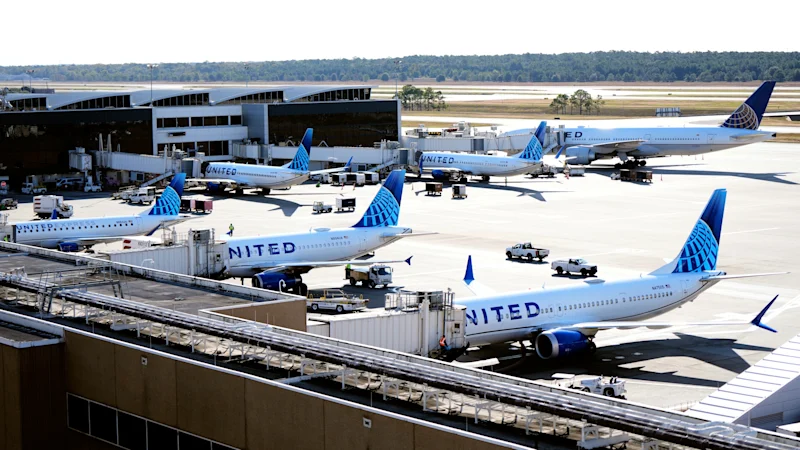
A routine upgrade to an ageing communications network in a remote part of the United States triggered a nationwide airspace shutdown after the system began overwhelming air traffic control equipment, officials said.
The disruption occurred while telecoms contractor L3Harris was replacing copper wiring with fibre-optic cable. Transportation Secretary Sean Duffy said the work caused a router to flood other parts of the system with connection attempts, disrupting communications with aircraft and radar feeds.
“That router that was being replaced as we switched from copper to fibre, it started flooding other routers in our air traffic control system,” Mr Duffy told a news conference. “We had over 1000 connection attempts every four to five seconds.”
The Federal Aviation Administration (FAA) ordered a nationwide ground stop at 3.45pm Washington time on Friday as a precaution. Officials said there was no evidence of a cyberattack or other nefarious activity.
“When we see that, your safety is paramount. We shut down the airspace,” Mr Duffy said.
Investigators had not established whether the initial fault resulted from poor installation, an incorrect configuration or a defective new router. Mr Duffy said the systems recovered once the work at the remote location had been isolated.
FAA administrator Bryan Bedford apologised to travellers and said about 30,000 of the day’s 50,000 scheduled flights had landed or were already airborne when the ground stop was imposed.
Of the remaining flights, 12,000 were cancelled, including 9,000 commercial services and 3,000 private flights. A further 4,000 to 5,000 cancellations were expected on Saturday as airlines attempted to reposition aircraft and crews, although the system was expected to recover by Sunday.
Ageing US air traffic control system under scrutiny
The incident has renewed attention on the age of America’s air traffic control infrastructure, which still relies in part on copper wiring and floppy disks. The FAA has announced plans to stop using floppy disks by the end of 2028.
Mr Bedford described the communications system as “1G” and said it was no longer in production, costing about 1 billion US dollars a year to maintain. Old Cisco 600 routers were being replaced continually, he said.
“This is probably one of the worst kept secrets in government – that this [communications] system needs to be replaced,” Mr Bedford said.
Rebecca Guy, the FAA’s acting chief technology officer, said the agency had not realised that a problem at an isolated site could have such extensive consequences.
The FAA administrator said the system had failed to cope with the incident, while Mr Duffy said responsibility could lie with the agency, the contractor or the equipment.
Congress allocated 12.5 billion US dollars for system upgrades last year, but Mr Duffy said the Trump administration wanted an additional 30 billion dollars, and was seeking as much as 50 billion dollars in total extra funding.
Democratic congressman Robert Garcia said there must be “full public transparency” about what had happened and why, adding that answers were needed to ensure the systems and technology were properly funded and upgraded.
Airlines continued to deal with the disruption on Saturday. Delta urged passengers who could do so to rebook for Monday, while United Airlines said most services were operating normally but some remained delayed or cancelled.
