


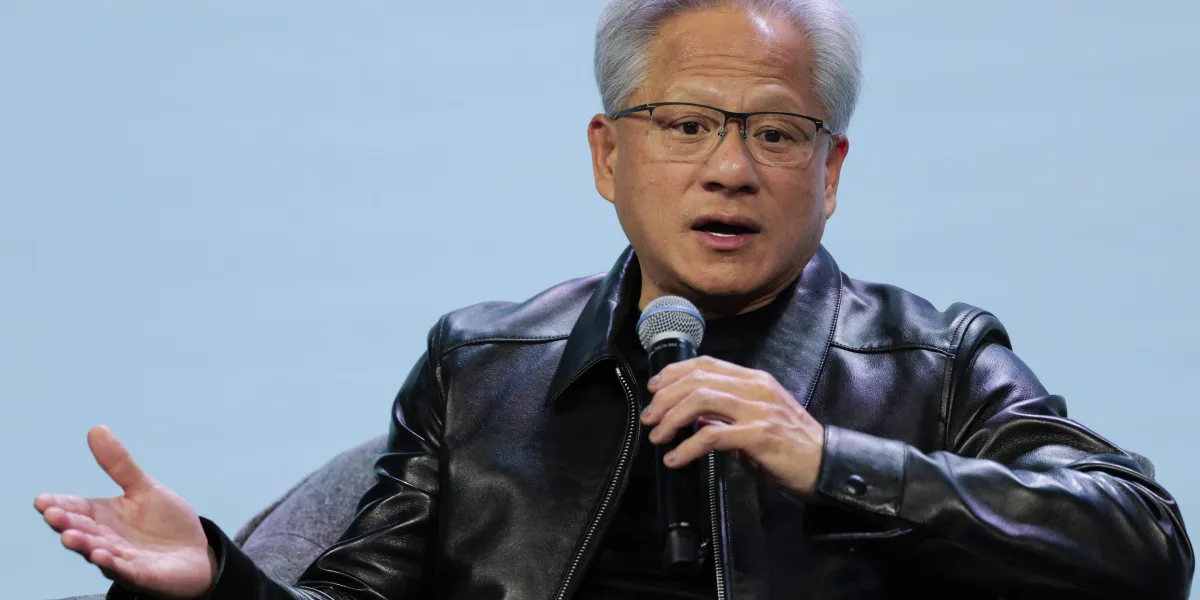
Jensen Huang is discussing a return to the leadership of Nvidia as supporters organise a campaign to reinstate him, while the chipmaker faces mounting scrutiny in the United States over its dealings with China.
A petition calling for Huang to return as chief executive had attracted 175,000 signatures, including those of Tesla and SpaceX chief Elon Musk, Epic Games chief executive Tim Sweeney, Atoms chief executive Travis Kalanick and thousands of Nvidia employees.
Allies of Huang have also established what has been described as a “war room” to support his return. The campaign comes as concern grows across the artificial intelligence industry about the impact of Nvidia reducing its investment in start-ups and suppliers under interim chief executive Colette Kress.
UBS analyst Tim Arcuri has estimated that a pullback by Nvidia could remove more than $50 billion from the market. The company’s financing has become important to businesses building the infrastructure required for the rapid expansion of AI.
Neocloud operator Nscale is seeking financial backing from Nvidia and other investors for a $45 billion data centre in West Virginia linked to Anthropic, according to reports cited in the source material.
Jensen Huang faces challenge from US scrutiny
The effort to bring back Huang faces a significant obstacle in Washington. Treasury Secretary Scott Bessent has questioned whether Nvidia complied with US laws banning the sale of certain chips to China during Huang’s tenure.
“Was it a low-level fail? Was it in the middle, or was it in the C-suite? And who knew?” Bessent said in a television interview.
He questioned whether shell companies had been used as a route around export controls and asked whether Nvidia had pursued “seemingly illicit sales” to increase revenue and earnings.
“If this were a bank and they hadn’t complied like this, the OCC would be in there right now, and a lot of the executives would be removed,” Bessent said, referring to the Office of the Comptroller of the Currency.
He said he expected answers from Nvidia’s board and external counsel within 10 days. Bessent also raised questions about the company’s accounting, pointing to a sharp increase in sales through companies registered in Singapore while reported sales to China declined.
Nvidia stopped reporting its Singapore sales last year after an unusually high proportion of transactions were routed through the city-state.
Any return by Huang would not end the investigations into Nvidia’s links with entities connected to China. The company contacted Taiwanese officials after one of its employees there was charged in July 2026 with helping smugglers move AI chips into China.
In a separate episode, Nvidia’s general counsel Tim Teter contacted the US Commerce Department in 2025 to ask whether American officials had been involved in the detention of Alice Huang, an executive at Singapore-based Megaspeed.
Questions over export controls
Commerce Secretary Howard Lutnick is also expected to face questioning in Congress. Bessent has accused him of delaying enforcement of export restrictions on China.
Further questions have been raised over financing arranged by Lutnick’s sons, who succeeded him at Cantor Fitzgerald. They arranged billions of dollars in funding for companies that were business partners of Nvidia, according to reports cited in the source material.
The controversy places Nvidia’s investment role in the AI economy alongside concerns over export controls and corporate governance. For Huang’s supporters, the campaign to restore him is therefore unfolding as the company’s leadership and its relationships with China-linked businesses come under increasing examination.
