


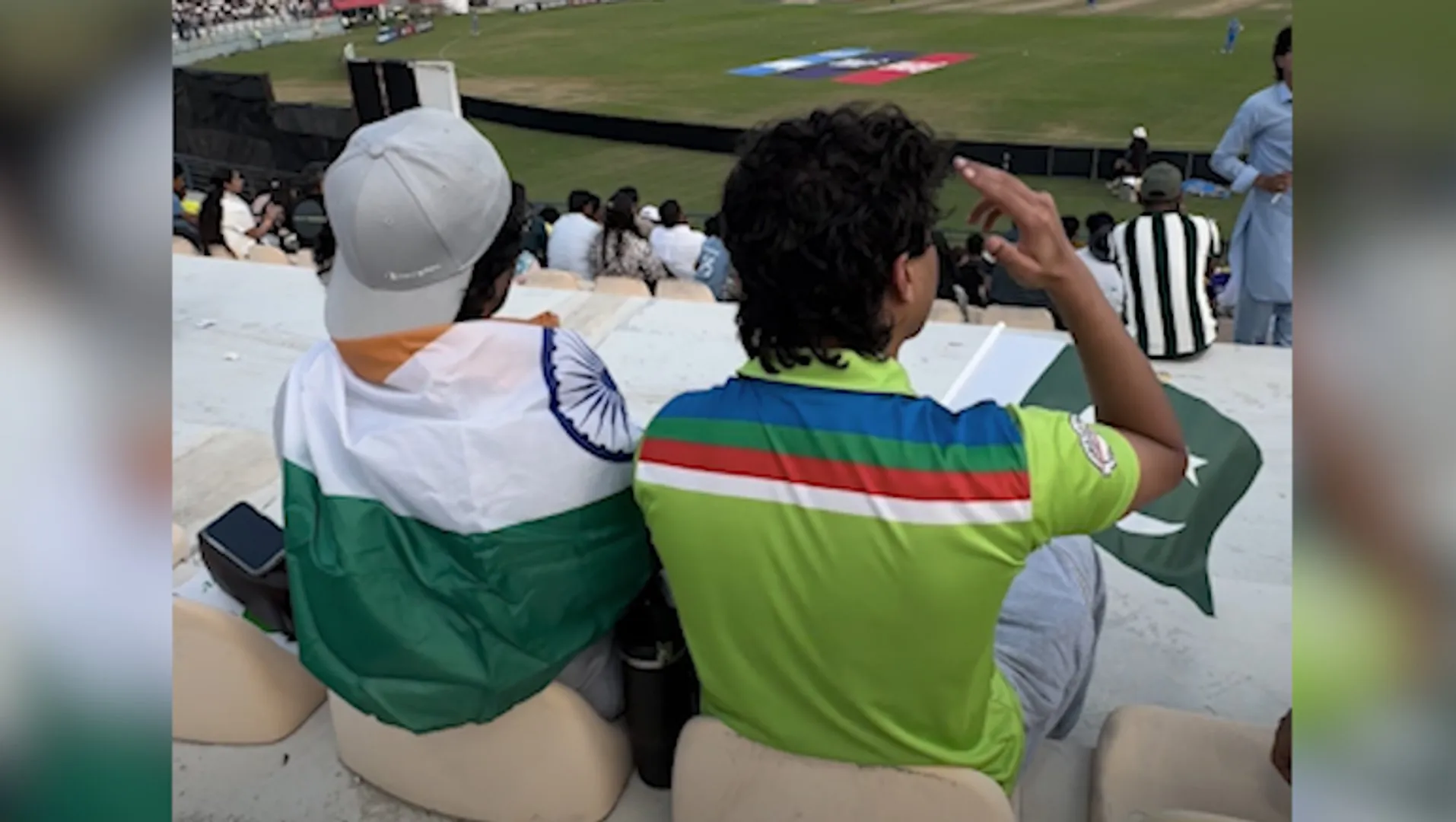
Fans watching the India-Pakistan cricket rivalry in Doha have called for politics to be kept out of the sport, even as heated exchanges took place during Pakistan’s victory in the Asia Cup Rising Stars 2026.
Pakistan won by 48 runs after India’s innings fell short of the target at the West End International Cricket Stadium on Sunday. On the pitch, verbal exchanges, hostile send-offs and confrontations contrasted sharply with the atmosphere among supporters in the stands.
The match took place in Qatar’s Asian Town, where supporters from both countries and neutral fans gathered in shirts and flags representing their teams. Attendance grew towards the second half and came close to the stadium’s 10,000 capacity.
India’s fast bowler Harshit Rana and Pakistan’s top-order batters were involved in a tense exchange soon after Pakistan chose to bat. The combative mood continued during India’s innings.
Fans warn politics is poisoning cricket
Among those watching together were Mohammed Saeed Khan, from Mumbai, and his Pakistani friend Abrar Hussain, from Karachi. The pair, who share accommodation and play in the same weekend cricket league in Doha, said there was no need to divide supporters along national lines.
“We have been friends for over six years,” Khan said. “We share accommodation, meals and a love for the game that goes beyond any rivalry.”
Both men expressed disappointment at what they described as the politicisation of cricket. “Politics should stay out of the game,” Hussain said. “The game of cricket is very close to our heart. We don’t want anything spoiling our game.”
Recent meetings between India and Pakistan, including matches involving senior, women’s and youth teams, have been marked by political tension following the countries’ four-day conflict last May.
At the Men’s Asia Cup 2025, India’s players avoided shaking hands with Pakistan’s team, while Pakistani players made gestures linked to the cross-border aerial fighting. India later refused to accept the trophy from the Pakistani head of the Asian Cricket Council after winning the tournament.
Khan said he believed some players did not want to participate in such confrontations but were “forced into the act” by politicians. He called on cricket boards to discipline players whose behaviour risked influencing younger cricketers.
“It is a worrying sign for the sport,” Hussain said. “Politics has poisoned cricket and the fact that young cricketers show this behaviour is not good for the future of the game.”
India-Pakistan cricket rivalry brings fans together
For migrant workers living near the stadium, the tournament offered a rare chance to watch their home nations play close to where they live and work. The fixture also attracted supporters from elsewhere in Qatar.
Avinash Daniel, a railway engineer from New Delhi, attended with his young family and two friends. He said it was their first time watching an India-Pakistan match in a stadium and described the experience as a cultural one.
“There are no different sides in the stands,” Daniel said. “No Indian stands, no Pakistani stands. We are all mixed. It’s a wonderful cultural experience.”
He said political involvement in cricket benefited politicians rather than players or supporters, who wanted the sport to provide a break from everyday life.
“At the end of this match, both Indians and Pakistanis will go out and eat the same mandi – a traditional Arab rice and meat dish – probably cooked and served by Indians and Pakistanis,” Daniel said.
