


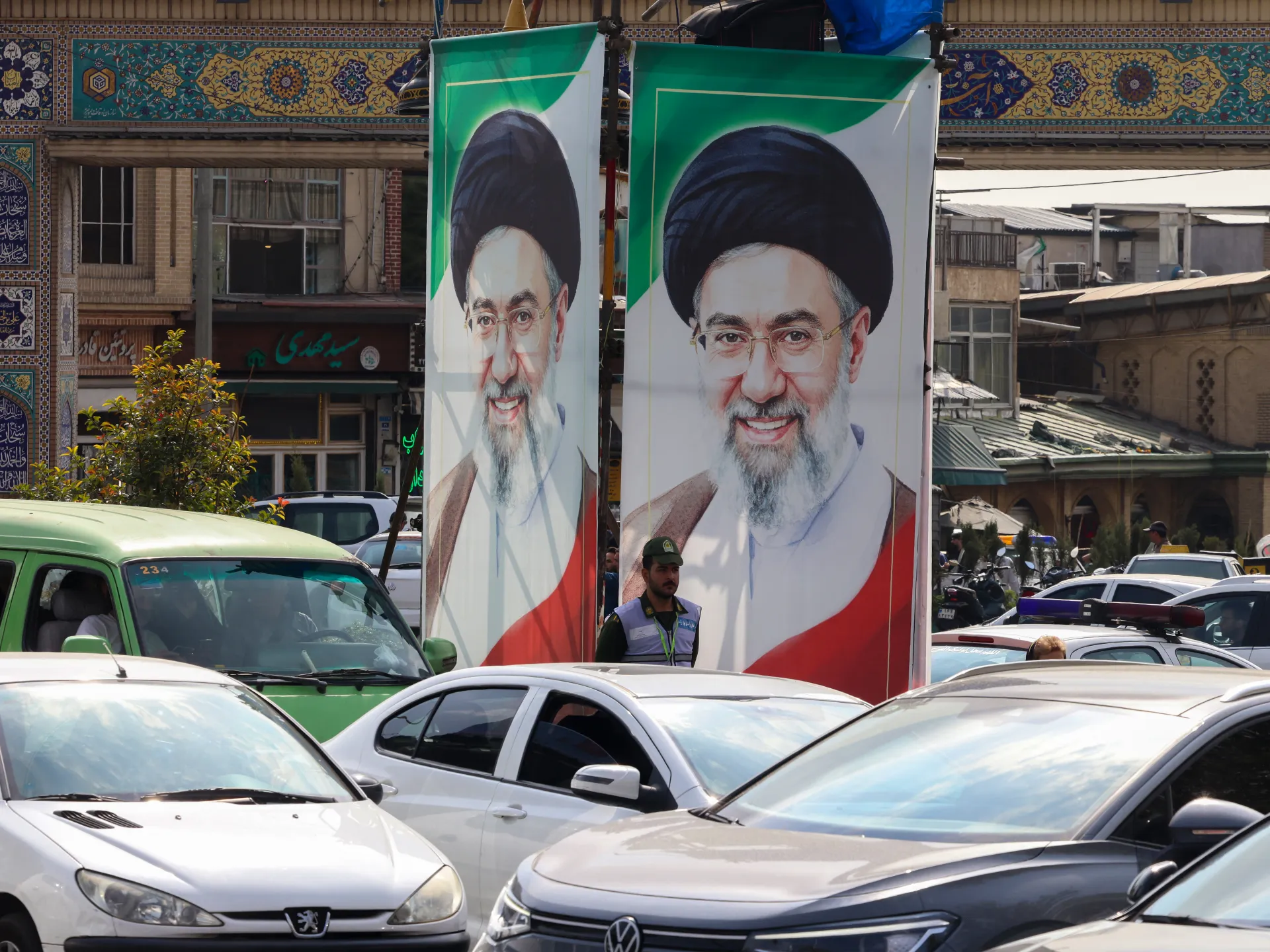
Iran’s Islamic Revolutionary Guard Corps has announced a shift to an “offensive and asymmetrical” military doctrine, warning that any renewed US attack could prompt Tehran to strike American bases and invade countries involved in operations against it.
The declaration came as attacks continued around the Strait of Hormuz, intensifying fears that stalled diplomatic efforts could give way to a fresh military escalation in the region.
Hossein Mohebi, an IRGC spokesman, said Iran’s policy had previously been focused on retaliation. “Now we say that if a country attacks us, we will both respond and launch an offensive,” he said.
He claimed Iran’s missile stockpile had grown by one and a half times since the 12-day war between Iran and Israel in June 2025, although he did not give figures. He also said the range, destructive power and accuracy of the country’s missiles had improved.
Iranian forces were preparing to unveil what Mohebi called the “father of all bombs”, he added, describing it as a new capability for the country’s adversaries.
Iran’s offensive doctrine raises fears of wider conflict
The IRGC statement was issued as the security situation around the Strait of Hormuz deteriorated. The organisation’s navy said four vessels accused of taking part in illegal oil transfers had been hit and caught fire in the northern Gulf.
It also said three other vessels had struck mines west of the strait. The claims could not be independently assessed from the information available.
Before the conflict, roughly one-fifth of the world’s oil and natural gas supplies passed through the Strait of Hormuz. Shipments remain below those levels, although regional oil exports returned to pre-war levels last month after exporters used alternative routes, including pipelines.
Recent attacks in the waterway, along with fighting between Yemen’s Houthis and the Saudi-backed, internationally recognised government, have nevertheless driven oil prices higher. Brent crude rose above 110 US dollars a barrel on Thursday amid concerns about further disruption to energy supplies.
Negar Mortazavi, a senior fellow at the Centre for International Policy, said Iran was seeking to make future US and Israeli attacks more costly after its previous approach had failed to prevent repeated strikes.
“Tehran now wants to establish a new equation: Any future attack on Iran will come at a much higher cost for the aggressors,” she said.
Unable to match the conventional military capabilities of the United States, Iran was increasingly relying on missiles, drones and its influence over the Strait of Hormuz, Mortazavi said.
She said Tehran’s wider aim was to impose military, economic and political costs on Washington, potentially affecting the November 3 US midterm elections. Iranian officials were monitoring the elections closely and believed the economic damage caused by the conflict could harm the Republican Party’s efforts to retain control of Congress, she added.
“The long-term objective is to establish deterrence so that future American administrations think twice before daring to attack Iran again,” Mortazavi said.
Political analyst Rami Khouri said the doctrine was designed to ensure that the consequences of any attack extended to the US, Israel and regional countries supporting their military operations.
“That’s one part of the strategy, that the suffering and the damage have to be equal and reciprocal,” he said.
Khouri warned that a renewed conflict could affect energy supplies, transport, insurance costs and shipments of essential goods well beyond the Middle East.
US and Iran trade warnings as diplomacy stalls
US President Donald Trump has sent conflicting signals about Washington’s next steps. On Wednesday, he said the US was no longer negotiating with Tehran and suggested that a decision on the conflict was close.
“We are going to have something one way or the other that’ll happen fairly soon,” Trump told reporters.
At a campaign rally in South Carolina, he said the US could end the war immediately but wanted a lasting settlement. “It’ll end very soon. We could leave now, but we want to make sure it lasts for a long time,” he said.
Trump had previously pledged not to attack Iran before the November 3 elections.
US Secretary of State Marco Rubio said reaching a peace agreement was extremely difficult and insisted that Iran must stop targeting commercial shipping in the Strait of Hormuz.
Iran’s uranium enrichment programme has also returned to the centre of the dispute. Rubio said Washington would reject any agreement that allowed Iran to develop nuclear weapons.
“The United States will not support any deal that creates a pathway for Iran to ever have a nuclear weapon,” he said.
Tehran has maintained that its right to enrich uranium is guaranteed under the Non-Proliferation Treaty. Iran has proposed a seven-day plan to restore shipping through the Strait of Hormuz in exchange for an end to the US blockade of its ports, sanctions relief and the unfreezing of Iranian assets.
Amid the regional tensions, the US State Department ordered non-emergency personnel and their families to leave Saudi Arabia after recent Houthi attacks. The US embassy in Riyadh warned of further attacks, while American officials said family members could also be withdrawn from other Gulf missions.
Tommy Piggott, a State Department spokesman, said departure orders covering the Gulf had not been issued for all mission personnel and applied only to employees and their families in Saudi Arabia.
Israeli Prime Minister Benjamin Netanyahu has separately repeated his pledge to topple Iran’s government, saying this was necessary to prevent it rebuilding its nuclear programme and the “axis of resistance”.
Analysts warn another confrontation may be approaching
Mortazavi said both sides appeared to be preparing for renewed confrontation, while the escalating attacks around Hormuz increased the risk of a broader conflict.
“Another round of war seems to be approaching,” she said, adding that the political calendars in the US and Israel could influence the timing of any military action.
Mohsen Rezaei, secretary of Iran’s Supreme National Security Council, said any attack on Iran would carry a cost. “If diplomacy can create this understanding, we prefer diplomacy, but if the war continues, Iran has the necessary means to sustain its response,” he said.
Khouri said US threats could still be part of a negotiating strategy, but warned that renewed strikes might target critical infrastructure, including electricity networks, transport systems, bridges and essential services.
“We’re probably going to get some severe attacks on a few targets that will try to make life in Iran very difficult,” he said.
He cautioned, however, that it remained unclear whether Iran could withstand another major offensive while inflicting comparable damage on its adversaries. Tehran was unlikely to surrender simply in response to military pressure, he added.
