


A federal judge in California has ruled that the Trump administration cannot use immigration law to revoke the visas or pursue the deportation of non-US citizens because of protected political speech, including criticism of Israel and support for Palestinians.
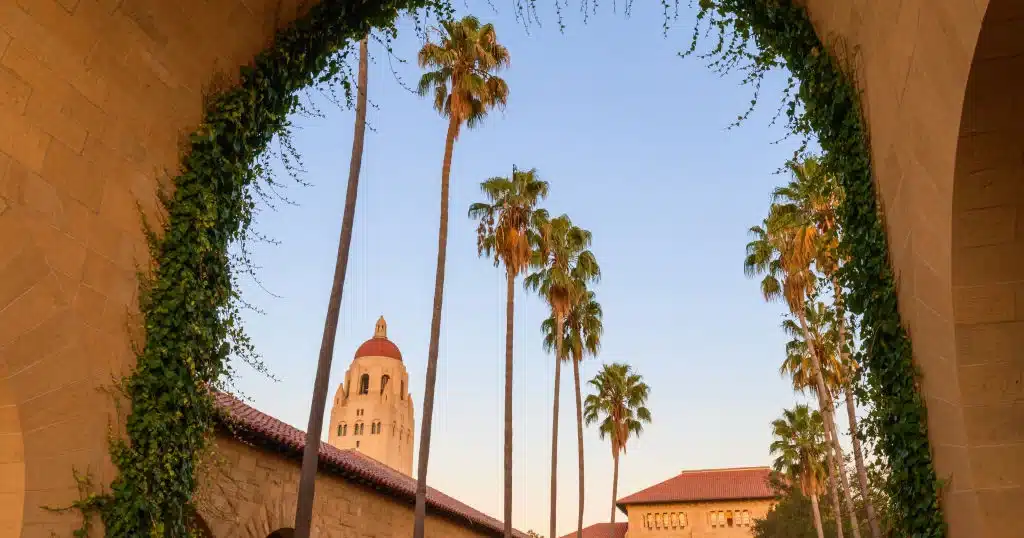
Judge Noël Wise of the US District Court for the Northern District of California issued the 90-page decision in San Jose on Friday, August 28, in a case brought by The Stanford Daily and an international student identified as Jane Doe.
The ruling found that provisions of the Immigration and Nationality Act relied upon by the administration violated the First Amendment’s protections for free speech and freedom of the press, as well as the Fifth Amendment’s guarantees of due process.
It is believed to be the first ruling in the US to directly address the constitutionality of the provisions in the context of the administration’s efforts to punish non-citizens for political expression.
The case was brought by the Foundation for Individual Rights and Expression (FIRE), which argued that the government had created a climate of fear among international students and student journalists. The organisation said the decision would have implications for similar legal challenges involving pro-Palestinian activists and students.
The disputed immigration provisions give the Secretary of State broad powers to declare a non-citizen deportable where their presence is considered to undermine a “compelling” US foreign policy interest, and to revoke a visa “at any time”.
FIRE said the government had attempted to apply those powers to protected speech, including articles, opinion pieces and participation in peaceful protests. The organisation cited the cases of Mahmoud Khalil and Mohsen Mahdawi, Columbia University students targeted over pro-Palestinian activism, and Rümeysa Öztürk, a Tufts University student detained after co-writing an opinion article criticising her university’s response to campus protests.
Judge Wise said non-citizens living lawfully in the United States enjoy First Amendment protections. She rejected the idea that immigration officials could decide whether political views were sufficiently damaging to US foreign policy without providing clear standards for people to follow.
“Freedom of speech is illusory if we are only ‘free’ to express complementary views about the government and its leaders,” she wrote.
The judge also found that the administration’s actions had affected the work of The Stanford Daily, an independent, student-run newspaper with more than 150 members. According to the court record, writers holding F-1 student visas had declined assignments, withheld articles, sought anonymity and asked for previously published work to be removed because they feared immigration consequences.
Some had avoided reporting on protests or the war in Gaza altogether, the court heard.
“The government has offered a chilling message regarding protected speech — speak out against Israel or in support of Palestinians and we will revoke your visa and deport you,” Wise wrote. “Noncitizen students heard the warning and heeded.”
She added that constitutional protection extended to opinions which might be unpopular, politically controversial or opposed to US domestic or foreign policy.
George Porteous, editor-in-chief of The Stanford Daily, said the newspaper’s reporters should not have to fear deportation simply for writing a story.
“Today’s victory means they won’t have to,” he said.
Conor Fitzpatrick, a FIRE lawyer involved in the case, said the ruling confirmed that freedom of speech did not belong only to people whose views were approved by the government.
The US Justice Department had not responded to requests for comment by Saturday.
The decision follows a ruling by US District Judge William Young in Boston in September 2025, which found that the administration had acted unconstitutionally by targeting non-citizens for deportation solely because they supported Palestinians or criticised Israel. Young said lawfully present non-citizens had the same free-speech rights as other people in the country.
The cases form part of a wider legal battle over the Trump administration’s response to campus demonstrations and criticism of Israel’s military campaign in Gaza. Several international students and activists have faced detention, visa cancellations or deportation proceedings, while universities and civil-rights organisations have argued that immigration powers are being used to suppress political dissent.
