


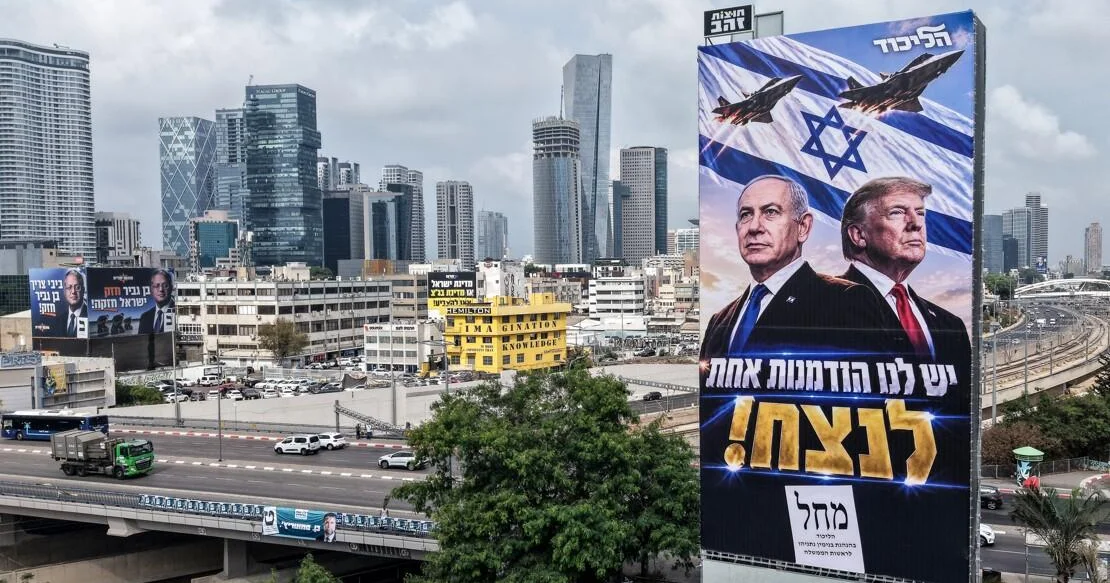
Israelis have begun voting in a tightly contested election that could determine whether Benjamin Netanyahu remains prime minister, but the result may not produce a clear winner. Polls suggest neither the right-wing and religious bloc led by Mr Netanyahu nor the rival “change bloc” is likely to secure the 61 seats needed to form a government alone.
The vote is the first since the Hamas attacks of 7 October 2023, which authorities have described as Israel’s most catastrophic security failure since its foundation. Israelis are voting while the country remains engaged in conflicts in Gaza, Lebanon and Syria, after two direct confrontations with Iran and amid Mr Netanyahu’s calls for a third.
Yohanan Plesner, president of the Israel Democracy Institute, said an inconclusive result appeared the most likely outcome. The election could therefore lead to prolonged coalition talks, a minority government or another vote if the deadlock cannot be resolved.
Netanyahu campaigns on security
Mr Netanyahu, Israel’s longest-serving prime minister and leader of Likud, is seeking to rebuild a coalition based on ultranationalist and Jewish religious parties.
His central argument is that he is the only politician capable of forming a government without relying on Arab parties, which he says would pose a danger to Israel’s ability to respond to its many security challenges. He has also told voters that the military campaigns in Gaza, Lebanon and Iran remain unfinished and that he needs more time to complete them.
Mr Netanyahu received a strong endorsement from President Trump last week. Mr Trump said America’s support for the war against Iran could be affected if the Israeli prime minister lost office.
“If Israel has the wrong Leader, which would be anyone other than Bibi, America will have to do this work ourselves, and I am not inclined to do so,” Mr Trump said.
Since then, Mr Netanyahu has portrayed himself as the leader best placed to work with Mr Trump to prevent Iran from obtaining a nuclear weapon, an issue many Israelis regard as an existential threat.
His campaign slogan, which rhymes in Hebrew, says: “Either right wing or Palestine, either right wing or a nuclear bomb.” He also posted an AI-generated image of a mushroom cloud over Tel Aviv, repeating his warning about the danger posed by Iran.
Netanyahu supporters continue to present him as a formidable international statesman. Benny Abraham, a restaurant owner, said: “Bibi can handle the whole world. Bibi is charismatic. He has a strong voice. The world loves him.”
“He’s the king of Israel,” he added.
Israel’s change bloc seeks an alternative
Opposing Mr Netanyahu is a broad collection of Arab, right-wing, left-wing and centrist parties united primarily by their desire to remove him from power.
The leading candidate to head the bloc, if its parties can win enough seats to form a coalition, is Gadi Eisenkot, a former military chief who leads the centrist Yashar party. Mr Eisenkot served alongside Mr Netanyahu in the war cabinet during much of the first year of the Gaza conflict.
He lost his son and two nephews while they were serving in Gaza. Around half of Yashar’s candidates in the election are women, in contrast with the male-dominated parties supporting Mr Netanyahu.
Mr Eisenkot has presented himself as a veteran seeking to reunite a country divided during Mr Netanyahu’s time in office. Responding to the prime minister’s warnings over Iran, he accused him of using “a campaign of fear-mongering, lies, and threats — including images of nuclear bombs in the heart of Tel Aviv”.
“This time, it won’t work for him,” Mr Eisenkot said.
He has promised to establish a state inquiry into the intelligence and security failures that allowed the 7 October attacks to take place. Mr Netanyahu has so far blocked such an investigation.
Uzi Aharoni, a 73-year-old engineer from Tel Aviv, said he regarded Mr Eisenkot as the only credible alternative to the prime minister.
“Eisenkot is not left, he’s not right. He’s straight and honest. He’s the kind of leader who will take care of us, the people of Israel, and not himself or his corrupt family,” he said.
Arab turnout and military service dispute
Turnout among Arab Israelis could prove decisive. Arab citizens make up about 20% of Israel’s population, but their participation has varied considerably between elections.
“The higher the Arab turnout, the less likely that Mr Netanyahu, within the current coalition, can form another government,” Mr Plesner said.
Jehad Abomoch, a cafe owner in the predominantly Arab city of Baqa al Gharbiya, said more Arab voters were expected to participate because of their opposition to another Netanyahu government and its far-right allies.
He described the past four years as “a real catastrophe, both socially and in terms of wars”, adding that many Arab Israelis felt they had “no hope, no future”.
Two new parties are also contesting the election, with both polling close to the threshold required to win seats in the Knesset. Whether either crosses that threshold could alter the balance between the two main blocs.
Both parties are challenging Mr Netanyahu’s alliance with ultra-Orthodox groups by calling for ultra-Orthodox Jewish citizens to be included formally in Israel’s compulsory military service. The issue cuts directly into the prime minister’s traditional support base and coalition arrangements.
Deadlock could lead to another election
If neither side can assemble a majority, parties or individual lawmakers could change allegiance despite their campaign pledges. Such negotiations could continue for weeks before a coalition is agreed.
The change bloc might also attempt to form a minority government if it wins more seats than the opposing camp without reaching 61. Arab parties could help by supporting its formation or by abstaining from a vote against it.
If no government can be formed, Israel could be forced into another election. The country held five elections between 2019 and 2022 because of similar political deadlock.
Mr Plesner said that if candidates kept their promises and refused to switch sides, “we will roll into another election”. He added: “I’m sure that most politicians are not interested in that.”
