


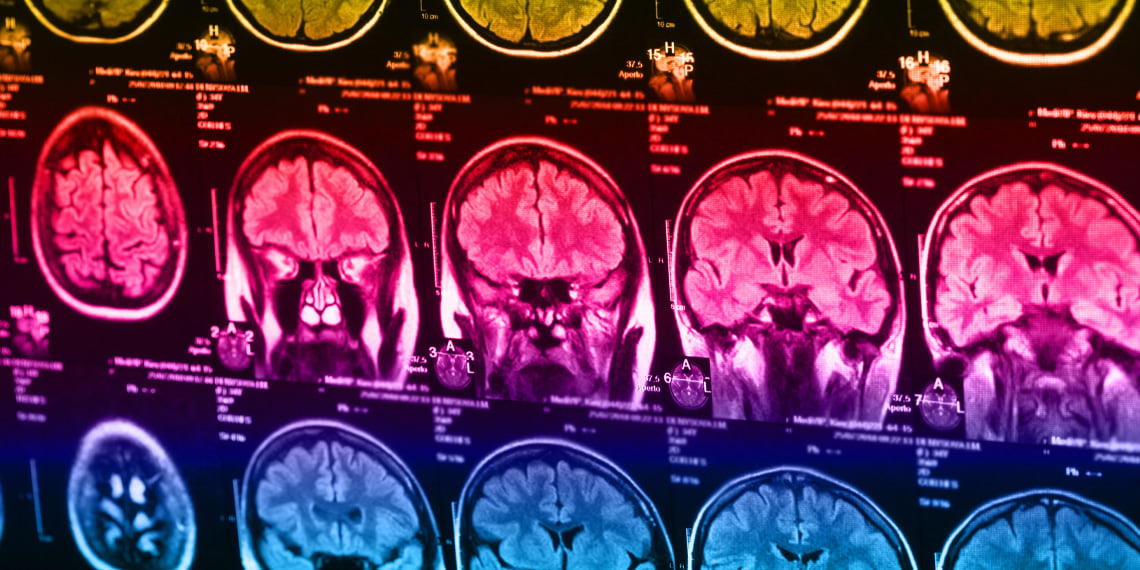
A Polish neuroimaging study suggests that when confronted with arguments that challenge political beliefs, people show marked activity in brain networks tied to self-reflection, reinforcing the view that political convictions are closely linked to personal identity. The research, conducted in Kraków and published in Scientific Reports, largely mirrors findings from an earlier American study.
In psychology, such resistance to changing one’s mind is often described as motivated reasoning: people filter or reinterpret new information to protect prior conclusions. The study’s authors emphasise that while political beliefs are normative and tied to social belonging, reactions to counterarguments are not merely about facts but about identity and values.
Earlier work covered by PsyPost noted that reading belief-confirming political messages can activate reward circuits, whereas contradictory messages engage error-detection regions. A 2020 line of research found distinct brain activity patterns in liberals and conservatives when watching identical political videos, with alignment to a group’s neural responses predicting stance adoption. The Polish project situates itself as a cultural replication with a broader look at identity-related processing in the brain.
The team’s blueprint traces back to a 2016 American neuroimaging study that compared responses to counterarguments targeting political views and non-political beliefs. That study reported heightened activity in the default mode network (DMN) when political beliefs were challenged, with greater amygdala and insula engagement among those less willing to change their minds.
The new research, led by Małgorzata Kossowska, a professor at the Institute of Psychology at Jagiellonian University in Kraków and head of the Behaviour in Crisis Lab, sought to test whether the same neural signatures appear in Poland’s multi-party political landscape, shaped by post-communist transformation and different cultural norms. The study was preregistered to publicly record their plans before data collection.
“One of the most intriguing questions in psychology is why people hold on to their beliefs even when confronted with information that challenges them,” Kossowska told PsyPost. “This is particularly important in the political domain, where presenting facts or counterarguments often little to change people’s minds. We were interested in understanding why political beliefs are so resistant to change and whether this resistance reflects something fundamental about how our brains process information.”
The researchers recruited 46 politically engaged Polish adults via social media, with a final behavioural sample of 43 after a technical error. Participants were on average about 25 years old, included 34 women, eight men and one nonbinary person, and were all right-handed with no neurological or psychiatric history. All identified as strongly left-wing on a screening questionnaire, mirroring the design of the 2016 study to control for baseline levels of political investment.
Before entering the lab, participants rated their agreement with eight political statements and eight non-political statements tailored to Polish culture. Political items included debates over abortion, refugee acceptance, and sex education; non-political items covered factual claims such as the impact of a college education on earnings or the invention of the light bulb.
In the lab, each participant lay inside a functional magnetic resonance imaging scanner for four runs of roughly seven minutes. They views each of the 16 endorsed statements for 10 seconds, immediately followed by five counterarguments or opposing evidence, shown for 10 seconds apiece. After considering all five counterarguments, the original claim reappeared, and participants rated their belief strength on a 1-to-7 scale over 12 seconds. The session also included a notice—made afterwards—that not all counterarguments were accurate. About a week later, 32 participants completed an online follow-up evaluating the same 16 statements.
Behaviourally, participants showed a clear split in openness to counterarguments. For non-political statements, belief ratings fell from 6.13 to 5.37 after challenges, a substantial drop (Cohen’s d 1.13). By contrast, political beliefs shifted only marginally—from 5.72 to 5.68—which the researchers characterised as a negligible effect (Cohen’s d 0.06). One week later, non-political beliefs remained lower at 5.65, while political beliefs stood at 5.83, with little change from the initial baseline.
Neuroimaging revealed distinct patterns for the two types of challenges. Political counterarguments elicited greater DMN activity, notably in the medial prefrontal cortex at the front midline, the posterior cingulate cortex near the midline, and the right supramarginal gyrus above the ear. The authors interpret this as processing political counterarguments as challenges to personal identity.
Conversely, challenges to non-political statements activated networks linked to external attention and flexible thinking, including the dorsolateral prefrontal cortex and the orbitofrontal cortex—regions associated with weighing evidence and revising expectations.
When examining belief persistence across both domains, stronger resistance to change correlated with higher activity in the dorsomedial prefrontal cortex, a region tied to self-referential thought and protection of identity. Greater willingness to revise a given item aligned with greater activity in the right inferior temporal gyrus and left temporal pole, areas implicated in processing meaning and knowledge.
“The main takeaway is that changing someone’s political beliefs is not simply a matter of presenting better arguments or more information,” Kossowska said. “Our findings suggest that political beliefs are often closely connected to our sense of who we are.”
She added: “This suggests that political disagreement is not always just about facts. It can also involve identity, values, and the need to maintain a coherent understanding of ourselves. The practical implication is that if we want to encourage openness to different perspectives, we need to consider not only what information we communicate, but also how that information relates to people’s identities and values.”
In a key methodological note, the study looked at emotion-related brain activity—specifically the amygdala and insular cortex subregions—to see whether emotion tracked belief change. Unlike the 2016 American study, the Polish research found no statistically significant link between activity in these emotion-related regions and the degree of belief updating among participants. The authors report modest evidence that amygdala and insula activity was unrelated to belief change, suggesting cognitive, identity-driven processes may drive resistance rather than emotional arousal.
“One particularly interesting finding concerned the role of emotion,” Kossowska explained. “We did not replicate these associations. Instead, our results pointed more strongly toward brain systems involved in self-referential processing and maintaining a coherent sense of identity. This suggests that resistance to changing one’s mind may not necessarily be driven by strong emotional reactions.”
The team also noted faster responses to political items, speculating that strongly held political positions may be well established, leading to quicker conclusions and less deliberation than for non-political items. “These findings reinforce the idea that resistance to belief change is not necessarily a matter of intense emotional reactions or extensive deliberation. Sometimes, people may simply rely on deeply established convictions without seriously reconsidering them.”
Taken together, the Polish results reproduce the primary behavioural pattern and the DMN findings of the American study, but differ on whether emotion-related brain regions predict belief change. Kossowska described the replication as providing broader support for cross-cultural consistency while highlighting the differences that refineme theories about identity and belief formation through replication.
Noting methodological caveats, an independent sceptic raised concerns about the neuroimaging interpretations. Paul J. Zak, a professor at Claremont Graduate University, questioned the strength of the imaging findings and warned against over-interpreting brain activity as direct evidence of specific psychological processes, a practice he described as reverse inference. He told PsyPost that the study’s functional imaging results were “thin and over-generous in their interpretations.”
The authors acknowledge several limitations: the political statements were value-based, while non-political ones were factual, which may engage different brain regions; the participant pool was narrowly left-leaning, nearly 80 per cent women, limiting conclusions about other ideological groups; and real-world political behaviour was not measured. They also noted that future studies should recruit gender-balanced samples across the political spectrum and examine a broader set of beliefs and real-world outcomes such as voting or activism.
As part of the discussion, Zak urged caution about the experimental design and called for studies that compare strongly versus weakly held beliefs using observable actions like political donations. He suggested that beliefs may be more effectively changed through storytelling and social proof than through facts alone.
Kossowska concluded with a broader aim: to move beyond identifying neural mechanisms of belief resistance toward understanding the conditions that foster openness to alternative perspectives, given implications for political communication, misinformation, and polarization. “I think the broader message of this research is that our beliefs are not simply collections of propositions that we evaluate independently of who we are,” she said. “They are often embedded in our identities, values, and broader understanding of the social world. This is especially true of political beliefs. When people defend a political position, they may be defending something much more personally meaningful than a particular opinion.”
The study, “Neural correlates of belief change in political and non-political domains among left-wing individuals confronted with counterarguments,” was authored by Małgorzata Kossowska, Paulina Szwed, Gabriela Czarnek, Sofiia Honcharowa, Aleksandra Domagalik, and Łucja Doradzińska.
