


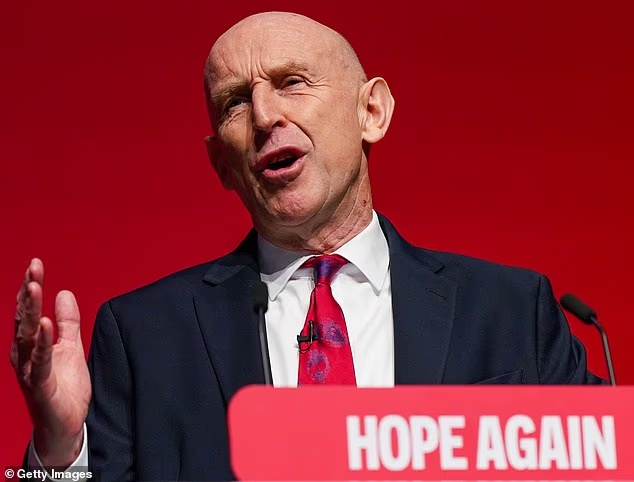
Households and businesses are bracing for John Healey’s Budget, with expectations that the Chancellor will offer some relief from rising living costs while leaving many of the tax pressures already announced firmly in place.
The Budget is expected to be more measured than Rachel Reeves’s 2024 and 2025 statements, which together increased taxes by £75 billion. Treasury briefings have suggested that Healey is presenting the measures as a period of “breathing space” for families and companies.
Possible announcements include additional help with energy bills, the protection of some low-income pensioners from income tax and the cancellation of planned fuel duty increases. There may also be targeted tax reductions for businesses.
However, the outlook remains difficult for taxpayers. Further tax rises and frozen thresholds are due to increase revenues between next April and 2029, while the economy is already facing high debt, weak business activity, inflation and rising energy costs.
The quieter speculation before this Budget has offered some reassurance. In previous years, rumours about possible tax changes led some people to make unnecessary financial decisions, including withdrawing pension tax-free cash they did not need.
Healey has also ruled out further increases in capital gains tax. The tax on profits from selling assets such as shares or a second home is therefore expected to remain at 18 per cent for basic-rate taxpayers and 24 per cent for higher- and additional-rate taxpayers.
Even so, households are being urged to review their finances before the Budget and prepare for changes that are already scheduled to take effect.
How savers can prepare for the Budget
No major new tax measures for savers are expected, but two changes already in the pipeline will affect people holding cash outside tax-free accounts.
From next April, people under 65 will be restricted to paying £12,000 a year into a cash Isa. They will still be able to use the remainder of the overall £20,000 Isa allowance for a stocks and shares Isa. Those aged over 65 will retain access to the full allowance for cash savings.
Tax on interest earned in ordinary savings accounts is also due to rise by two percentage points from April. The new rates will be 22 per cent for basic-rate taxpayers, 42 per cent for higher-rate taxpayers and 47 per cent for additional-rate taxpayers.
The personal savings allowance currently protects up to £1,000 of interest for basic-rate taxpayers and £500 for higher-rate taxpayers. Additional-rate taxpayers do not receive an allowance. These limits have remained unchanged since April 2016.
Savers should check whether money held in taxable accounts could be transferred into a cash Isa, provided they have sufficient allowance available. They should also compare the rates paid across all their accounts, including Isas, and consider moving money where a more competitive rate is available.
Married couples and civil partners can make use of separate Isa and personal savings allowances. Savings can be transferred between spouses without tax, potentially allowing both partners to use their allowances.
Interest from a joint savings account is normally divided equally between the two account holders for tax purposes. This can enable each person to use their own personal savings allowance, where applicable.
Mortgage costs and fixed-rate deals
An expected tax charge on banks could feed through into higher mortgage costs if lenders seek to recover the additional expense. Mortgage rates are already rising amid expectations of higher interest rates and continuing inflation.
Homeowners on variable rates, and those approaching the end of a fixed-rate deal, may therefore want to review their options early. A fixed-rate mortgage can provide certainty over monthly payments in a volatile market.
Five-year fixed deals are priced at around 6 per cent, although rates of about 5 per cent may be available to borrowers who shop around with the help of a mortgage broker. The same considerations apply to people buying a new home.
Borrowers should consider the overall cost and terms of any deal rather than focusing only on the headline rate, and should allow time to arrange a remortgage before their existing deal expires.
Investments and Isa allowances
Investors are not expected to face a further increase in capital gains tax, although dividend tax has already risen by two percentage points for basic- and higher-rate taxpayers.
Dividend tax is now 10.75 per cent for basic-rate taxpayers and 35.75 per cent for higher-rate taxpayers. The additional-rate figure remains 39.35 per cent.
The annual tax-free allowances for capital gains and dividend income have already been reduced to £3,000 and £500 respectively. Further cuts would leave little scope for investors to shelter returns outside tax-free accounts.
The annual £20,000 allowance for stocks and shares Isas is expected to remain unchanged. One possible future measure could require investors to put part of their Isa savings into UK shares, although any such change would be more likely to begin next April at the earliest.
Investors should use as much of their Isa allowance as they can afford, including the allowance available to a spouse or civil partner. Investments held outside an Isa can also be divided between spouses through tax-free transfers, allowing both people to make use of their capital gains and dividend allowances.
Where one partner pays tax at a lower rate than the other, investments may be arranged so that surplus income is received by the lower-rate taxpayer, subject to the applicable rules.
A further option is a “bed and Isa” transaction, in which investments are sold and bought back within an Isa. If the gain on the sale is below the £3,000 annual capital gains allowance and the new investment remains within the £20,000 Isa limit, the shares can be moved into a tax-free wrapper.
Pensions and inheritance tax changes
There has been little recent discussion of reducing pension tax relief or cutting the amount of tax-free cash available at retirement. At present, people can typically take 25 per cent of their pension pot tax-free from the age of 55, subject to a cash limit of £268,275.
The lack of speculation has been interpreted both as a sign that changes could still be announced and as evidence that pension tax benefits are not on the Budget agenda. Most people still building their pension savings should continue to contribute as much as they can afford, as the fund is likely to play an important role in their retirement income.
More immediate planning may be needed by older people who have built large pension funds mainly to pass wealth to their families. From next April, unused pension funds will fall within the inheritance tax regime and could face tax at 40 per cent.
Where the deceased is aged 75 or over, withdrawals made by beneficiaries may also be subject to income tax. This could create a substantial tax bill for families inheriting pension wealth.
People using pensions primarily as a means of passing on money may wish to consider whether to leave the fund untouched, draw down some of it or use unused tax-free cash for spending or gifts.
Inheritance tax exemptions include the £3,000 annual gifting allowance and the ability to give £250 to as many people as desired, subject to the relevant conditions. Some larger gifts can become exempt if the giver survives for seven years.
Another possibility is to use the pension to buy an annuity and give away surplus income after normal expenditure. Anyone considering such steps should assess the effect on their own financial security before making a decision.
Help with household costs
More targeted help with energy bills is expected for families under financial pressure. This could include an increase in the £150 Warm Home Discount payment, which is available to people receiving certain means-tested benefits, including pension credit.
The payment is made automatically in England and Wales, while applicants in Scotland may need to apply. Northern Ireland has a separate affordable warmth scheme for low-income households.
About one million low-income pensioners may also receive an increase in their tax-free personal allowance, currently £12,570, allowing more of their income to remain outside the tax system.
Fuel duty increases due to take effect next year could also be abandoned. Unleaded petrol is currently subject to duty of 52.95p a litre, with the rate scheduled to rise to 55.95p at the start of next year and 57.95p in March.
Any decision to cancel those rises would offer some relief to motorists, although a separate tax increase on imported fuel could push petrol prices higher.
Businesses may receive tax reductions intended to show that the Government is supporting them. But those measures would not undo the impact of the increase in employers’ National Insurance bills introduced by Reeves, which has been linked in the article to job losses and company closures.
Households should also review large regular expenses, including energy, broadband, mobile phone contracts and essential insurance. Switching providers where better value is available could reduce costs regardless of what is announced in the Budget.
