


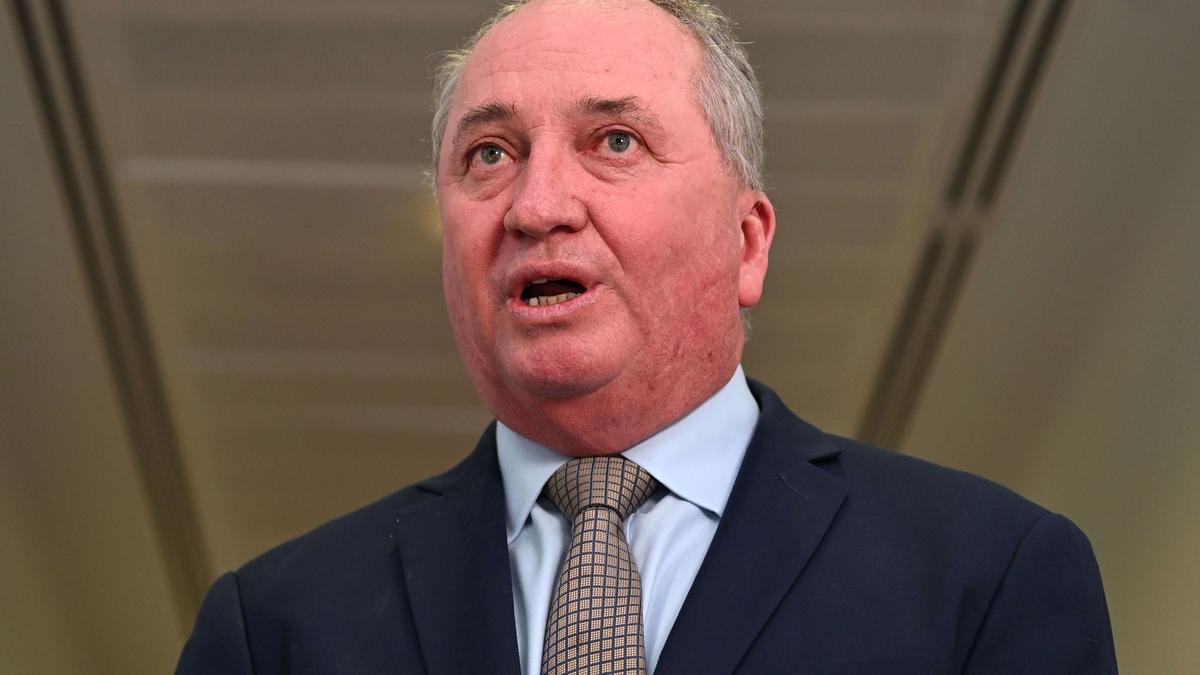
One Nation’s public service cuts plan would reduce the number of federal workers through attrition and remove departments whose responsibilities duplicate those of state governments, Barnaby Joyce has said.
Joyce, the party’s treasury spokesman, said the Climate Change Department would be abolished. He also indicated that the federal Education and Health Departments could either be scrapped or folded into other departments.
However, One Nation has not released figures or costings for the proposal.
“There has to be a streamlining of bureaucracy,” Joyce said on Tuesday morning. “We can’t have a duplication. You must chose if you want a state department or a federal department, make your choice.”
He said positions would not be refilled as public servants retired or left their jobs, adding that the party was concerned about both the size of Australia’s debt and its future direction.
One Nation public service cuts plan comes amid spending debate
The proposal comes as federal spending reaches 26.9 per cent of gross domestic product, its highest level in four decades outside the Covid pandemic.
Treasurer Jim Chalmers has indicated that a savings package will be outlined in the mid-year economic update, which is expected in December.
The Coalition announced on Monday that it would seek $31 billion in spending cuts, targeting net zero agencies, renewable energy schemes and housing programmes.
Labor backbencher Julie-Ann Campbell said the government needed to pursue savings, but questioned whether the Opposition might target healthcare and Medicare. She said cuts should not affect cost-of-living measures supporting Australians.
Shadow treasurer Tim Wilson denied that the Coalition was considering cuts to health. He said its focus was putting the budget on a sustainable footing, arguing that higher government spending was contributing to inflation and interest rates.
Economists and the Reserve Bank have also said government spending is helping to fuel domestic demand and inflation. Trimmed mean inflation is currently 3.6 per cent, above the Reserve Bank’s target of less than 3 per cent, with the latest inflation data due on Wednesday October 28.
