


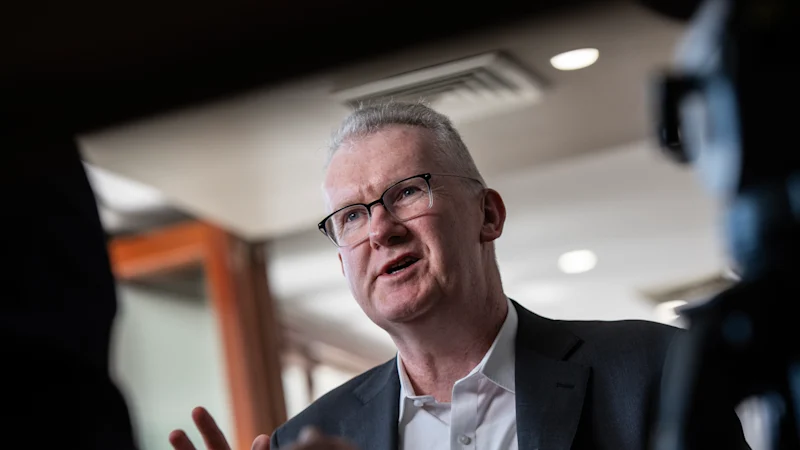
Australia’s migration overhaul will cut tens of thousands of backpacker places, tighten international student rules and accelerate the removal of unlawful non-citizens, the government has announced as it seeks to regain control of immigration before the next election.
Home Affairs Minister Tony Burke said the changes would move Australia away from a largely demand-driven system that had been in place since the Howard era. The plan aims to reduce net overseas migration to 245,000 by the end of the next financial year and to 225,000 the following year.
“That is no longer the experience of Australians,” Mr Burke said. “Effectively there is now an expectation on us that the pure demand-driven approach to major parts of the immigration system is not what Australians want.”
The government says reducing migration will help ease pressure on housing and rents, while a skills programme focused on construction and health workers is intended to increase the workforce needed to build more homes.
Backpacker visas to be allocated by ballot
A central part of the package is a new ballot for second- and third-year working holiday visas. The second-year programme will be limited to 45,000 places, down from 57,000 this year, while third-year places will fall from 31,000 to 5,000.
Applications for backpacker visas will be processed within 30 days, rather than taking several months, but that remains slower than the usual processing time of a few days before the recent slowdown.
The restrictions have prompted warnings from tourism, hospitality and farming organisations, which rely on working holidaymakers to fill seasonal jobs, particularly in regional areas.
Stephen Ferguson, chief executive of the Australian Hotels Association, said targeting working holidaymakers “makes no logical sense”, describing them as a mobile workforce that helped fill vacancies.
Nationals leader Matt Canavan and Michael Guerin, head of the National Farmers Federation, said the measures could contribute to food shortages and higher prices. Mr Canavan said the government was “barely shifting the migration dial”.
The government has not released detailed figures for all other visa categories, but the changes to backpacker visas are expected to account for a significant part of the planned reduction in migration.
Student and deportation measures
International students, apart from those studying for PhDs, will no longer be able to bring partners or other family members on secondary visas. The government also intends to prevent students from repeatedly moving between lower-tier courses to extend their stay.
Universities Australia chief executive Luke Sheehy warned that cuts to international student numbers would affect teaching, research and construction, saying each student contributed about 70,000 Australian dollars to the economy.
Former Labor leader Bill Shorten, now vice-chancellor of the University of Canberra, supported the exemption for PhD students and said uncertainty should end for international students. He said they boosted the economy and helped subsidise the education of local students.
Mr Burke also announced that Australian Border Force would recruit 100 additional officers to locate and deport 77,000 unlawful non-citizens. Some could be held at Melbourne’s mothballed quarantine facility while removal arrangements are made.
He sought to distinguish the policy from Donald Trump’s controversial Immigration and Customs Enforcement agency, saying Australia’s deportation approach would not mirror it.
Opposition leader Angus Taylor accused Labor of lacking commitment to a comprehensive migration reform, arguing the government was relying on population growth to support the economy while Australians were becoming poorer.
The Greens leader, Larissa Waters, described the package as “a culture war and a dog whistle”, while business groups expressed concern about the reduction in working holidaymakers but welcomed the greater focus on construction skills.
New figures released on Thursday showed net migration had fallen from more than 305,000 to 292,000. Migration expert Abul Rizvi said migration in the March quarter had dropped to 101,000 from 107,000 a year earlier, although it remained high by historical standards.
