


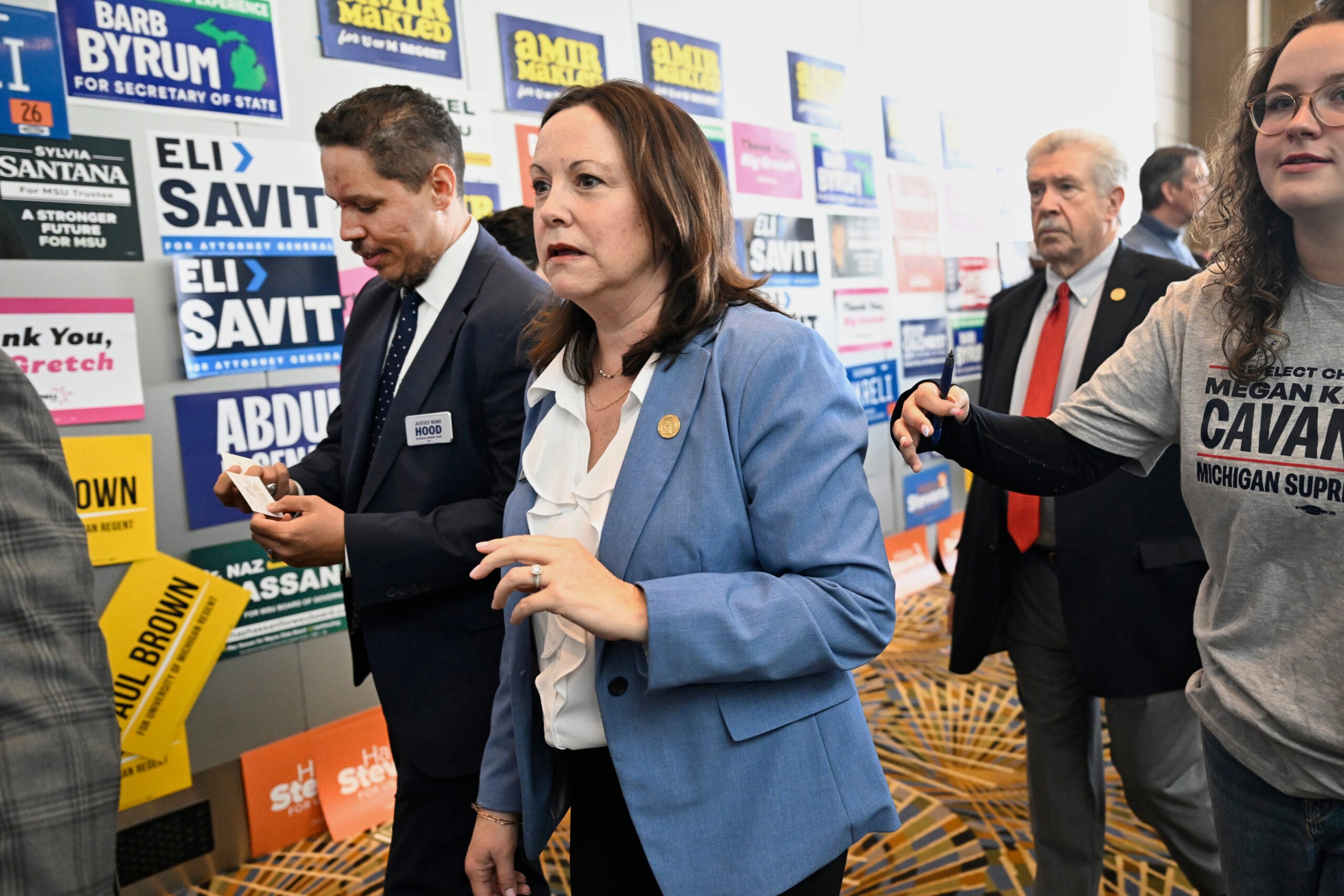
State supreme court elections have become a major political investment for liberal groups, which have spent millions in battleground states ahead of Tuesday’s voting in an effort to influence the courts that will oversee the next round of redistricting.
The most closely watched contests are in North Carolina and Ohio, where Republican majorities could eventually be overturned. National organisations are also working to preserve the liberal majority on Michigan’s court and competing for an open seat in Montana, where voters will decide whether judicial elections should remain non-partisan.
The results will help shape battles over abortion rights, election disputes and the drawing of congressional and state legislative maps. Justices elected in the coming cycles could hear challenges to maps drawn after the midterm elections and, later, following the 2030 census.
North Carolina at the centre of the fight
North Carolina has emerged as the most intense contest. Democrats are defending a seat held by Anita Earls, with the state party describing the race as an important step towards taking control of the Republican-majority court.
“In 2028, we’re looking at being able to take three Republican seats on that court,” Anderson Clayton, chair of the North Carolina Democratic Party, said.
Democrats lost four seats on the court in the 2020 and 2022 elections. The Republican majority subsequently cleared the way for Republican-led redistricting in 2023, according to the source material.
Clayton said her organisation had spent more than $1 million on the current race. Ms Earls has also received backing from national Democrats including Pete Buttigieg and Maryland governor Wes Moore.
“If we had won a state Supreme Court race then in 2020 in our state, Hakeem Jeffries would be speaker of the House right now,” Clayton said, adding that Democrats were trying to build the foundations for congressional majorities “in 2032 and beyond.”
The American Civil Liberties Union is among the groups pursuing a long-term strategy. Deirdre Schifeling, its chief political and advocacy officer, said the organisation had committed $8 million this year to supreme court races in North Carolina, Michigan and Montana, following contests in Georgia and Wisconsin earlier in the year.
Ms Schifeling said the ACLU’s campaign to build “pro-civil rights, civil liberties majorities” also included Arizona, Pennsylvania, Kentucky and Ohio. The organisation has already reserved resources for supreme court races in Wisconsin and Pennsylvania in 2027 and plans to begin fundraising for the 2028 contests early next year.
More than $14 million has been spent on television advertising in North Carolina, Michigan, Ohio and Montana, according to estimates from the liberal-leaning Brennan Center for Justice. Most of the money has supported Democratic or liberal-leaning candidates, who have generally raised more than their conservative opponents.
Republican groups have been under pressure to defend statewide offices and state legislatures they control, leaving fewer resources for judicial contests. The Republican State Leadership Committee, the party’s main down-ballot campaign organisation, has largely remained on the sidelines this cycle after warning that Democrats were overwhelming it with spending.
Its judicial affiliate reported spending more than $5 million across 2024 and 2025. Edith Jorge-Tuñón, the committee’s president, said Republicans were responding with targeted spending.
“Democrats understand what is at stake, and have dumped massive amounts of resources into these contests,” she said. “The RSLC is fighting back with smart and targeted spending because the investments we make today will determine whether we are positioned to protect our majorities, compete in the next redistricting cycle, and secure Republican victories for years to come.”
The National Democratic Redistricting Committee declined to discuss its total spending on judicial races this year. Its president, John Bisognano, said the 2026 and 2028 state supreme court elections were “critical to the long-term fight to protect democracy”.
Campaigners on both sides expect the sums involved to rise, with liberal groups warning that major industries are increasingly turning their attention to state courts.
“I think that the money flowing into those races from external interests tells the tale of what big money, big pharma, big data recognize about the next areas that they can seek to leverage and control to their benefit,” said Tish Gotell Faulks, state courts director at Alliance for Justice Action. “Those interests are now turning to the state courts and seeking to capture those courts as well.”
