


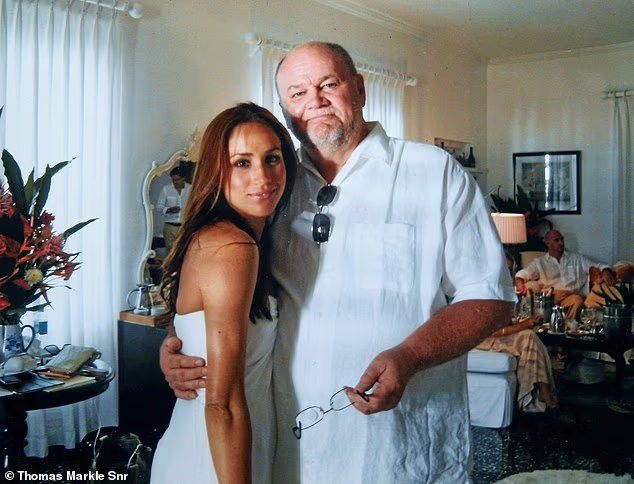
The Metropolitan Police is reported to have misplaced a 2019 letter containing child sex allegations against Thomas Markle before asking the Duchess of Sussex whether she had retained a copy.
The letter was allegedly sent to the force by Mr Markle’s former wife, Roslyn Loveless, in January 2019. It is understood that its contents were later passed to Prince Harry and Meghan.
The development has raised questions over the Met’s handling of information about Mr Markle, including claims that the force failed to share the allegations with the FBI or the National Crime Agency.
The force is understood to be assessing whether it should refer itself to a police watchdog over the handling of the letter. It eventually approached Meghan, who handed over a copy when asked.
Questions over the Met’s handling of the allegations
Ms Loveless, who died two years ago, divorced Mr Markle in 1975. She is reported to have written that she had questioned him about an accusation which he denied, but that he had said he travelled to the Philippines and Thailand because “12-year-olds are legal there”.
She is also alleged to have described Mr Markle as a potential threat to Harry, Meghan and Meghan’s mother, Doria Ragland. The letter was said to have been intended to assist with security and threat assessments in Britain.
Mr Markle, who is 82 and now staying in Florida after having his leg amputated, denies the allegations. Authorities in the Philippines are examining a large collection of child sexual abuse images allegedly linked to him.
Jim Gamble, a former head of the National Crime Agency’s child exploitation unit, said the Met’s handling of the matter could have allowed abuse to continue if the allegations were ultimately proven.
Speaking to the Today programme, he said: “If it turns out through the investigation ongoing in the Philippines and with the FBI that an individual is ultimately held to account for those offences, then there’s seven years during which children will have potentially continued to suffer abuse.”
Mr Gamble questioned why the force had considered the allegations sufficiently credible to pass them to Meghan, but apparently not to other law enforcement agencies.
“I would have expected them to prioritise an assessment with regard to the safeguarding and child protection issues that seem to have been included in [the letter],” he said.
He added that information about a person alleged to pose a risk to children should normally be shared with overseas agencies where appropriate.
“I would have expected the Metropolitan Police to have gone to the FBI to say, ‘Look, this isn’t proven, it’s an allegation, you might want to look at it’. Because in America, they may have more information that could corroborate it,” he said.
Mr Gamble said the information should also have been passed to the National Crime Agency, which has international links with police services including those in the Philippines and Thailand. He described an external investigation into the Met’s handling of the case as “absolutely necessary”.
Ms Loveless’s daughter Samantha, 61, has said that if her mother sent the letter, it was motivated by “hatred and bitterness”. She has also accused her mother of being an alcoholic and “not credible”.
Meghan and her father have been estranged since at least 2018, when she married Prince Harry. Their relationship deteriorated after Mr Markle admitted staging paparazzi photographs of himself before the wedding.
Meghan wrote to her father last December after his leg was amputated, reportedly telling him that he posed a risk to children and would never be allowed to meet his grandchildren, Archie and Lilibet.
Police in the Philippines said on Friday that they were investigating claims that Mr Markle had “hundreds, if not thousands” of child sexual abuse images, including one allegedly showing him having sex with an underage girl.
The Philippines’ interior minister, Jonvic Remulla, said Mr Markle appeared to be “a possible sex offender of the grossest kind”. Mr Markle has denied wrongdoing, while acknowledging that he paid for sex in the Philippines and insisting that the women involved were adults.
