


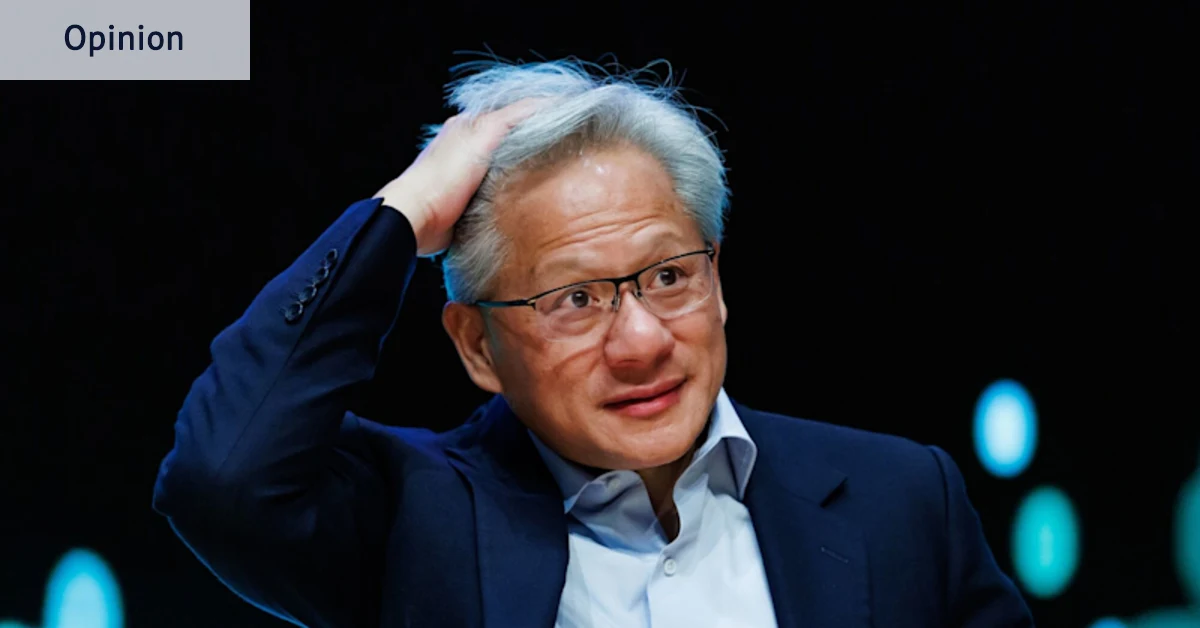
Nvidia’s latest results have exceeded expectations, but the chipmaker’s record performance has done little to ease concerns over the scandal surrounding its co-founder and former chief executive, Jensen Huang.
The company reported third-quarter sales of US$115.8 billion, more than twice the figure for the same period last year and ahead of forecasts of about US$109 billion. Its gross margin was 74.8 per cent, while Nvidia expects sales of at least US$130 billion in the current quarter.
Yet the results arrive as the company faces investigations and mounting uncertainty over its exposure to China, following allegations involving Huang’s affairs with Alice Huang, described as an alleged Chinese spy or an agent who helped circumvent US restrictions on advanced chip sales.
Jensen Huang has resigned, despite a petition signed by almost 200,000 Nvidia employees, shareholders, Silicon Valley technology leaders and others calling for his return. He said he would be “honoured” to come back, but chairman Harvey Jones has indicated that the board does not intend to reinstate him.
Nvidia is accelerating its search for a permanent chief executive, leaving interim chief executive Colette Kress to steady the company. The leadership change is particularly significant because about 60 of Nvidia’s most senior executives reported directly to Huang.
The departure also threatens the network of relationships he built with major suppliers and customers. The scandal has prompted an investigation by the Trump administration, congressional inquiries and a probe by the US Securities and Exchange Commission.
China restrictions threaten Nvidia’s growth
More consequential for Nvidia may be the change in US policy triggered by the allegations. New restrictions require data-centre operators in South-East Asia to obtain a US government licence before Nvidia can supply them, in an attempt to prevent China gaining access to advanced chips through the region.
Nvidia does not rely on revenue from direct sales to China, but the investigations will examine whether chips reached Chinese companies indirectly. The scrutiny includes sales to South-East Asian data centres hosting Chinese businesses and alleged transfers through third parties such as Megaspeed, a Singapore-based company previously run by Alice Huang.
Nvidia generated more than US$100 billion in revenue through its Singapore subsidiary last year, close to half its total revenue, before it stopped reporting sales by billing address and began disclosing them according to customers’ headquarters. Whether any of that income was generated directly or indirectly from China is expected to be a focus of the inquiries.
The restrictions are also creating uncertainty for data-centre owners and their financiers, including shareholders, banks and private credit providers. About US$49 billion in loans has reportedly been raised against data centres in the region over the past three years.
Nvidia’s board has established a committee to oversee compliance with national security and trade laws. It said the rise of artificial intelligence and superintelligence posed unprecedented challenges for national security, while the move also highlighted questions about corporate governance under Huang’s leadership.
The company’s shares have fallen by about 35 per cent in six weeks. Beyond potential legal action arising from the investigations or shareholder claims, Nvidia faces the possibility that restrictions on South-East Asian sales could materially reduce future revenue.
There is also a threat to the pace of data-centre construction in the US after Democrats made gains in the midterm elections, where opposition to artificial intelligence and data centres was a major issue.
Kress has maintained an ambitious outlook, raising Nvidia’s forecast for fiscal 2028 revenue growth from 70 per cent to 75 per cent. But her comments also pointed to tighter scrutiny of the financing arrangements Huang developed to stimulate demand for Nvidia chips.
The company is continuing to support data-centre operators and frontier laboratories, but said non-investment-grade customers would need to have their own customer base established before receiving financial backing. Nvidia said it would be “disciplined and selective” in supporting so-called neocloud companies.
That approach could create difficulties for developers with facilities under construction or still on the drawing board who have yet to secure strong customers. Nvidia’s procurement commitments total US$390 billion, including US$203 billion due next year, making continued demand for its chips critical to its growth plans.
The quarterly figures show the strength of Huang’s legacy. But the company’s future will depend on whether the investigations, tighter export controls and political backlash against data centres undermine the demand underpinning its exceptional expansion.
