


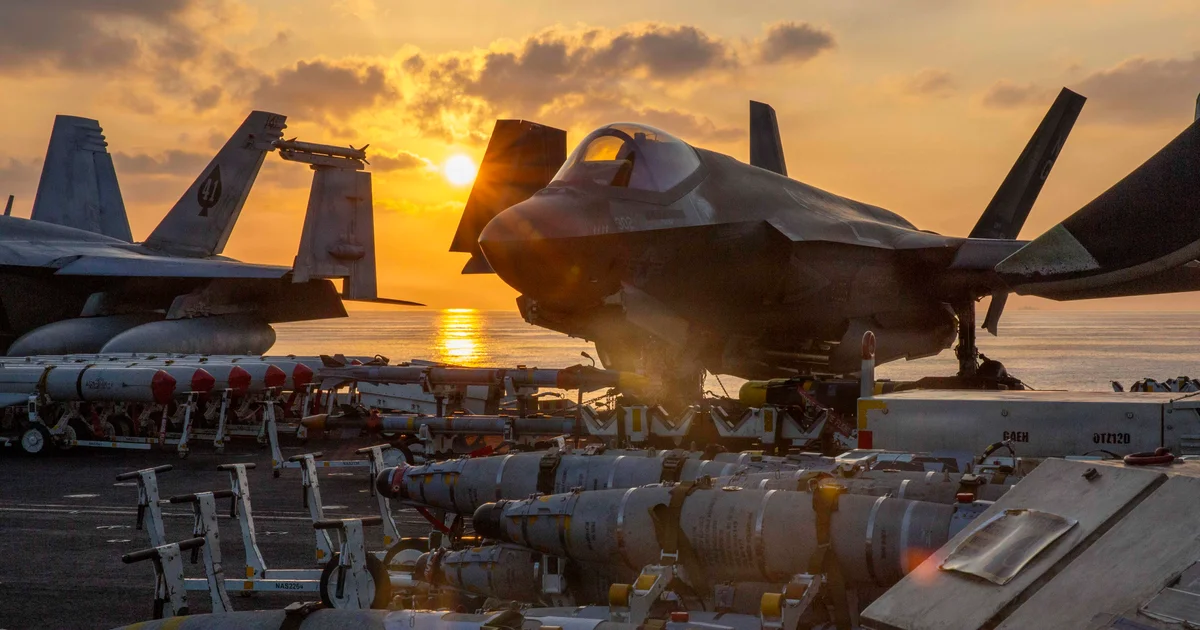
The United States is facing an ammunition shortfall after spending an estimated $22.3 billion on munitions during its war in Iran, according to a report by the Defense Department’s inspector general.
The report, the first mandatory assessment of its kind to be submitted to Congress, estimated that Operation Epic Fury cost $33.4 billion between February 28 and June 30. It said the scale of weapons use had exposed “strategic inventory shortfalls” and bottlenecks in the industrial base needed to replenish supplies.
American military losses listed in the assessment include four F-15 aircraft destroyed, one F-35 damaged, seven KC-135 tanker aircraft damaged and as many as 30 MQ-9 Reaper drones destroyed.
The findings contrast with repeated assurances from President Trump, who has dismissed concerns over depleted weapons stocks during the six-month conflict. He said recently that the US had “virtually unlimited” ammunition.
In a post on Truth Social on Monday, Mr Trump again said the country was producing “more Exquisite and Elite Weapons than at any time in our History”.
US Central Command has said American forces struck more than 1,000 targets during the first 24 hours of the war. The report noted that the US had not carried out attacks on that scale again in recent months.
US ammunition shortfall exposes production constraints
The inspector general’s assessment also said Iranian strikes had damaged or destroyed hundreds of buildings and structures at US bases in Kuwait, Bahrain, Qatar, the United Arab Emirates, Saudi Arabia, Iraq, Oman and Jordan.
Those costs were not included in the estimate because it remained unclear whether all the bases would be rebuilt or who would pay for the work.
The demands of the conflict have also placed pressure on the production of air-defence weapons. Lockheed Martin is currently making 750 Patriot missiles a year, with each costing about $4 million.
Mark Cancian of the Center for Strategic and International Studies said the US had enough weapons for a war against Iran, but warned that sustaining a longer conflict against China would be far more difficult.
“We might be able to provide enough munitions for a month, but getting on to month two or month three or four, that’s a great challenge,” he said.
The Pentagon has denied claims of ammunition shortages. Defence Secretary Pete Hegseth has nevertheless urged the defence industry to increase weapons production, a process described by Lockheed Martin missile division chief Tim Cahill as “controlled chaos”.
“It’s just, move fast, figure it out, find what our obstacles are, break them down,” Mr Cahill said.
